-
Call Now
1800-102-2727


Post-Fertilisation Events in Plants and Animals, Practice Problems, and FAQs

We all began our journey in this world through our parents. But do you all know that you did not start your journey as a baby? You were a zygote first which is formed after the fusion of male and female gametes. Then the zygote underwent many changes to form a baby. The period during which the zygote develops into a mature foetus can be called pregnancy. Pregnancy refers to the time from conception to birth. The duration of pregnancy is different. It depends on the types of organisms. At the end of the pregnancy, the mother gives birth to the young one(s). For example in the below given image pregnancy and parturition of human beings are represented.

Fig: Pregnancy and parturition in human beings
You have a variety of fruits and vegetables that are products of a plant. Have you ever wondered how these products are formed by plants? The flowers are the reproductive organs in which male and female reproductive parts are present. The male and female gamete undergo fertilisation and form a zygote in the ovule. This ovule will transform into a seed and the ovary will transform into fruit after the process of fertilisation in plants.

GIF: Formation of fruit
There are several events that take place after fertilisation in animals as well as in plants. These events are called post-fertilisation events. Let’s take a deep dive into the details of post-fertilisation events in this article.
Table of contents
- Post-fertilisation events
- Post-fertilisation events in plants
- Post-fertilisation events in animals
- Post-fertilisation events in different types of animals
- Practice Problems
- FAQs
Post -fertilisation events
Fertilisation is the process of fusion of male (n) and female (n) gametes to produce a diploid zygote (2n). Post-fertilisation events are described as a series of events that take place in the zygote. In plants, after fertilisation, mainly the endosperm and embryo formation takes place. At the end of these processes, fruit and seed will develop. On the other hand, in animals, post fertilisation events included cleavage, embryogenesis, gastrulation, organogenesis, parturition and lactation.
Post-fertilisation events in plants
In flowering plants, fertilisation is also termed double fertilisation as the two male nuclei in the pollen grain fuse with the egg and the polar nuclei to form the diploid zygote (2n) and the triploid endosperm (3n) respectively. In flowering plants, the zygote is formed inside the ovule. After fertilisation the petals, sepals, and stamens of the flower fall off normally. However, the pistil remains attached to the plant. The post-fertilisation events in plants involve the following:
- Endosperm development
- Embryo development
- Seed development
- Fruit development
Endosperm development
The endosperm is present in the seeds of the flowering plants at the time of seed development. The triploid (3n) primary endosperm cell undergoes multiple divisions and as a result, it forms endosperm tissue. It is rich in reserved food materials that are used for the nutrition of developing embryos. After endosperm development, embryo development takes place.
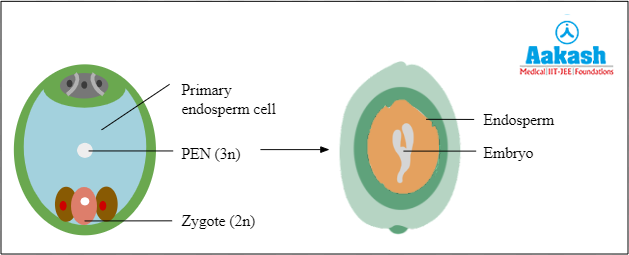
Fig: Formation of endosperm from PEN
Types of endosperm
Endosperm is categorised into three types and are listed below:
- Nuclear endosperm
- Cellular endosperm
- Helobial endosperm
Nuclear endosperm
In the process of nuclear endosperm formation, the primary endosperm nucleus (PEN) undergoes multiple nuclear divisions which produces free nuclei without a cell wall. These nuclei once formed are pushed towards the periphery and a large vacuole appears in the centre of the embryo sac. Later the wall formation starts from the periphery and progresses towards the centre and ultimately a cellular endosperm is formed. This type of endosperm development takes place in maize, wheat, rice, cotton and Capsella. In certain cases, the cell wall formation remains incomplete. Examples include coconut. In coconut the outer part of the endosperm, consists of a fleshy tissue called coconut meat and the central part which is present in the centre form a milky water called coconut milk.
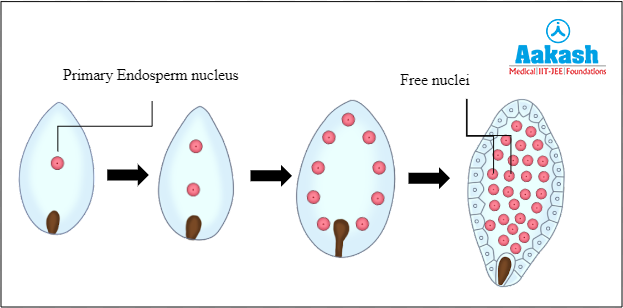
Fig: Nuclear endosperm formation
Cellular endosperm
In the process of cellular endosperm formation, cell wall formation occurs during each nuclear division. It leads to the formation of the cellular endosperm and is commonly seen in Petunia, Balsam, and Datura.
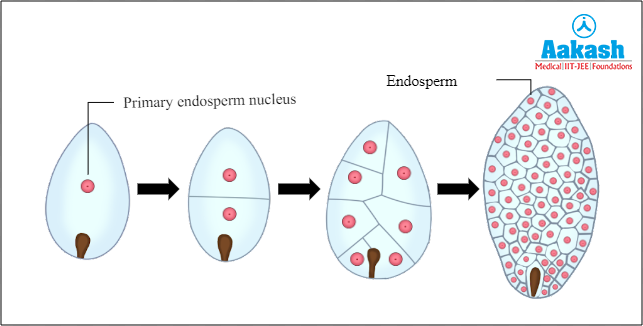
Fig: Cellular endosperm formation
Helobial endosperm
The process of helobial endosperm formation is an intermediate type between cellular and nuclear type endosperm formation. Here the first division of the primary endosperm nucleus is followed by the cell wall formation. This will result in the formation of two cells called chalazal and micropylar cells. In this type, the chalazal cell mostly does not divide and act as a base cell, whereas the micropylar cell divides further similarly to the nuclear endosperm. The free nuclear stage is then followed by the cell wall formation. This type of endosperm is normally found in the monocotyledons. Examples include Eremurus.
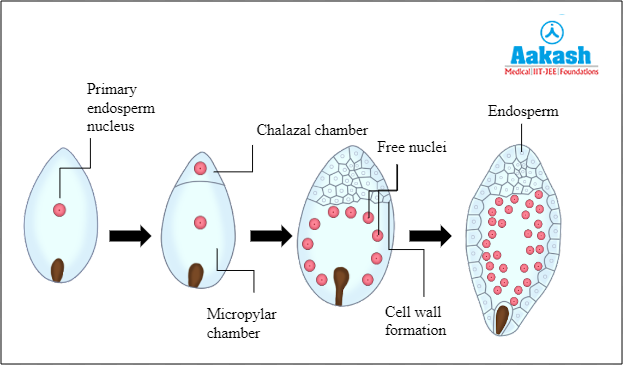
Fig: Helobial endosperm formation
Significance of endosperm formation
The following are the major significance of endosperm formation:
- Endosperm is considered important for the growth of an embryo.
- It stores the food reserve.
- Endosperms supply nutrients to the embryo.
- It also provides protection to the developing embryo.
- Endospermic tissues have shown to regulate seed germination and gene expression.
- Endosperm induces signals according to environmental conditions.
- It helps in the regulation of embryonic growth.
- The endosperm contains hormones like cytokinin that helps in the regulation of cellular differentiation.
- It induce abortion of seeds in cases of genetically mismatched cross.
Embryo development or embryogeny
The process through which embryos grow and develop in flowering plants is known as embryogeny. Embryo development takes place at the micropylar end where the zygote is formed. The early developmental stages of embryo development are the same in both monocots and dicots.

GIF: Embryogeny
Embryogenesis in dicot
The following stages are involved in the embryogenesis of dicots:
Formation of two celled stage
After fertilisation the zygote develops a cellulose wall around it and becomes oospore. The oospore divides by a transverse wall into the basal suspensor cell and the terminal embryo cell then. The suspensor cell lies towards the micropyle while the embryo cell faces the antipodal cells.
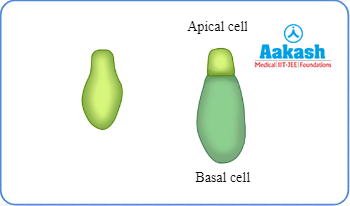
Fig: Formation of two celled stage
Formation of proembryo
Further division of this two celled structure results in the formation of a filament called proembryo. The suspensor cell then divides transversely now to produce a filamentous suspensor. This suspensor possesses 6 - 10 cells. The suspensor then pushes the developing embryo into the endosperm.
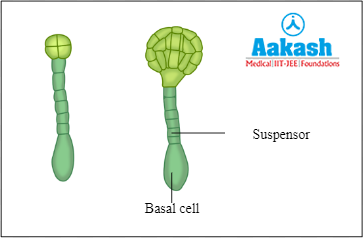
Fig: Formation of proembryo
Formation of hypophysis
Towards the micropylar end the first cell of the suspensor becomes swollen. It then functions as a haustorium. The lowermost cell of the suspensor adjacent to the embryo functions as hypophysis. It gives rise to the apex of the radicle. The embryo cell undergoes two vertical divisions and a transverse division to form an eight celled embryo now. The eight embryonic cells or the octant divide to produce protoderm or dermatogen. It is considered as the outer layer. The inner cells differentiate further into ground meristem and procambium. Epidermis is formed from the protoderm. Procambium normally produces the vascular strand. Cortex and pith are formed from the ground meristem.

Fig: Formation of hypophysis
Formation of mature embryo
Initially the embryo formed is looking globular and is undifferentiated. Early embryos with radial symmetry are called proembryos. It is transformed into embryos with the development of radicle, plumule and cotyledon. Now it looks heart shaped. The four terminal cells of the octant give rise to the plumule and cotyledons. The four basal cells next to the suspensor give rise to the hypocotyl and most of the radicle.
Structure of dicot embryo
The dicot plant embryo is composed of two parts, an embryonal axis, and two cotyledons. In the embryonal axis, two parts are present as follows:
- Epicotyl: It is present above attachment of the cotyledon in the embryonal axis. It terminates in plumule.
- Hypocotyl: It is present below the attachment of the cotyledon in the embryonal axis. It terminates in the radicle or root tip. The root tip is protected by a root cap.

Fig: Mature embryo
Embryogenesis in monocot
The following stages are involved in the embryogenesis of monocots:
Formation of quadrant stage
In monocots after fertilisation, the zygote divides transversely forming the terminal cell and basal cell. The basal cell which is larger and lies towards the micropylar end does not divide again but becomes transformed directly into a large vesicular cell. The terminal cell transversely divides forming two cells. This series of divisions leads to the quadrant stage. Then the quadrants divide transversely forming octants arranged in 2 tiers of 4 cells each.
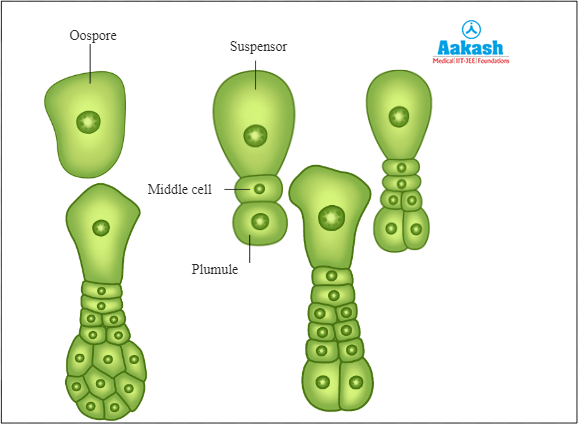
Fig: Formation of quadrant stage
Formation of mature embryo
The embryo of a monocot is composed of only one cotyledon. In the grass family, the cotyledon is termed scutellum. A sheath of undifferentiated cells covers the root cap and is known as coleorhiza. The region present above the level of attachment of the scutellum on the embryonic axis is called epicotyl. It consists of shoot apex and a few leaf primordia enclosed in coleoptiles. The remnant of the second cotyledon in monocots is called epiblast.

Fig: Embryogenesis in monocot
Seed development
A seed is described as a fertilised ovule. The integuments of ovules become hard to form seed coats. The body of seed usually has three basic structures as follows:
- Seed coat
- Cotyledon
- Embryonal axis
Seed coat
The seed coat is a double-layered structure that is formed from the integuments of an ovule. The outer hard seed coat is called testa which is formed from the outer integument. The inner seed coat is known as tegmen which is formed from the inner integument. There is a small opening present on the seed coat, which is called a micropyle. It helps in the movement of water and oxygen in the seed. A scar left on one side of the seed is called hilum. It indicates the point of attachment of the seed to the funiculus.
Cotyledon or seed leaf
There are either one or two cotyledons present in a seed depending on the plants. For the storage of reserve food for the developing embryo, the cotyledons normally become thick and swollen. Monocots possess one cotyledon and dicots possess two cotyledons.
Embryonal axis
The embryonal axis refers to both the embryonic root and shoot as a whole. The portion of this axis above the level of the attachment of the cotyledon grows and becomes the shoot, and the portion below the attachment of the cotyledon develops into the root.

Fig: Structure of a seed
Types of seeds
Seeds are classified into various types on the basis of the below mentioned two criteria:
- Based on cotyledons
- Based on endosperm
Types of seeds based on cotyledons
There are two types of seeds based on cotyledons as follows:
- Monocotyledonous seeds
- Dicotyledonous seeds
Monocotyledonous seeds
These are the types of seeds that have only one cotyledon. Examples include seeds of cereals.

Fig: Structure of monocot seed
Dicotyledonous seeds
These are the types of seeds that have two cotyledons. Examples include the seeds of castor.

Fig: Structure of dicot seed
Types of seeds based on endosperm
The seeds are categorised into three types based on endosperm as follows:
- Albuminous seeds
- Non-albuminous seeds
- Perispermous seeds
Albuminous seeds
In albuminous seeds, the endosperm is present and is not fully consumed during the period of embryo development. Examples include wheat, maize, barley, castor, and sunflower seeds.
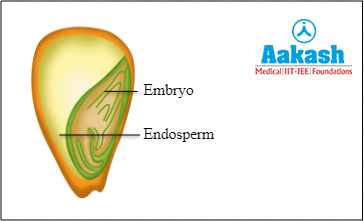
Fig: Structure of albuminous seed
Non-albuminous seeds
In non-albuminous seeds, the endosperm is absent because it is fully consumed during the period of embryo development. Examples include seeds of pea and groundnut.

Fig: Structure of non-albuminous seed
Perispermous seed
In some seeds the remnants of nucellus are also present. These are called perispermous seeds. Examples include black pepper and beet.
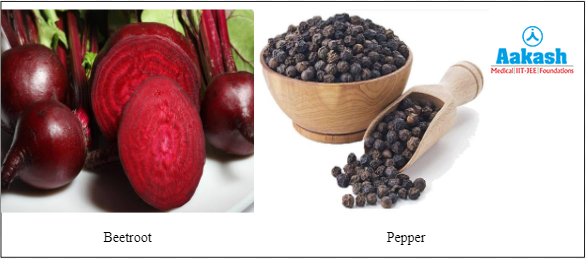
Fig: Beet and black pepper
Fruit development
Fruits are structures that form from a mature ovary through the process of differentiation and cell division. In certain cases, they form from other floral parts like the thalamus, perianth, peduncle, etc. They are a great source of fibres, vitamins, and minerals. Examples include grapes, bananas, papayas, and watermelons. They are part of a healthy diet.
Fig: Fruit
Pericarp
The wall of the ovary develops into the pericarp, which is a fruit wall. There are some fruits, such as guava and cucumber in which the pericarp is fleshy. On the other hand, in pea and mustard, the leathery pericarp is found.
Drupe
Drupe is a type of fruit. The pericarp is well differentiated into three layers in drupes:
- Epicarp: It is the outer covering of the fruit.
- Mesocarp: It is the middle layer present between the epicarp and endocarp.
- Endocarp: It is the inner layer that covers the seed.

Fig: Structure of fruit
Types of fruit
Fruits are classified into three types as follows:
- True fruits
- False fruits
- Parthenocarpic fruits
True fruits
These fruits develop from mature ovaries. These can form only after fertilisation. These contain seeds. Examples of true fruits include peas, mangoes, and coconuts.
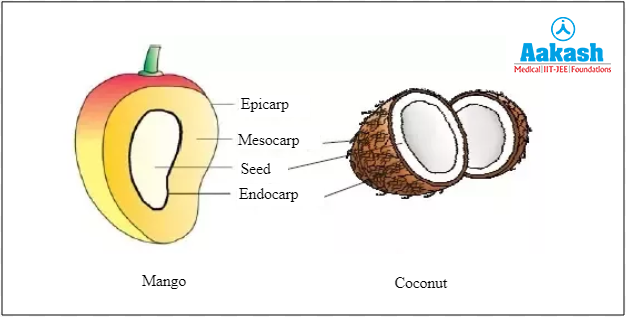
Fig: True fruits
False fruits
The fruit that is created from the ripened ovary and some other floral elements, such as the base or receptacle, the perianth, etc., is known as a false fruit. Examples of false fruits include apples, bananas, cashews, and strawberries.

Fig: False fruits
Parthenocarpic fruits
The fruits that develop without fertilisation of the ovules are called parthenocarpic fruits. These are seedless fruits that occur naturally or can be introduced. Examples of parthenocarpic fruits are bananas, seedless watermelons, and seedless grapes.

Fig: Parthenocarpic watermelon
Post-fertilisation events in animals
All sexually reproducing organisms form zygotes. The zygote undergoes several steps to give rise to a multicellular organism. The post-fertilisation events differ in different groups of animals. In general, there are four events that occur after fertilisation as follows:
- Embryogenesis
- Pregnancy
- Parturition
- Lactation
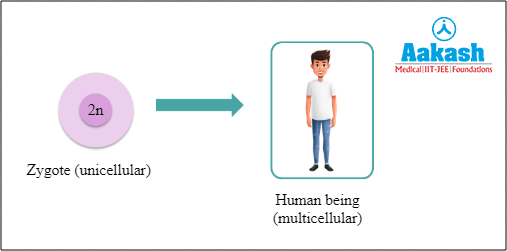
Fig: Formation of a multicellular organism from zygote
Post-fertilisation events in different types of animals
On the basis of the site of development of the zygote, animals are divided into three categories:
- Oviparous animals
- Viviparous animals
- Ovoviviparous animals
Oviparous animals
Oviparous animals are those groups of animals that lay eggs. The young ones hatch after being expelled from the parent body. Most amphibians, birds, reptiles, and fishes are oviparous and they make nests to protect their eggs. The eggs are covered by a calcareous shell here for protection and prevention of drying.

Fig: Hen
Embryogenesis in oviparous animals
In oviparous animals, embryogenesis occurs outside the body. These animals lay fertilised eggs in the nest. The eggs are incubated before it hatches. The egg contains storage of reserve nutrients that is required for a developing embryo. The size of an egg can vary greatly. For example, the largest egg is the ostrich egg. Frogs are amphibians that lay eggs in aquatic environments as their delicate, gelatinous eggs require regular hydration. Some mammals are also oviparous and these are known as monotremes. The most common member of the oviparous mammal is the duck-billed platypus or Ornithorhynchus anatinus.

Fig: Duck-billed platypus or Ornithorhynchus anatinus
Viviparous animals
Viviparous animals are those groups of animals that give birth to young ones. The embryo development occurs inside the female body and due to this, the chances of survival of a young one are high. Examples include all mammals, such as human beings.
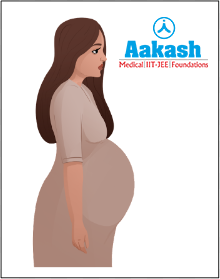
Fig: Viviparous
Events of post-fertilisation in viviparous animals
In viviparous animals, all four post-fertilisation events take place. These events are discussed below:
Embryogenesis in viviparous animals
After fertilisation, the zygote undergoes cleavage in which rapid mitotic cell divisions occur. Each daughter cell formed due to cleavage is known as blastomere. The repetitive divisions form the 8 - celled stage, 16 - celled stage, and 32 - celled stage. The 32 - celled stage is called a blastula. The blastocyst implants in the inner layer called the endometrium. This step is known as implantation. This endometrial lining is freshly prepared each time an egg is generated throughout the estrous (non primates) or menstrual (primates) cycles depending on the organisms. Now, embryo development takes place in the uterus. The nutrition is provided directly from the mother through a specialised tissue called the placenta in placental mammals.

Fig: Embryonic development
Marsupials
A unique group of non-placental mammals are called marsupials. Despite internal fertilisation, the internal development of their young is only partially complete at the time of parturition. These young ones spend the second stage of their development in a pouch on their mothers and are extremely underdeveloped when they are born. The most famous marsupial is the kangaroo.
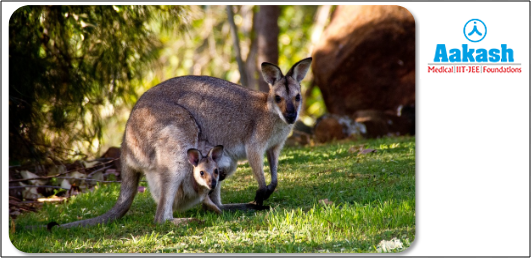
Fig: Kangaroo (Macropodidae)
Pregnancy
The duration of pregnancy is also known as the gestation period. It is the time from conception to birth. During this time, the implanted blastocyst undergoes several changes and forms an embryo which later on develops into a mature foetus. The duration of pregnancy differs in different organisms. The duration of pregnancy in human beings is 9 months +/- 7 days. Similarly, the gestation period in elephants is 624 days, which is the highest of all animals. Some other examples include dogs whose gestation period is 58 - 68 days, whereas the gestation period of cats is 58 - 67 days. By the end of pregnancy, the embryo develops into a mature foetus that is ready to come outside of the body.
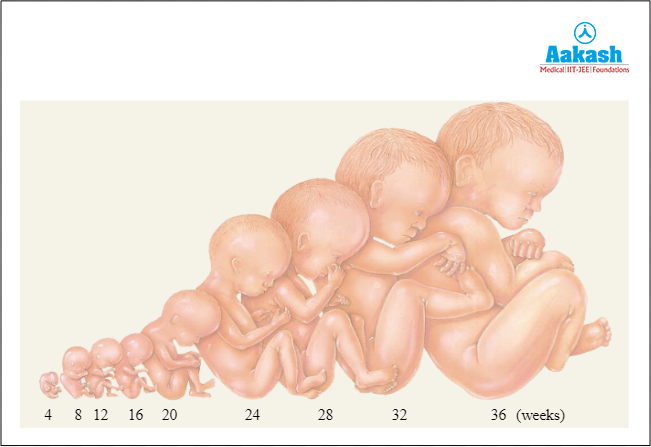
Fig: Changes occurs in the foetus during pregnancy in human beings
Parturition
The process of delivering a foetus is known as parturition or it is also known as childbirth. The uterine contractions occur at the end of the pregnancy due to which the expulsion of the foetus takes place.

GIF: Parturition
Mechanism of parturition
Several hormones play a critical role in the process of parturition and these hormones include oestrogen, oxytocin, relaxin, prostaglandins, etc. The process of parturition is stimulated by the neuroendocrine mechanism which is a very complicated process. The placenta and fully developed embryo transmit parturition signals, which trigger the mild uterine contractions known as the foetal ejection reflex. As a result, the hypothalamus influences the maternal pituitary gland to release oxytocin. The oxytocin stimulates the uterine muscles to contract more that further stimulates the pituitary gland to release more oxytocin. Oxytocin secretion and uterine contractions trigger a response that causes the uterus to contract more forcefully until the foetus is expelled from the womb through the birth canal. A short time after the baby is born, the placenta is also expelled from the uterus.
Lactation
Under the influence of the prolactin hormone, female mammary glands differentiate during pregnancy and start to make milk through a process known as lactation. In this process, oxytocin plays an important role in assisting the release of milk from the mammary glands. Giving breast milk to a newborn is the act of breastfeeding. For the development of a healthy child doctors advise breastfeeding for the infants for the first six months of life.

Fig: Lactation
Ovoviviparous animals
Ovoviviparous are those groups of animals that produce eggs that develop within the maternal body and hatch within or immediately after release from the parent body. These animals have various sources of nutrients, such as unfertilised egg yolks or cannibalising other members of their species. Internal fertilisation takes place in these organisms. Examples include certain species of sharks, snakes, and guppies.
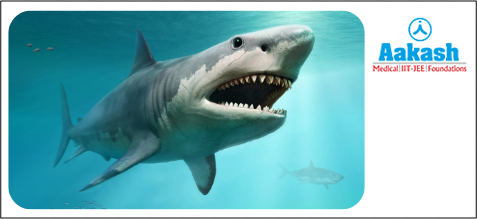
Fig: Ovoviviparous animal
Practice Problems
1. Identify the incorrect statement with respect to the oviparous animals.
- They are egg-laying animals
- The egg is covered by a calcareous shell in reptiles and birds
- Embryogenesis occurs inside the body
- Fishes and amphibians are oviparous
Solution: Oviparous animals are those groups of animals that lay eggs. The young ones hatch after being expelled from the parent body. The eggs are surrounded by a covering of calcareous shell to get protection and prevention of drying. Most amphibians and reptiles are oviparous. Hence, the correct option is c.
2. From the given options, identify the correct statement regarding viviparity and oviparity.
- In viviparous animals, the fertilised eggs are covered by a hard calcareous shell
- The oviparous organisms have a greater chance of survival
- In viviparous animals, the development of zygote takes place inside the body of female organism
- Reptiles, birds, and mammals are viviparous
Solution: Viviparous animals are those groups of animals that give birth to young ones. The embryo development occurs inside the female body and due to this, the chances of survival of a young one are high in them. Examples include most mammals including human beings. Hence, the correct option is c.
3. Identify the incorrect match from the following options:
- Lizard (reptile) - Oviparous
- Parrot (bird) - Oviparous
- Whale (mammal) - Viviparous
- Shark (mammal) - Oviparous
Solution: Sharks are an example of ovoviviparous animals in which an egg is present within the body and after fertilisation it hatches within the body. The organism gives birth to the young ones. Sharks are a type of cartilaginous fish, not mammals. Hence, the correct option is d.
4. Which structure protects the embryo in plants?
- Seed coat
- Cotyledon
- Endosperm
- Embryonic axis
Solution: The seed coat is the term used to describe outer protective layers of the seed. The embryo is protected by seed coverings from damage and from drying out. Seed coats are formed from the integuments of the ovule. Hence, the correct option is a.
FAQs
1. Which part of the plant grows first when a seed germinates?
Answer: The primary root or radicle grows first when a seed germinates. It grows downward in the soil and provides anchoring to the plant.

GIF: Seed germination
2. What is another term used for seed leaves?
Answer: Another term used for seed leaves is cotyledon. It stores reserved food required for the developing embryo.
3. Which type of fertilisation takes place in dogs?
Answer: In dogs, internal fertilisation takes place. The sperms are inserted in the female reproductive tract where the egg gets fertilised. They are viviparous and possess oestrus cycle.
4. How does a couple get twins?
Answer: Twins can develop when a single fertilised egg (zygote) divides into two cells and each cell multiplies and develops into a complete foetus (identical twins). When two different secondary oocytes are fertilised in the womb, then also twins (non identical) can be formed.

 Call Now
 Let's Chat
 Share
Share