-
Call Now
1800-102-2727


General Classification : Phylogenetic and Phenetic System of Classification, Practice Problems and FAQs

Do you believe that dinosaurs existed on this planet Earth? Yes, they existed. They originally appeared during the Triassic period, between 243 and 233.23 million years ago (mya), while the precise origin and chronology of dinosaur evolution are still being studied. Dinosaurs lived for about 165 million years on Earth before becoming extinct 65 million years ago (at the end of the Cretaceous Period). How are we getting all this information?
Have you heard about fossils? Any preserved remains, impressions, or trace of living thing from a previous geological epoch is referred to as a fossil. Using the characters identified from fossils we can find out the ancestors of all the living organisms. Birds are a living group of dinosaurs in the sense that they descended from the common ancestor of all dinosaurs.
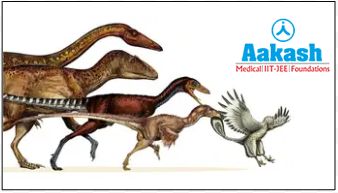
Fig: Evolution of birds from dinosaurs
Do you know which are the oldest plants in the world? Mosses are considered as the oldest plants in the world as their ancestors lived about 470 million years ago. But due to the presence of soft tissues, much information about their fossils are not available. Scientists use information about the fossils also for classification. There are many systems of classification based on this. What if fossil records are unavailable? Then how will we classify the organisms? There is a solution for this also. Let’s understand more about phylogenetic and phenetic systems of classification in this article.
Table of contents
- Phylogenetic system of classification
- Phenetic system of classification
- Practice Problems
- FAQs
Phylogenetic system of classification
According to Charles Darwin’s theory of evolution, organisms of a particular species undergo gradual changes over successive generations to eventually evolve into a new species. Existing species descended from ancestors who looked different from them.

GIF: Evolution of man
The system of classification based on the evolutionary relationships between different organisms is called the phylogenetic system of classification. It was first proposed by Engler and Prantl. For example, Engler and Prantl arranged flowering plants according to increasing complexity in floral parts. They considered monocots primitive to dicots. Improved phylogenetic system of classification was proposed by Hutchinson and Takhtajan.
An important feature of the phylogenetic system of classification is that fossils play an important role in this system of classification. It is also based on evolutionary traits.

Fig: Plant fossils
Disadvantages of phylogenetic system of classification
- New relationships are formed as per the discovery of new fossils.
- Fossil records are not available in all cases.
- Primitive and advanced characters of organisms creates difficulty in the hierarchical arrangement of organisms.
Phenetic system of classification
With the advancement in science and technology, new methods and criteria have been introduced for classifying organisms. It includes systematics. This system is used especially when fossil records are unavailable.
Systematics
Systematics is a branch of Biology that deals with nomenclature and classification of organisms. It includes classical systematics and new systematics.
Classical systematics
It classifies organisms based on morphological traits of one or few specimens and supporting characters from other fields of biology.
New systematics
Julian Huxley coined the phrase ‘new systematics’. New systematics classifies organisms based on morphological, physiological, cytological, biochemical and ecological characters. It leads to the formation of following new branches of Biology like Numerical taxonomy, Cytotaxonomy, Chemotaxonomy and Cladistic taxonomy.
Numerical taxonomy
It is a type of classification of organisms which involves assigning numbers and codes to all the observable characteristics for the computers to analyse and process the data as plus (+), minus (-) or 0. It does not consider the evolutionary relationships. It is also called Adansonian taxonomy. It establishes relationships between organisms. A family tree based on the numerical taxonomy is called dendrogram.

Fig: Numerical taxonomy
Cytotaxonomy
It is a type of classification of organisms based on the cytological features of a cell like chromosome number, chromosome size, behaviour of chromosomes during meiosis etc. In a species, the number of chromosomes remains constant. For example, human beings possess 46 chromosomes while apes possess 48 chromosomes. This helps the taxonomists to understand the evolutionary relationships.

Chemotaxonomy
It is a type of classification based on the chemical constituents of cells like proteins, enzymes, hormones, DNA, RNA, proteins, etc. Secondary metabolites like alkaloids are also taken into consideration in this type of classification. For example, the classification of medicinal plants and spices are done mainly based on the secondary metabolites. Tropane alkaloids are normally seen in the members of the family Solanaceae.
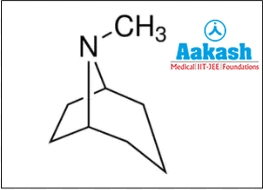
Fig: Tropane alkaloids
Cladistic taxonomy
In this system of classification taxonomic affinities are based on evolutionary and genetic relationships between organisms and not just morphological similarities. It considers plesiomorphic characters and apomorphic characters. A graphic representation which shows the evolutionary relationships is called cladogram or phylogenetic tree.
Plesiomorphic characters
The characters inherited from the common ancestors are called plesiomorphic characters or ancestral characters.
Apomorphic characters
The characters which differ from the ancestors and appeared during evolution are called apomorphic characters or derived characters.
Practice Problems
Q 1. Select the appropriate combination:
a. Linnaean system of classification: Girth and height of the plant
b. Natural system of classification: Medicinal plants, poisonous plants and edible plants
c. Numerical taxonomy: Each character is valued equally
d. Phylogenetic system of classification: Bentham and Hooker
Solution: The classification of organisms by a comparison of a large number of observable features is known as numerical taxonomy. The classification done by early people like Aristotle, and Carl Linneaus are examples of artificial classification systems. Bentham and Hooker proposed a natural classification system. Cryptogams and phanerogams were used to categorise the Plant Kingdom. Bentham and Hooker did not provide a phylogenetic classification system. Engler and Prantl, Hutchinson, and Takhtajan were the ones who gave it. Hence the correct option is c.
Q 2. When fossils aren't available for constructing a phylogenetic tree, classification is done using ____________.
a. Numerical taxonomy
b. Cytotaxonomy
c. Chemotaxonomy
d. all of the above
Solution: Both living organisms and fossils are used to construct a phylogenetic tree. When finding fossil data is challenging, data is obtained from a variety of sources and processed utilising tools like numerical taxonomy, cytotaxonomy, and chemotaxonomy. The classification of organisms by comparing huge numbers of observable traits in various organisms is known as numerical taxonomy. Cytotaxonomy is the division of organisms into taxons based on cytological characteristics such as chromosome number, morphology, and chromosomal behaviour during meiosis. Chemotaxonomy is the classification of plants based on structural similarities in the chemical compounds they produce. Hence the correct option is d.
Q 3. Select the wrong statement about the phylogenetic classification system:
a. It is based on the evolutionary characteristics of different organisms
b. It is predicated on the idea that species from the same taxon share a common ancestor
c. It entails assigning numbers and codes to all of the characters before processing the data
d. In the evolutionary system of classification, fossils play an important function
Solution: The phylogenetic classification system is based on evolutionary links between organisms. It is assumed that organisms from the same taxon share a common ancestor. The evolutionary links between organisms are represented by phylogenetic trees. Both living organisms and fossils are included in phylogenetic trees. The remains of living organisms are preserved in rocks as fossils. If common ancestors may or may not exist, fossils can be utilised to connect the various species. When there is no supporting fossil data, numerical taxonomy can be applied. Computers are used to perform the analysis here, which is based on all observable qualities. All of the characters are given numbers and codes, and the data is then processed so that each character is given equal weight while hundreds of characters are considered at the same time. Hence the correct option is c.
Q 4. The study of cytotaxonomy includes:
I. Chromosome number
II. Number of observable characteristics
III. Chromosomal behaviour
IV. Chromosome morphology
a. Only I and II
b. Only II and III
c. Only I, II and IV
d. Only I, III and IV
Solution: Cytotaxonomy is the division of organisms into taxons based on cytological characteristics such as chromosome number, morphology, and chromosomal behaviour during meiosis. There are various sorts of chromosomes based on the position of the centromere in the chromosome. When fossils are few, cytotaxonomy is one of the tools used for phylogenetic categorization. Hence the correct option is d.
Q 5. Write down the differences between cytotaxonomy and chemotaxonomy?
Answer:
|
Cytotaxonomy |
Chemotaxonomy |
|
It is based on cytological characters |
It is based on the characteristics of chemical constituents |
|
Characteristics of chromosomes are taken into consideration |
Presence of similar chemicals taken into consideration |
|
Chromosome analysis plays a major role |
DNA, RNA and protein analysis plays a major role |
FAQs
Q 1 . What is a phylogenetic tree?
Answer: A phylogenetic tree (also phylogeny or evolutionary tree) is a branching diagram or tree that depicts the evolutionary relationships between distinct biological species or other entities based on physical or genetic similarities and differences. All life on Earth is represented by a single phylogenetic tree, demonstrating that they share common ancestors.
Q 2. What is a spindle diagram?
Answer: A romerogram is a spindle diagram, sometimes known as a bubble diagram, that was popularised by American palaeontologist Alfred Romer. It plots taxonomic diversity (horizontal breadth) against geological time (vertical axis) to show how the abundance of different taxa has changed over time. A spindle diagram, on the other hand, is not an evolutionary tree since the taxonomic spindles conceal the parent taxon's actual relationships with the daughter taxon and have the drawback of involving the parental group's paraphyly. This type of diagram is no longer used in its original form.
Q 3. What is serotaxonomy?
Answer: Serotaxonomy is the classification of plants that are quite similar based on variances in their protein content. The method is based on the antigen-antibody connection, which is very specific.
Q 4. How chromosomes are classified based on the position of centromere?
Answer: The chromosome is a well-organised bundle of DNA present in the cell's nucleus. One of the characteristics employed in cytotaxonomy is chromosome types. The chromosome is classified into four categories based on the location on the centromere.
- Metacentric chromosomes
They are those chromosomes where the centromere is located in the middle of the chromosome.
- Sub-metacentric chromosomes
In sub-metacentric chromosomes the centromere is located near the centre of the chromosome.
- Acrocentric chromosomes
Chromosome is acrocentric, meaning the centromere is far from the centre but not at the end.
- Telocentric chromosomes
Centromeres are positioned at one end of the chromosome and are referred to as telocentric.
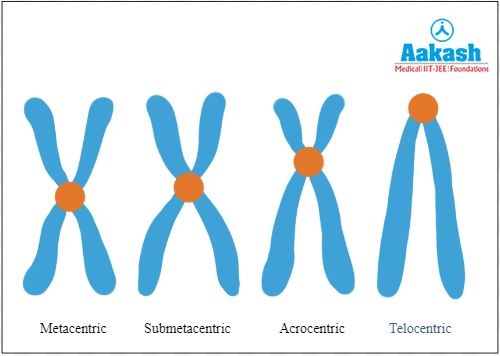
Fig: Types of chromosomes
Related Topics
|
General Classification : Artificial and Natural system of classification, Practice Problems and FAQs |
|
Classification of plants : Sexual system of classification, Eichler’s system of classification, Cryptogamae, Phanerogamae, Tracheophytes, Practice Problems and FAQs |

 Call Now
 Let's Chat
 Share
Share