-
Call Now
1800-102-2727


Connective Tissue

The human body is composed of millions of cells, and these cells create an intriguing tissue system that helps maintain the body’s framework and organ system. There are different types of tissues in our body which perform different functions in the body from maintaining the skeletal system to assisting the circulatory system. Connective tissues are the type of tissue which connect and support different tissues and organs in the body.
Table of Content
- What is connective tissue?
- Connective tissue fibres
- Connective tissue cells
- Types of connective tissue
- Functions of connective tissue
- Practice problems
- FAQs
What is Connective Tissue?
Connective tissues provide support and link various tissues and organs in the body. They are widely dispersed throughout the entire body. They develop from the mesoderm.
It could be located within and surrounding the body's organs. Bone and cartilage comprise the skeletal tissue, whereas lymph and blood are types of fluid-connective tissue. Connective tissue is composed of a number of cells that form an intercellular structure of protein fibres released by the cells, such as collagen or elastin.
Connective tissue fibres are extended proteins that polymerise with the fibrous elements that make up tissue after fibroblasts release them. These fibres stay attached in the extracellular matrix amongst connective tissue cells, strengthening and sustaining the connective tissues.
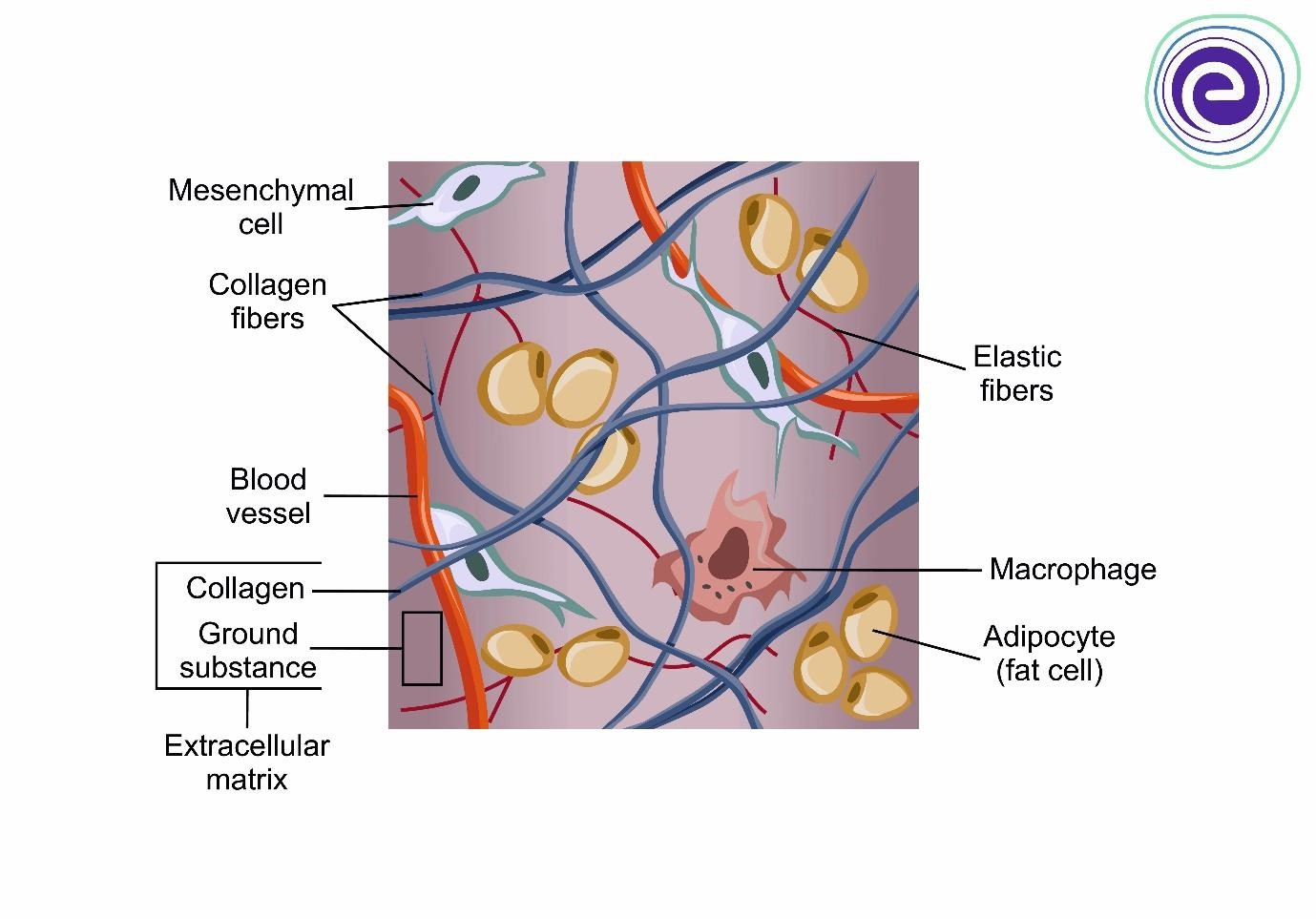
Image: Connective tissue
|
Did you know? Rheumatoid arthritis is a connective tissue disease caused when the immune cells of the body start attacking the connective tissue cells, often those present in the joints. |
Connective Tissue Fibres
There are three different types of connective tissue fibres.
Collagen Fibres
Collagen fibres constitute one of the most prevalent forms of fibre in connective tissue. They are made up of the protein collagen, which offers structure and support to the tissues. Collagen fibres possess a high level of tensile strength, which allows them to endure stretching and give ligaments, tendons, and skin structural stability.
Collagen fibres are distinguished from other types of fibres by their capacity to create extracellular threads, sheets, and networks that exhibit high resistance to tearing and breaking forces.
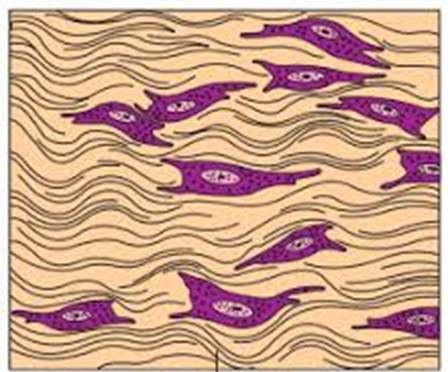
Image: Collagen fibres
Elastic Fibres
Elastic fibres are made of a protein called elastin and play a role in tissues' flexible and elastic properties. Elastin protein molecules make up an elastic fibre, while fibrillin is the glycoprotein that surrounds the elastin molecules.
Elastic fibres can be stretched and get back into their original shape because of their rubber-like characteristics. This characteristic of the elastic fibres enables the expansion and contraction of tissues like the skin, blood vessels, and lungs. The molecular makeup of the elastin subunits and the cross-links that hold them collectively gives elastic fibres their elastic properties.
Reticular Fibres
Reticular fibres are thin, extending fibres composed of collagen and glycoproteins. Reticular fibres are made up of collagen Type III, and they create an extensive series of thin fibres that help support diverse cells.
Soft tissues and organs, including the liver, spleen, lymph nodes, and bone marrow, are supported and strengthened by this network-like structure that is formed by these cells. Similar to adipocytes, smooth muscle cells, and nerve fibres, these are likewise made by fibroblasts and typically found in the reticular lamina of the basement membrane.
Connective Tissue Cells
The following are some of the most important connective tissue cells found in our body:
- Fibroblasts: Fibroblasts are one of the most prevalent cells found in connective tissue. They are responsible for making and releasing the proteins like collagen and elastin that make up the extracellular matrix. Additionally, fibroblasts are involved in tissue repair and wound healing.
- Adipocytes: Adipocytes, also referred to as fat cells, have the major role of preserving energy in the form of fat. They can be present in adipose tissue, which additionally acts as a source of energy and cushions and insulates organs.
- Chondrocytes: Chondrocytes are particular kinds of cells that make up cartilage. They are responsible for preserving and generating the proteoglycans and collagen that make up the cartilage matrix.
- Mast Cells: Mast cells are normally found close to blood arteries in connective tissue and are engaged in the immune response. During allergic reactions or inflammatory reactions, they secrete chemical mediators like histamine.
- Macrophages: Macrophages are cells with phagocytic functions that are essential to the immune system's defence. They ingest and degrade cellular waste, foreign matter, and pathogenic organisms in connective tissue. Macrophages also help to heal wounds and repair damaged tissue.
Types of Connective Tissue
The different types of connective tissues found in the human body are as follows:
Areolar Connective Tissue
This tissue is made up of cells, fibres, and ground material in almost equal amounts. Fibroblasts are the most common form of cell present in areolar tissue, although other kinds of cells are present as well, though in lower quantities. Collagen fibres make up the majority of the extracellular matrix.
Areolar tissue is found in the lamina propria that covers the mucous membrane, the papillary section of the skin's dermis, the subcutaneous layer of skin, and surrounding blood vessels. It fills the gap between muscle fibres, supports the organs located within the abdominal cavity, and surrounds blood and lymphatic veins.
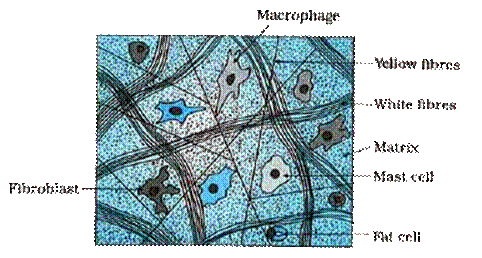
Image: Areolar connective tissue
Adipose Connective Tissue
Adipose tissue is a kind of connective tissue made up of adipocytes which have been adapted for fat storage in the form of oil droplets. There are two varieties of adipose tissue, each with distinctive structures, colours, and purposes:
- White adipose tissue is designed specifically to store fat. Each of the adipocytes that make up the tissue has sizable cytoplasmic droplets of whitish-yellow fat inside it.
- Brown adipose tissue is made up of adipocytes that contain numerous lipid droplets dispersed across the mitochondria. A darker look is produced by the presence of numerous droplets. The brown adipose tissue helps to regulate blood temperature and plays a role in heat release.
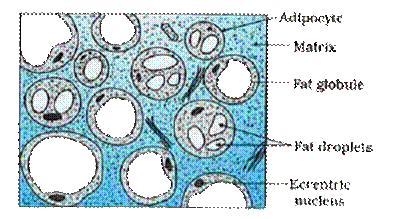
Image: Adipose connective tissue
Reticular Connective Tissue
Reticular tissue is identified by the abundance of reticular or Type III collagen fibres, and they create a delicate framework that supports numerous cell types. The protein reticulin found in reticular tissue is created by altered fibroblasts, also known as reticular cells. Reticular tissues can be located in the stroma of the liver, spleen, lymph nodes, bone marrow, and reticular lamina of the basement membrane of the body.
Dense Regular Connective Tissue
Dense regular connective tissue comprises Type I collagen bundles and fibroblasts that are positioned parallel to one another to resist repeated impact from the same direction. The tissue is made up of a shining white extracellular matrix that is filled with dead fibroblast cells and fibres. Dense regular connective tissue fibres run parallel to each other, enhancing tensile durability and resilience to stressing in the direction of the fibre.
Dense Irregular Connective Tissue
Irregular dense connective tissue is located in the dermis of the skin and joint capsules and contains collagen fibres distributed in an irregular structure. The asymmetrical structure provides equal strength in every direction. The network of fibres might seem like a mesh. This kind of tissue can be found in the dermis of the skin.
Cartilage
Cartilage is a hard but elastic connective tissue that supports and structures the body's various organs. It comprises chondrocytes, a type of cells that are encased in an extracellular matrix made of proteoglycans and collagen fibres.
The flexibility and smooth, lubricated exterior of cartilage offer cushion and slide areas between skeletal joints which facilitate bone movement.
It eases joint motion, opens the airways, and prevents compression at joints. It helps shape the outer ear, helps vocal cord movements, serves as a foetal skeletal marker, and represents a region where children's bones grow.
There are three kinds of cartilage present in the body:
- Hyaline Cartilage
- Elastic Cartilage
- Fibrocartilage
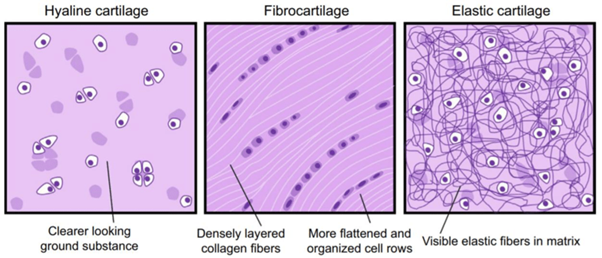
Image: Types of cartilage
Bone
Bone is the body's hardest connective tissue that helps ensure the stability of bodily structure and posture and supports the protection of internal organs. They consist of high collagen fibres and calcium, which provide strength.
Bone tissue is made up of cells called osteocytes that are surrounded by a calcified matrix made up of collagen fibres and mineral salts, primarily calcium and phosphate.
Spongy bone is found in its centre, which has been enclosed by compact bone. The spindle-shaped osteon is an element of the bone. Osteocytes can be found in the concentric layers within the matrix, lamellae within every osteon. Haversian canals are an essential channel via which capillaries and nerves flow. Lamellae cover the Haversian canals.
The spongy tissues that make up the core of the marrow cavity are called marrow. Unlike red marrow, which creates blood cells, yellow marrow stores fat.
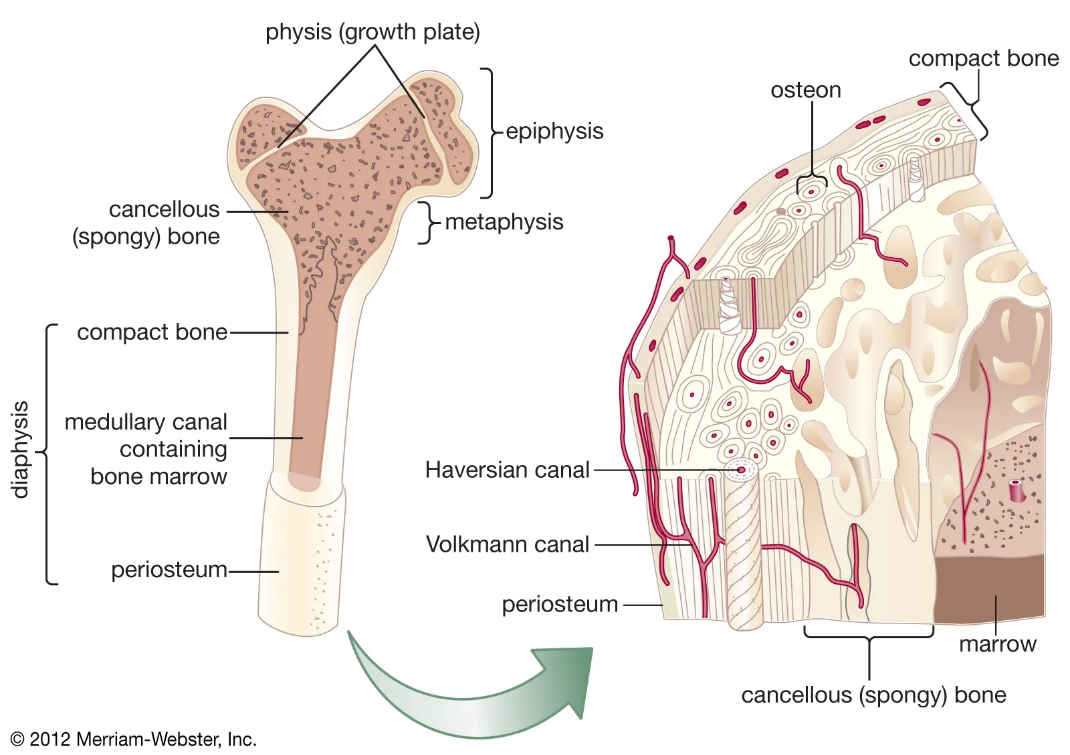
Image: Bone structure
Blood
Blood is a fluid connective tissue which flows through the entire body. It comprises blood platelets, white blood cells, and red blood cells suspended in plasma, a fluid matrix. The cells are generated in the bone marrow and initiate as stem cells before developing into various cell types. Blood is essential for carrying waste materials, nutrients, oxygen, hormones, immunological reactions, and clotting.
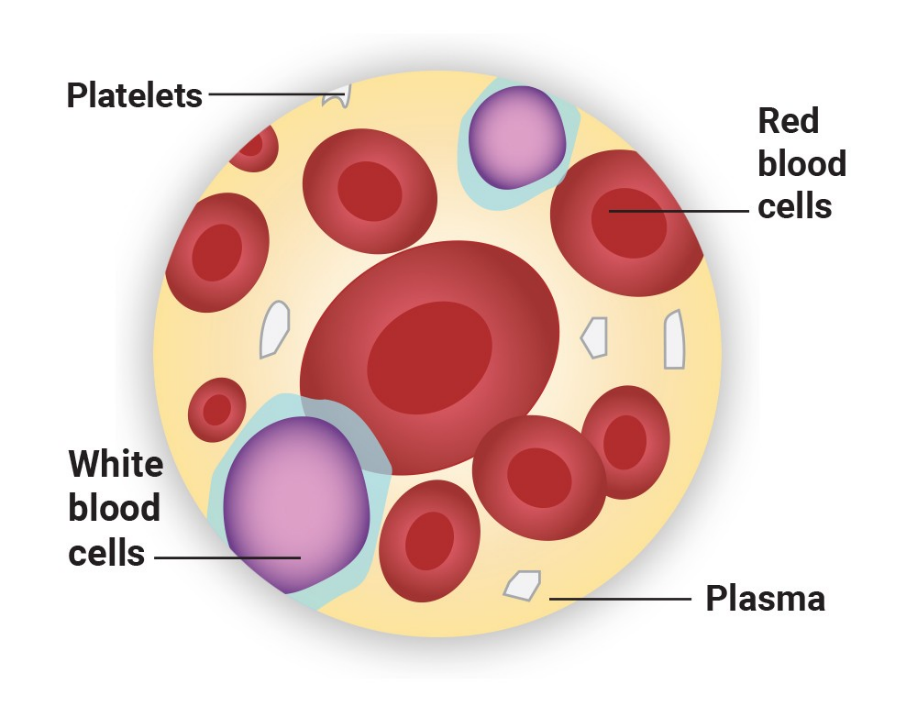
Image: Blood connective tissue
Lymphoid Tissue
Lymphoid tissue is a type of connective tissue that comprises lymph nodes, tonsils, and the spleen. It contributes significantly to the immune system by generating and harbouring immune cells that play a part in pathogen defence. The extracellular matrix of lymphoid tissue appears like connective tissue and contains scattered elastin fibres and dispersed collagen.
Functions of Connective Tissue
There are several functions of connective tissue, such as the following:
1. Connective tissue gives structural support to a wide range of organs, tissues, and structures within the body. It creates the framework that provides the body structure and stability.
2. Connective tissue joins and binds many tissues and organs together. It includes ligaments that link bones together, tendons that secure muscles to bones, and fascia that envelops and protects muscles, blood vessels, and nerves.
3. Connective tissue is essential for the protection of vital organs and structures.
4. The immune system's connective tissue contributes to the body's defence against infections and foreign substances.
5. Blood provides oxygen, nutrition, hormones, and waste materials throughout the body.
6. Connective tissue is essential for repairing and recovery of wounded tissues.
7. Adipose tissue deposits huge quantities of fat, which may be further digested and used for energy later.
8. Adipose tissue provides insulation by forming a layer beneath the skin, helping preserve the body's homeostasis.
Practice Problems
Q 1. The skeletal support present in the external part of the human ear and in the nose tip is:
A. Bone
B. Adipose tissue
C. Cartilage
D. Reticular tissue
Ans. c. Cartilage is the soft connective tissue which is present as the skeletal support in the external part of the ears and the tip of the nose.
Q 2. Which of the following is not a connective tissue fibre?
A. Elastic fibres
B. Postganglionic fibres
C. Collagen fibres
D. Reticular fibres
Ans. B. Postganglionic fibres are brain fibres which are present in the nervous system and extend from a ganglion and reach the effector organs.
Q 3. Which of the following connective tissue cells stores fat?
A. Mast cells
B. Macrophages
C. Fibroblasts
D. Adipocytes
Ans. D. Adipocytes, also known as fat cells, are found in the adipose tissue, and they have the function of storing energy in the form of fat.
FAQs
Q1. What connects two bones together?
Ans. Ligaments are fibrous connective tissues that connect two bones together and help maintain the structural integrity of our body.
Q2. What is spongy bone also known as?
Ans. Spongy bone is also known as the cancellous tissue or trabecular bone. It is characterised by its spongy, porous and honeycomb-like structure. It is generally found in the ends of long bones.
Q3. Why is blood a connective tissue?
Ans. The reasons why blood is considered as a connective tissue are: it has the same embryonic origin as the other connective tissues, and blood connects several body parts together by transporting oxygen, nutrients, hormones and metabolic wastes throughout the body.

 Call Now
 Let's Chat
 Share
Share