-
Call Now
1800-102-2727


Bioremediation

Biotechnology is a branch of science that involves the utilisation of biological systems using technology to create distinct products or processes that aid in nature. Bioremediation is one of those biotechnological processes that remove pathogens, toxins or pollutants harmful to other living forms or convert them into something useful.
Table of contents
- What is Bioremediation?
- Process of Bioremediation
- Types of Bioremediation
- Advantages of Bioremediation
- Examples of Bioremediation
- Practice Questions
- Frequently Asked Questions
What is Bioremediation?
A biotechnological process of cleaning contamination from a distinct environment is called Bioremediation. It is considered a waste management procedure involving the microorganisms eliminating or using the pollutants or toxins from contaminated areas like water, soil, air and many more.
Process of Bioremediation
Bioremediation involves the deterioration of contaminants which produce toxins using microorganisms. Thus, to deplete the contaminant, we first stimulate the growth of certain microorganisms that utilise the contaminants like solvents, pesticides, and oil as a source of nutrients and energy. The contaminants are transformed into harmless gases like carbon dioxide and a small amount of water.
A suitable temperature, nutrients and food are necessarily required for bioremediation. The process may get slow if one of the components is missing. Introducing amendments to the environment makes it possible to improve the unfavourable condition for bioremediation. Amendments include molasses, air, and vegetable oils. These amendments enhance the bacterial conditions to flourish, speeding the completion of the bioremediation process.
The process of bioremediation can be performed either in situ or ex-situ.
-
In situ bioremediation process:
When the contaminants are treated at the location of contamination itself, it is called the in situ bioremediation method.
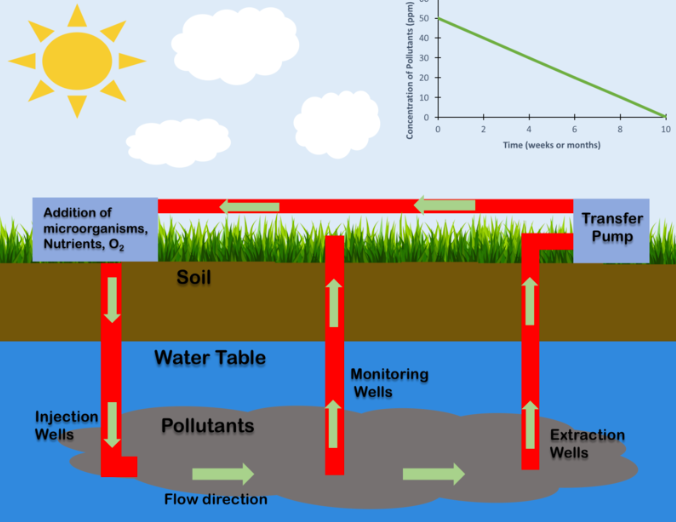
Image : In situ method of bioremediation
-
Ex situ process of bioremediation:
When the contaminants are processed and treated away from the site of contamination, called the ex-situ method of bioremediation. It is an important method when the climate is worst to sustain microbial activities or when it is tough to evenly distribute the nutrients in the dense soil. Excavating and treating the soil could significantly increase the bioremediation process;’s cost in the ex-situ method.
Factors like the size of contaminated areas, the density of soil, climate change, microbial requirements, and concentration of toxins bioremediation process may take several months to several years, either in-situ or ex-situ.
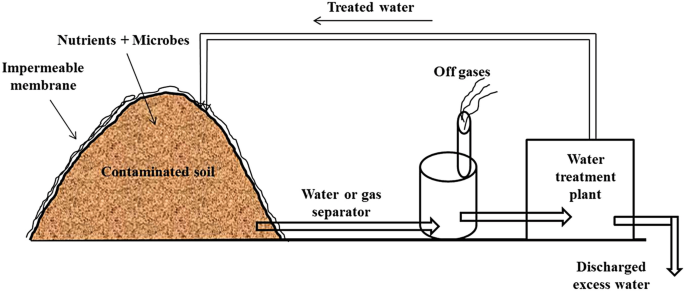
Image : Ex situ bioremediation method of soil cleansing
Types of Bioremediation
Generally, bioremediation is of three types:
1. Biostimulation
As the name implies, bacteria are triggered to start the process of bioremediation. The contaminated soil is priorly blended with specific nutrient substances and other essential components in gaseous or liquid form. It encourages microbial growth leading to the effective and prompt removal of pollutants.
2. Bioaugmentation
In certain places, microorganisms are required to extract pollutants and toxins from the same location. The process of bioaugmentation is utilised in that situation. For example, municipal wastewater. Although, there is a drawback of bioaugmentation which involves the uncontrollable growth of microbes in eliminating contaminants.
3. Intrinsic Bioremediation
The technique is most effective for the biome's soil and water as they hold a high probability of toxins and contaminants. Intrinsic bioremediation is applied for underground places like petroleum tanks. Suh locations make it difficult to detect leaks and impurities. Thus, chemicals may enter to degrade the fuel. In certain conditions, only microorganisms can purify the tanks and eliminate pollutants.
Advantages of Bioremediation
There are important benefits of bioremediation over other clean-up procedures. They are:
- It involves a natural procedure that lessens the damage to the ecosystem.
- It can also help to eliminate toxins or pollutants conveniently from underground.
- Bioremediation does not interrupt many nearby communities in comparison to other procedures.
- Since water and carbon dioxide are transformed from pollutants, bioremediation releases few harmful byproducts compared to the other clean-up techniques.
- Bioremediation is cheaper as it does not need labour or substantial equipment.
- Commonly applicable in several sites for the treatment of the environment.
Examples of Bioremediation
In 1989, an oil tanker named The Exxon Valdez crashed off the ground in Alaska. The spill was so intense that it reached approximately 11 million gallons of oil. During that time, bioremediation was gaining popularity as an effective method for cleaning oil spills. The two organisations, EPA and Exxon Mobil Corporation, started experimenting with numerous substances. Their initial results on the efficacy of bioremediation proved positive.
Between 1989 and 1990, over 2000 times the affected areas received over 100,000 pounds of fertilisers to clean up the affected areas. By mid-1992, fertilisers could break down all the oil compounds. Thus, the process was considered completed with effective results.
Practice Questions
Q1. Bioremediation employs the utilisation of
A. Living organisms
B. Non-living organisms
C. Oil
D. Nutrients
Ans. A. Living organisms.
The bioremediation process employs the utilisation of living organisms, considerably microorganisms.
Q2. Bioremediation can clean up
A. Oil spills
B. Groundwater
C. Wastewater
D. All of the above
Ans. D. All of the above.
Bioremediation can eliminate pollutants and toxins from oil spills, groundwater, wastewater and other environmental problems.
Q3. When the process of bioremediation takes place away from the site of the pollutant, it is called
A. in situ bioremediation
B. Ex-situ bioremediation
C. All of the above
D. None of the above
Ans. a. in situ bioremediation
When bioremediation takes place away from the site of the pollutant, it is called the in situ method of bioremediation.
Frequently Asked Questions
Q1. Who introduced modern bioremediation and when?
Ans. A petroleum engineer named George M. Robinson introduced the modern bioremediation technique in 1960. In a jar, he placed the pollutants with distinct microbes to assess the depletion of pollutants.
Q2. Can I use the bioremediation technique at my home?
Ans. No. The removal of pollutants needs the growth of certain microbes, which can only grow in a sterilised environment under specific conditions. Home does not provide sterilised pieces of equipment and sanitised environment.
Q3. Can microorganisms digest pollutants?
Ans. Yes. Microorganisms dissociate the pollutants and toxins and utilise them as their energy source, food and nutrients. They convert or transform harmful contaminants into non-toxic compounds.

 Call Now
 Let's Chat
 Share
Share