-
Call Now
1800-102-2727


What is Assisted Reproductive Technology: Types and Advantages

Infertility has been a growing medical issue in the World in recent years. Medical science has advanced to help families grow their families and have healthy and nourished children. Assisted reproductive technology provides treatment for both men and women. It helps them overcome infertility and have the chance to have a happy family.
Table of Contents
- What is assisted reproductive technology?
- Types of assisted reproductive technology
- Advantages of assisted reproductive technology
- Practice problems
- FAQs
What is Assisted Reproductive Technology?
The term "assisted reproductive technology" describes a range of treatments for infertility. The technology facilitates pregnancy using a variety of methods, including in vitro fertilisation, surrogacy, and other fertility medication prescribed by a doctor.
In fertile couples, ART also aids in resolving irregularities brought on by genetic problems. Couples may also consider ART if they are genetically predisposed to certain communicable diseases. ART approaches help to lower infection risks during pregnancy, parturition, and lactation.
Infertility is a challenging issue to deal with and face today. However, there are numerous ART procedures that can be used to address and resolve this issue.
Types of Assisted Reproductive Technology
There are various types of assisted reproductive technology that can be used to treat infertility and several other reproductive issues:
In Vitro Fertilisation (IVF)
IVF, often known as in vitro fertilisation, happens to be one of the finest and most popular ART methods. The majority of patients choose IVF above other ART techniques. This procedure consists of combining a woman's egg and a man's sperm in a laboratory setting. Immediately following fertilisation, the embryo is transferred and implanted into the woman's uterus.
The procedure begins by monitoring the woman's ovulatory cycle and triggering it for the purpose of extracting an egg (also known as an ova or ovum) from her ovaries. The eggs and the sperm are maintained in a liquid solution in the laboratory for the procedure of fertilisation. The fertilisation of an egg leads to the development of a zygote.
Additionally, the zygote is subjected to 2–6 days of embryo culture. Finally, to generate a healthy pregnancy, the embryo culture is transferred into the uterus of the same or a different woman.

Image : Steps of IVF
Gamete Intrafallopian Transfer (GIFT)
Gamete intrafallopian transfer (GIFT) is a procedure that resembles in vitro fertilisation (IVF), except that the gametes (egg and sperm) are administered to the woman's fallopian tubes and not to her uterus, and fertilisation occurs in the tubes and not being performed in a laboratory.
This type of assisted reproductive technology is chosen by couples who prefer a natural method so that the fertilisation and implantation procedure takes place inside the woman's body.
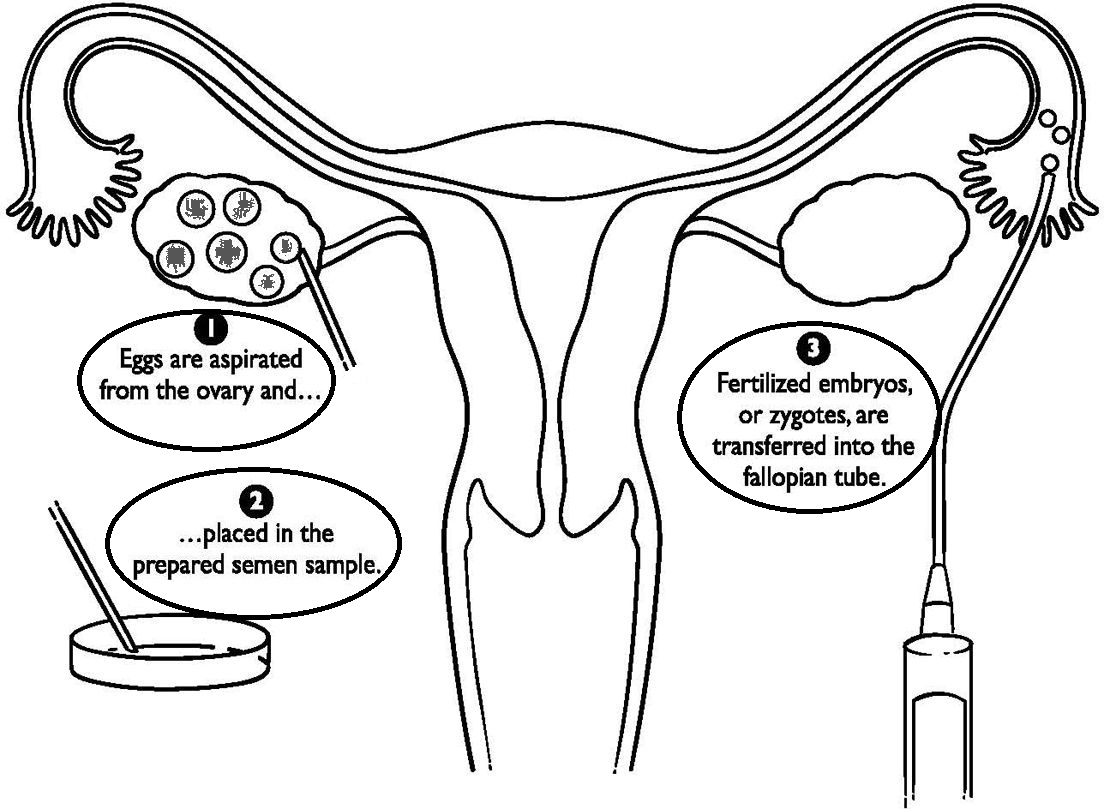
Image : Steps in GIFT
Zygote Intrafallopian Transfer (ZIFT)
Zygote intrafallopian transfer is another type of assisted reproductive technology. ZIFT is a procedure that is very comparable to IVF and embryo transfer. The key difference between the two is that, with ZIFT, the transfer of an embryo is carried out in the fallopian tubes, while in IVF, the embryo transfer is carried out in the uterus. The technique is also known as TET (tubal embryo transfer) since the embryo is transferred straight into the tubes. After 24 hours, the fertilised egg is transferred into the fallopian tube.
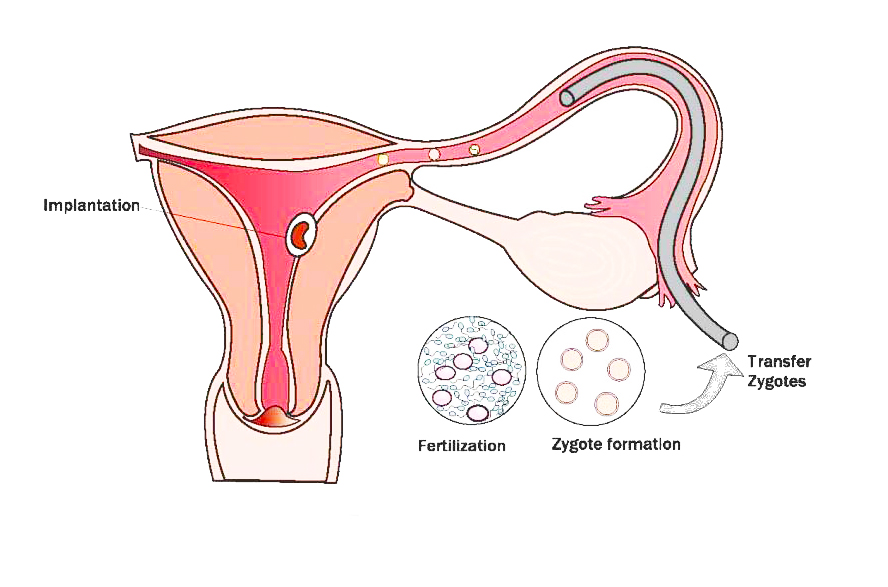
Image : The process of ZIFT
IntraCytoplasmic Sperm Injection (ICSI)
By directly injecting the sperm into the egg or ovum, it is a unique type of in vitro fertilisation treatment which helps in the development of an embryo in the male partner. A single sperm cell can be directly injected using this method into the ova's cytoplasm. With the use of this technology, gametes can be prepared and transformed into embryos that are then placed inside the uterus of the woman.
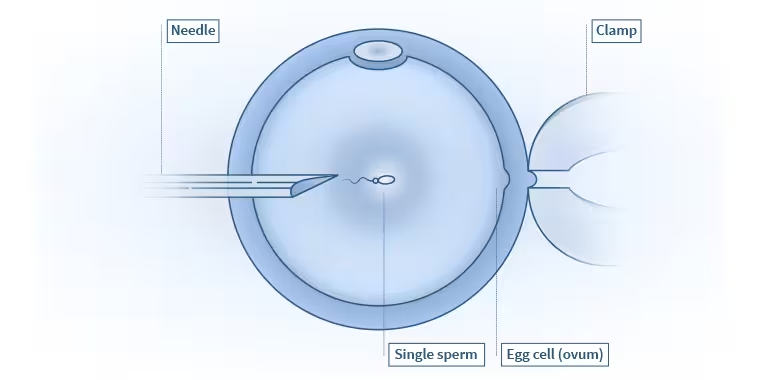
Image : The process of ICSI
Intrauterine Insemination (IUI)
Intrauterine insemination is the procedure of inserting a long, narrow tube into a woman's uterus to transfer a man's sperm. Additionally, this approach can be used together with ovulation stimulation. When the mechanisms work together, the likelihood of conception could possibly increase.
The cause of infertility has a major impact on this method's success percentage. Furthermore, if the inseminations use fresh or frozen sperm on a monthly schedule, it is feasible to improve the success percentage of this approach by almost 20%. However, the reproductive age of the woman, fertility drugs, infertility testing, and many other factors affect the increase in success rate.
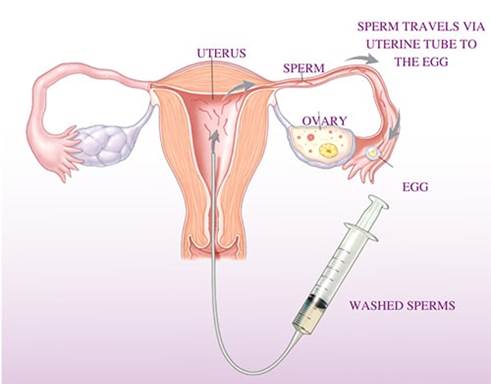
Image: The process of IUI
Surrogacy
Either the egg donor (conventional surrogate) or a different woman (gestational carrier), who does not have any biological connection to the child, can carry a pregnancy. Pregnancy can be obtained with insemination on its own or using ART if the embryo is planned to be carried by a surrogate.
The child's surrogate will be linked to them biologically. If a gestational carrier is chosen to carry the embryo, the infertile woman's eggs are extracted, fertilised using her partner's sperm, and then implanted inside the gestational carrier's uterus. There will be no genetic link between the child and the gestational carrier.
Before considering surrogacy or a gestational carrier, everyone involved can seek psychological and legal counsel.
Donor Eggs
This ART approach is used when the woman's eggs cannot be seen or there is a problem in egg development. The donor's eggs/ova are extracted. Furthermore, the embryo continues to be in an incubation state until it is transferred to the woman's uterus. If the male partner of the couple has a similar challenge, the same process can be used with donor sperm.
Advantages of Assisted Reproductive Technology
We all have learnt that the most important benefit of ART is to provide a couple with the joy of having a child. Here are some advantages of using assisted reproductive technology:
- Preimplantation genetic testing (PGT), which investigates the genetic profile of embryos, decreases miscarriage incidences in couples with identified genetic disorders and in couples who have experienced repeated miscarriages.
- With PGT, embryos can be screened for prominent genetic abnormalities like Down syndrome and cystic fibrosis, increasing the likelihood of having a healthy baby.
- With the use of assisted reproductive technologies, people can schedule and plan their pregnancies as they see fit. They may additionally preserve their eggs or embryos for later use using cryopreservation.
Practice Problems
Q1. If a woman has blocked fallopian tubes, which of the following ART could help her have a child?
A. IUI
B. IVF
C. GIFT
D. ZIFT
Ans. B. IVF is the best technique for a woman who has blocked fallopian tubes.
Q2. ART stands for
A. Artificial Reproductive Technology
B. Artificial Reproductive Technique
C. Assisted Reproductive Technology
D. Assisted Reproductive Technique
Ans. C. Assisted Reproductive Technology (ART) is used to help infertile couples have a child.
Q3. Which technique is useful for a couple if the male partner has a low sperm count?
A. Intrauterine Transfer
B. Artificial Insemination
C. Intracytoplasmic Sperm Injection
D. Gamete Intracytoplasmic Fallopian Transfer
Ans. B. Artificial Insemination is the best solution for couples with a male partner with a low sperm count.
FAQs
Q1. What are the three types of IVF?
Answer: Three types of IVF techniques involve no or minimal drugs: mild stimulation IVF, natural cycle IVF and in vitro maturation (IVM).
Q2. What was the first assisted reproductive technology?
Answer: The earliest documented medical treatment in this area of human reproduction was artificial insemination using the spouse's sperm, which occurred around the latter part of the 18th century.
Q3. What are the reasons for infertility?
Answer: There are several reasons for infertility: age, tobacco and alcohol consumption, being overweight or underweight, lifestyle issues, etc.

 Call Now
 Let's Chat
 Share
Share