
When it comes to school education in India, one name stands out: the Central Board of Secondary Education, or CBSE. If you or your child is studying in a school affiliated with this board, or if you are considering one, you likely have many questions.
What exactly is the CBSE? How is it different from other boards? What are its benefits, and how does its examination system work?
This comprehensive guide is designed to answer all your queries. We will break down everything you need to know about the CBSE board, making it simple and clear for students from Class 1 right up to the crucial Class 12.
What is the CBSE Board?
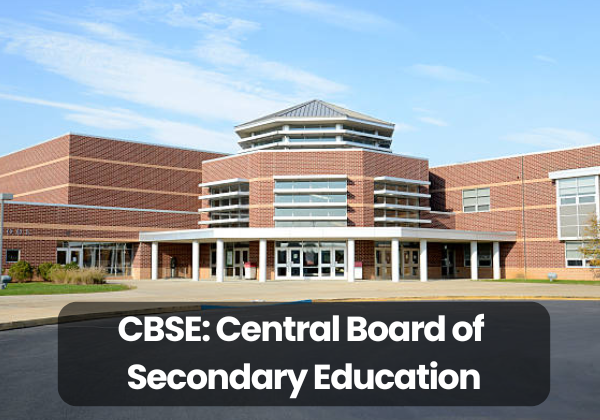
Let’s start with the basics. CBSE stands for the Central Board of Secondary Education. It is a national-level board of education in India for public and private schools, controlled and managed by the Union Government of India.
Think of it as a giant framework that ensures a standardised and consistent quality of education is delivered across thousands of schools in India and even abroad. Its primary functions include:
-
Designing the Curriculum: CBSE creates a uniform syllabus for all its affiliated schools.
-
Conducting Examinations: It is responsible for conducting the final examinations for Class 10 and Class 12.
-
Granting Recognition: It grants affiliation to schools that meet its specific infrastructure and teaching standards.
-
Recommending Textbooks: The NCERT (National Council of Educational Research and Training) books are prescribed by CBSE, ensuring all students learn from the same core material.
The CBSE Curriculum
The CBSE curriculum is renowned for being structured, scientific, and student-friendly. It is designed not just to impart bookish knowledge but to foster overall intellectual, social, and emotional growth.
Key Features of the CBSE Curriculum:
-
Well-Structured Syllabus: The syllabus is logically sequenced, building concepts from one class to the next. This creates a strong foundation, especially in core subjects like Mathematics and Science.
-
Focus on Application: CBSE encourages the application of knowledge. You’ll find that questions in exams are designed to test your understanding, not just your ability to memorise.
-
Continuous and Comprehensive Evaluation (CCE): While the strict CCE pattern has been modified, the philosophy remains. CBSE emphasizes continuous assessment through unit tests, projects, and classwork, reducing the burden of a single final exam.
-
Language Options: The board is flexible with languages. While Hindi and English are compulsory, students can often choose an additional language like Sanskrit, French, or a regional language.
Important CBSE Examinations (Class 10 & Class 12)
This is the aspect of CBSE that students are most familiar with. The board conducts two major, all-India examinations:
The Class 10 Board Exams
The Class 10 board exam is a significant milestone. It’s often the first national-level exam a student faces. The results help you choose a stream (Science, Commerce, or Humanities) for your higher secondary education (Class 11 and 12). The Class 10th syllabus is comprehensive, ensuring you have a strong grasp of all fundamental concepts.
The Class 12 Board Exams
The Class 12 board exams are arguably the most important school-level examination in India. Your score in these exams is a key determinant for admission into prestigious universities and competitive courses, especially in the fields of engineering and medicine. Performing well in CBSE Class 12 boards is the first step towards cracking exams like JEE and NEET, for which the CBSE 12th syllabus forms the base.
CBSE vs. Other Educational Boards
Parents often wonder how CBSE stacks up against State Boards or the ICSE curriculum. Here’s a simple breakdown:
-
CBSE vs. State Boards: State Boards follow a curriculum focused on the respective state’s language, culture, and history. CBSE offers a pan-India curriculum, making it easier for students who relocate frequently due to their parents’ jobs. The CBSE syllabus is also generally considered more streamlined and suited for national-level competitive exams.
-
CBSE vs. ICSE: The ICSE (Indian Certificate of Secondary Education) curriculum is often more extensive and detailed, with a strong emphasis on English and project work. CBSE, on the other hand, is more concept-oriented and application-based, with a focus on science and mathematics.
The choice depends on your child’s learning style and future goals. For students aiming for careers in engineering and medicine, CBSE provides a natural advantage.
Key Advantages of Studying in a CBSE School
Why do millions of parents choose CBSE schools? Here are the top benefits:
-
National Mobility: Since the curriculum is uniform across the country, a student can seamlessly move from a CBSE school in one state to another without any disruption in their studies.
-
Strong Foundation for Competitive Exams: The syllabi for major entrance exams like JEE (Main), NEET, and others are heavily aligned with the CBSE syllabus. This means your school preparation directly contributes to your competitive exam preparation.
-
Student-Centric Approach: The curriculum is regularly updated to be more relevant and less stressful. The focus is on holistic development, including co-scholastic areas like sports, arts, and life skills.
-
Wider Recognition: CBSE is recognized by all major universities and colleges in India and is also well-regarded internationally, simplifying the process for higher education abroad.
How Aakash Institute Complements Your CBSE Journey?
At Aakash Institute, we understand the CBSE ecosystem inside out. Our expert faculty is well-versed with the latest CBSE curriculum and examination patterns. We bridge the gap between school education and competitive exam preparation.
For CBSE students in Classes 8 to 10, we build a robust foundation. For students in Classes 11 and 12, our classroom programs are meticulously designed to simultaneously master the CBSE board syllabus and crack the JEE/NEET exams. We provide:
-
Comprehensive Study Material: Notes that cover both NCERT and advanced concepts.
-
Regular Testing: Test series that mirror the CBSE board exam pattern, helping you manage time and stress.
-
Doubt Clearing Sessions: Personalised attention to ensure no concept is left unclear.
The Central Board of Secondary Education (CBSE) is more than just a board; it’s a system designed to provide a balanced, modern, and national-level education. Its structured approach and focus on core subjects make it an excellent choice for students with aspirations in STEM fields.
Understanding how the board works is the first step to excelling within it. We hope this guide has clarified all your doubts. Remember, with the right guidance and consistent effort, whether in school or at a trusted partner like Aakash Institute, you can truly shine in your CBSE journey and beyond.
Central Board of Secondary Education FAQs
Q1. Is the CBSE syllabus tougher than State Board syllabi?
Answer: It’s not about being tougher, but about having a different focus. The CBSE syllabus is designed to be more streamlined and concept-oriented, with a strong emphasis on building a foundation in Science and Mathematics. State Boards often have a more detailed curriculum that may include more regional context and rote learning. For students aiming for national-level engineering and medical entrance exams, the CBSE syllabus provides a distinct advantage as it is closely aligned with exams like JEE and NEET.
Q2. Are NCERT books sufficient for scoring well in CBSE Board Exams?
Answer: Yes, absolutely. For the CBSE Board Exams, NCERT textbooks are the gold standard. The board question papers are primarily based on the concepts and exercises given in these books. A thorough understanding and practice of NCERT problems are the most crucial steps towards securing high marks. At Aakash, we always advise our students to master NCERT before moving on to any other reference books, as it forms the unshakeable foundation for both board exams and competitive entrance tests.
Q3. My child is in Class 10. What is the passing criteria for the CBSE Board Exam?
Answer: To pass the CBSE Class 10 Board Exam, a student must secure a minimum of 33% marks in aggregate (across all five subjects) as well as a minimum of 33% marks in each individual subject. This includes both theory and internal assessment/practical components where applicable. It’s important to perform consistently across all subjects to meet this criteria.
Q4. How does CBSE calculate the final percentage for Class 12?
Answer: The final result for CBSE Class 12 is calculated based on the performance in the final board examinations. It is a simple cumulative percentage of the marks obtained in all five main subjects. For example, if a student’s total marks across five subjects are 400 out of 500, the percentage is 80%. It’s important to note that CBSE does not include additional subjects (like a 6th subject) in the best-of-five calculation for the main percentage; the aggregate of all five primary subjects is considered.
Q5. We are relocating to another state. Will my child face any issues moving from a CBSE school to a State Board school?
Answer: While any school change requires adjustment, moving from a CBSE school to another CBSE school anywhere in India is seamless due to the uniform national curriculum. However, moving from CBSE to a State Board can be challenging. The State Board syllabus, language emphasis, and teaching methodology might differ significantly. Your child may find gaps in some topics and overlaps in others. It is highly recommended to review the new State Board’s syllabus in advance and plan for bridge classes if necessary to ensure a smooth academic transition.