• Motivational
  • Board Exams
  • Exam Prep Tips
  • Science & Tech
Thursday, February 26, 2026
  • Login
Aakash Blog
  • Aakash Home
  • MEDICAL
  • ENGINEERING
  • Aakash Web Stories
  • TOPPERS SPEAK
  • Exam
    • NEET
      • NEET 2024 Eligibility Criteria
      • NEET 2025 Dates
      • NEET 2025 Exam Pattern
      • NEET 2026 Syllabus
      • NEET 2025 Application
      • NEET 2025 Admit Card
      • NEET UG 2025 Result
      • NEET 2025 Cut Off
      • NEET 2025 FAQ
    • JEE Main
      • JEE Main 2025 Eligibility Criteria
      • JEE Main 2025 Dates
      • JEE Main 2025 Exam Pattern
      • JEE Main 2025 Syllabus
      • JEE Main 2025 Application
      • JEE Main 2025 Admit Card
      • JEE Main 2025 Counselling
    • JEE Advanced
      • JEE Advanced 2025 Eligibility Criteria
      • JEE Advanced 2025 Dates
      • JEE Advanced 2025 Application
      • JEE Advanced 2025 Syllabus
      • JEE Advanced 2025 Maths Syllabus
      • JEE Advanced 2025 Physics Syllabus
      • JEE Advanced 2024 Chemistry Syllabus
    • Olympiad
  • NCERT Solutions
  • Aakash Scholarships
    • Invictus scholarship
    • ANTHE scholarship
    • iACST Scholarship
No Result
View All Result
  • Aakash Home
  • MEDICAL
  • ENGINEERING
  • Aakash Web Stories
  • TOPPERS SPEAK
  • Exam
    • NEET
      • NEET 2024 Eligibility Criteria
      • NEET 2025 Dates
      • NEET 2025 Exam Pattern
      • NEET 2026 Syllabus
      • NEET 2025 Application
      • NEET 2025 Admit Card
      • NEET UG 2025 Result
      • NEET 2025 Cut Off
      • NEET 2025 FAQ
    • JEE Main
      • JEE Main 2025 Eligibility Criteria
      • JEE Main 2025 Dates
      • JEE Main 2025 Exam Pattern
      • JEE Main 2025 Syllabus
      • JEE Main 2025 Application
      • JEE Main 2025 Admit Card
      • JEE Main 2025 Counselling
    • JEE Advanced
      • JEE Advanced 2025 Eligibility Criteria
      • JEE Advanced 2025 Dates
      • JEE Advanced 2025 Application
      • JEE Advanced 2025 Syllabus
      • JEE Advanced 2025 Maths Syllabus
      • JEE Advanced 2025 Physics Syllabus
      • JEE Advanced 2024 Chemistry Syllabus
    • Olympiad
  • NCERT Solutions
  • Aakash Scholarships
    • Invictus scholarship
    • ANTHE scholarship
    • iACST Scholarship
No Result
View All Result
Aakash Institute Logo
No Result
View All Result

Home » News and Events » Aakash Admission Guide: How to Apply for Aakash Institute Admission?

    Talk to our expert


    Resend OTP

    By submitting up, I agree to receive all the Whatsapp communication on my registered number and Aakash terms and conditions and privacy policy

    Aakash Admission Guide: How to Apply for Aakash Institute Admission?

    India's Best Coaching for NEET (UG), IIT JEE Main, JEE Advanced, Class 6 to 12, NTSE & Other Competitive Exams. Read further to get the complete details on admission process.

    by Kriti Kohli
    7 years ago
    in News and Events
    Aakash Admission Process: Step-by-step Guide to Apply for Aakash Institute

    Aakash Admission Process: Step-by-step Guide to Apply for Aakash Institute

    ADVERTISEMENT

    The admission processes at Aakash may vary from one course to another course. Aakash offers Direct Admission option in all its courses and also offers admission on the basis of scholarship.  The students can take admission either directly on the basis of the percentage of Marks secured by them in their last school/ board exams or through the various scholarship tests offered, including the Admission Cum Scholarship Test (ACST), the Aakash National Talent Hunt Exam (ANTHE), National Eligibility  & Scholarship Test (NEST) and more.

    We provide scholarships for qualifying students from these tests to enroll in our programs. These tests allow students to assess their performance based on their ranking on the merit list, and many students that take these tests subsequently enroll in our courses. We offer admission to various Medical, Engineering, and Foundation courses through different programs like Classroom Programs, Distance Learning Programs (DLP), and Digital Learning Programs. Students who want to be trained by our academic experts for engineering entrance exams like – JEE Main and JEE Advanced, and medical entrance exam NEET can register for admission to Aakash Institute.

    Direct Admission

    1.Each course has a predefined specific percentage admission criterion. Broadly, for admission in any course, a student should fulfill the required grades or percentage (aggregate marks) in either Science & Maths in class VIII/ IX/ Class X Board/ All India Secondary School Examination (AISSE) or Physics, Chemistry, Biology (PCB)/ Physics, Chemistry, Maths (PCB) in Class XII Board/ Higher Secondary Certificate (HSC) examination. For Example:

    1. Those students who have secured minimum
    • 65% aggregate marks in PCB/PCM in Class XII or
    • 70% aggregate marks in Science & Maths in Class X Board Exam can take direct admission in Short-term courses i.e. Crash Courses/ Test Series Courses
    1. Those students who have secured minimum
    • 70% aggregate marks or B1 + B1 grades in Science & Maths in Class IX/ Class X Board Exam of Central Board of Secondary Education (CBSE), Delhi/ Indian Certificate of Secondary Education (ICSE) or any other recognized board can take direct admission in Two Year Integrate Course for Medical (NEET/AIIMS) or Engineering (JEE- Main & Advanced) as per their choice
    • 70% aggregate marks in Science and Maths in Class X/ 70% aggregate marks in PCB/ PCM in Class XII Board Exam can take direct admission in one-year Medical/ Engineering courses.

    National Eligibility & Scholarship Test (NEST)

    1. Aakash provides an opportunity to students of Class VIII, IX, X, XI, XII Studying & XII passed Science students to appear for National Eligibility & Scholarship Test (NEST) to showcase their potential.  Those students who qualify for this test are then given admission to the applied courses.
    2. The admission test also gives an opportunity to a student to outperform and get a scholarship in turn. A student who has qualified for our direct admission criteria can also appear for NEST in order to avail of the scholarship.
    3. For more details, please contact the centre counsellors.

    Documents Required for Admission:

    Students are requested to attach the following documents along with a duly filled application form at the time of admission.

    1. It is compulsory to provide a properly filled-in and signed NEST application form along with FEE in case of the offline admission process.
    2. It is mandatory to provide the correct Name, Mobile No. and Email ID with other details of the student/father/guardian in case of Online Enrollment.
    3. It is compulsory to attach a self-attested photocopy of the previous Class Mark-Sheet with 4 recent passport-size Photographs for both online or Offline admission.
    4. Fee can be paid through Netbanking (NEFT/RTGS), Paytm, or Debit/credit card.

    How to Get an Application Form?

    The Application form can be received from any of our Branches, Franchise Centres or Information Centres, or it can also be downloaded from our website: www.aakash.ac.in under the Admissions section.

    Process of Offline Enrollment

    Step 1: Fill out the Admission form carefully & paste one passport-size color photograph on the allotted space.

    Step 2: Signing on the Admission form is mandatory on the place specified as well as on the reverse of the form where Terms & Conditions are mentioned.

    Step 3: Get it checked/ verified by concerned counsellor at the Centre

    Step 4: The Counsellor will ensure that all columns are properly filled and a self-attested mark-sheet, as well as three recent passport-size color photographs, are attached to the form.

    How to Pay Fee (Offline)?

    • Pay through a Demand Draft (DD) of any Nationalized Bank: The Demand Draft is to be made in favor of Aakash Institute for Medical, Aakash IIT-JEE for Engineering, and Aakash Foundations for Foundation courses.
    • Pay through Swipe Card (Credit/Debit): You have to carry your Credit card/ Debit card and pay your (Student’s) Course fee at your respective Study Centre.
    • Receipt: Get a computer-generated receipt that does not require a signature. All receipt numbers are auto-generated and you must ensure that your receipt also bears a number on it.

    Note: Applicant must write the details of his/her payment on the back side of Demand Draft viz., Student’s name, Father’s name, Course name & Phone Number.

    How to Pay Fee (ONLINE)?

    Process of Online Registration

    STEP 1: Log on to the website: www.aakash.ac.in

    STEP 2: Select course by clicking on Classroom on top of the website

    STEP 3: Select your STREAM, CLASS & CENTRE location

    STEP 4: Click on BUY NOW. (Then it will take you to another screen of particular Course and its fee details).

    STEP 5: Click on Proceed for Payment. (It will take you to another screen for Registration. If you are a new user, click on CREATE NEW ACCOUNT; if existing user, kindly put your USERNAME & PASSWORD)

    STEP 6: Click on LOGIN (Fill the Online Application Form and submit as prescribed)

    Note:

    • The online payment may take 48 hours for processing and after the release of payment, the application would be processed.
    • Candidates will be required to submit a printed copy of the application form (duly completed in all respects along with required documents) at the time of admission, failing which their candidature shall be rejected.

    These factors will certainly make it easier for you to narrow down your choices and help you choose Aakash institute that will best suit your interests.

    We hope this blog helps answer all your queries regarding admissions. Here’s wishing good luck to all the talented young minds who seek to make it to Aakash Institute this year!

    FAQs about Aakash Admission Guide

    How much percentage is required for admission to Aakash Institute?

    70% aggregate marks in Science and Maths in Class X/ 70% aggregate marks in PCB/ PCM in Class XII Board Exam can take direct admission in one-year Medical/ Engineering courses.

    How can I get admission to Aakash?

    Admission processes at Aakash may vary from one course to another course. However, the students can take admission in Aakash through the process of Direct Admission (DA) and/or Admission cum Scholarship Test (ACST). Aakash offers Direct Admission (DA) option in all of its courses. The students can take admission either directly on the basis of the percentage of marks secured by them in their last School/Board Examinations or through ANTHE-Aakash National Talent Hunt Exam and/or ACST-Admission cum Scholarship Test and/or NEST-National Eligibility & Scholarship Test if they wish to avail the scholarship.

    Are mobile phones allowed at Aakash Institute?

    No student is allowed to carry a mobile phone/I-pod in classes or during tests. In case, if he/she carries a mobile phone in classes or tests, then it should be switched off. The Institute is not responsible for any loss/theft of mobile phones in the Institute.

    How the batches are divided in Aakash?

    Batches are divided depending on the total number of students considering the demand for a specific course and the number of batches and instructors available.

    Can I join Aakash after class 10th?

    If one is planning to take science stream after 10th and their aim is to have a head start for their preparation then yes Aakash foundation (class 10th) course is for you.

    Does Aakash provide a hostel facility?

    The Institute does not provide accommodation for its students. However, the Institute maintains an information pool of available paying guest (Pgs) / hostel facilities in and around its Branches and Centres.
    Tags: Aakash Admission GuideAakash admission processAakash instituteAdmission processadmission process in bitsHow to take admission at Aakash
    Previous Post

    AIIMS MBBS 2019 – Exam Dates, Eligibility Criteria, Application Form, Syllabus

    Next Post

    AIIMS to follow Two-stage registration Method to Reduce Application Rejection

    Related Posts

    FMGE January 2026 Result Out: Check Your Scorecard at natboard.edu.in
    News and Events

    FMGE January 2026 Result Out: Check Your Scorecard at natboard.edu.in

    Jan 30, 2026, 5:37 PM IST
    News and Events

    KCET 2025 Round 3 Seat Allotment Results Out at cetonline.karnataka.gov.in

    Sep 11, 2025, 1:41 PM IST
    News and Events

    NTA CUET UG 2025 Result (Link OUT) LIVE: Scorecards, Passing Marks, Merit List

    Jul 4, 2025, 4:01 PM IST
    NEET AIR 2025
    NEET Result

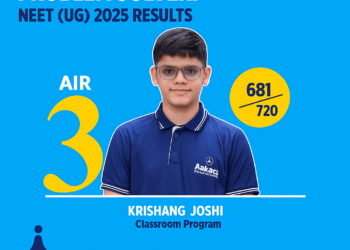
    NEET 2025 Topper’s Journey: How AIR 3 Scored 681/720: Krishang Joshi

    Jul 7, 2025, 12:41 PM IST
    NEET 2025 Physics Question Paper with Solutions
    NEET

    NEET 2025 Physics Question Paper with Solutions – Download PDF, Answer Key & Analysis

    May 7, 2025, 11:29 AM IST
    NEET 2025 Admit Card Date & Time Live Updates; How to Download @neet.nta.nic.in
    NEET

    NEET 2025 Admit Card Date & Time Live Updates; How to Download @neet.nta.nic.in

    May 1, 2025, 5:07 PM IST
    JEE Main Topper 2025
    IIT

    JEE Main 2025 Topper – AIR 6 – Shreyas Lohiya | Aakashian Achiever

    Apr 19, 2025, 10:01 AM IST
    JEE Main 2025 Topper - AIR 7 - Kushagra Baingaha
    News and Events

    JEE Main 2025 Topper – AIR 7 – Kushagra Baingaha

    Apr 19, 2025, 1:49 AM IST
    Next Post
    AIIMS Registration to happen twice

    AIIMS to follow Two-stage registration Method to Reduce Application Rejection

    Comments 94

    1. Durjan singh says:
      7 years ago

      Aadmit card cab aayega or kesa krna padega sir mujhe poora dittels chahiye sir. thainkyou

      • Aakash Institute says:
        7 years ago

        Hi Durjan Singh

        Thanks for your query. Can you please share your query in detail? You need complete details about which exam?

    2. Kannan says:
      7 years ago

      My daughter K. Shushimitha is studying at X std at Kendriya Vidyalaya, New Delhi. My daughter could not appear in the ANTHE exam as that time my father expired at Chennai. She is a bright student and secured 95% in 9th std. On enquiry with Aakash Institute, I have been informed that since my daughter did not appear in ANTHE exam, she cannot avail waiver of tuition ( which is nearly 1.65 lakhs). Alternatively, my daughter can appear in some scholarship exam (for which I can only upto waiver of Rs.60,000 only).

      As my daughter is a bright student and definitely she will bring laurels to the Institute, I request you to allow me 100% waiver of tuition fee and pay the balance fee.

      I wish to put my daughter at Medavakkam Branch, Chennai.

      • Aakash Institute says:
        7 years ago

        Hi Kannan,

        Sorry for the delay in response. At Aakash, there are a number of scholarship programs that keep happening on a regular basis. You can always look out and enroll for the perfect one. Even if your daughter has missed out ANTHE she can always register for our ACST Program (Admission Cum Scholarship Test). ACST is the right step in the right direction that helps you assess your preparation & gives you a chance to earn up to 65% scholarship.
        Please visit https://www.aakash.ac.in/admission/foundations/ to register for our Admission cum Scholarship test.

    3. Fatima Rahman says:
      7 years ago

      Acst test m apply karne k liye jis centre m admission lena hai wahi center select karna hai …ya koi nazderki center select kar sakte hain? Plz also tell about fee detail for regular class room programme for neet

      • Aakash Institute says:
        7 years ago

        Hi Fatima,

        Thanks for your valuable feedback. Yes select the centre where you need to appear for the exam. Call on our toll-free number at 7303529494 to get the complete details.

    4. ASHOK says:
      7 years ago

      Dear Sir
      Is Admission Test is required for student passed 12th cbse with 87% mark opting jee coaching at Akash.
      Pls guide me

      • Aakash Institute says:
        7 years ago

        Hi Ashok,

        Thanks for sharing your query. There are various tests that we organize at Aakash which can be useful for you. If you are interested you can opt for our repeater course to move towards your goal. For more information, kindly contact on 1800-212-1239

    5. Archana Mishra says:
      7 years ago

      Can I get admission in your institute with 165/ 300 in PCM?

      • Team @Aakash says:
        7 years ago

        Hi Archana,

        Thanks for sharing your query. With this score, you can easily get admission in the course of your choice. You can visit the nearest Aakash center to get more clarity on the same or call on our toll-free number at 1800-102-2727. Also, subscribe to our blog https://blog.aakash.ac.in/ to get all the latest updates.

    6. Basanta Ku Rath says:
      7 years ago

      My son is studying class xi in sai international,bbsr and staying in hostel.He wants to take medical coaching which you provide in sai school.He has scored aggregate 85% mark in ICSE 2019.I want fees concession for him.How can I get it.

      • Team @Aakash says:
        7 years ago

        Dear Sir/ Madam

        Thanks for writing to us. At Aakash, we help your child to get the best coaching for Medical & Engineering Entrance Exams. In order to make it convenient for students, Aakash in the league of its premium educational programs announces Aakash National Talent Hunt Examination (ANTHE) 2019. This year we are planning to conduct ANTHE as a grand event inviting applications from students of Classes VIII-XII. So, do not miss the opportunity! Register for Aakash ANTHE https://www.aakash.ac.in/anthe to avail up to 100% scholarship. Also, subscribe to our blog https://blog.aakash.ac.in/ to get more such updates.

    7. Ashok Biswal says:
      7 years ago

      Sir, My son presently studying in Std.8 in bhubaneswar. i am interested to give him best coaching for medical courses through your Bhubaneswar institute. What to do at present ?

      • Team @Aakash says:
        7 years ago

        Hi Sir,

        Thanks for sharing your query. If your son is studying in standard 8th then he is eligible to appear for Aakash ANTHE, a scholarship program that gives you a chance to avail upto 100% scholarship. To know more about the exam, kindly visit https://www.aakash.ac.in/anthe.

    8. Sri says:
      7 years ago

      Hi i want my daughter to jion in repeater course in hyderabad
      Is there any option to listen a demo class at himayathnagar center

      • Team @Aakash says:
        7 years ago

        Hi

        Thanks for sharing your query. You can enroll your daughter in our repeater course but there is no option to go for a demo class.

    9. Anonymous says:
      7 years ago

      My daughter is currently in Class 8. Can she apply for ANTHE? Because it says 8th class moving to 9th but she is still in class 8.

      my daughter dreams of being a physician. she wants to join Aakash institute in class 9. is there any courses for her?

      please reply as soon as possible.

      • Team @Aakash says:
        7 years ago

        Hi,

        Thanks for sharing your query. Aakash offers various courses for students. Since your daughter is moving to Class 9th she can opt for our four-year course. These courses will help you to start early and work hard towards achieving your goals. Also, call on our toll-free number 1800-102-2727 to know more.

    10. Shaarim Taameha says:
      7 years ago

      Sir/Ma’am
      I’m a class 12 student and I’m looking forward to appear for JEE Mains and Advance the comming year itself with my Boards Examination, can I join Aakash (central branch) at the end of this month for the preparation? And if possible what is the structure of the Fees ??

      • Team @Aakash says:
        7 years ago

        Hi Shaarim,

        Thanks for your query. There are various courses at Aakash that you can enroll for. To know more visit the nearest branch or call on our toll-free number at 1800-102-2727.

    11. Sarvochcha Sharma says:
      6 years ago

      I’m a student of class 10 and will be sitting in ANTHE on 20th OCTOBER 2019. Can I join any Branch of Aakash(for class 11 and 12, engineering) with the Scholarship obtained in ANTHE or the Scholarship will only be valid to Akash institute of my City?

      • Team @Aakash says:
        6 years ago

        Hi Sarvochcha,

        Thanks for sharing your query. You can avail ANTHE scholarship for Aakash classroom courses. You can also select the branch of your choice provided seats are available.

    12. Asmita kumari says:
      6 years ago

      I give gtse exam but I want to take admission in your faculty then could I take admission through gtse result.

      • Team @Aakash says:
        6 years ago

        Hi Asmita,

        Thanks for sharing your query with us. But you cannot become a part of our faculty simply by giving this admission test. If you are interested to be a part of the Aakash faculty then you need to follow a proper process by visiting our career section.

    13. Aditya raj says:
      6 years ago

      I am studying in class 11th with pcm and i had scored 89.4 in 10 th board so how can i join akash in class 12th and can you tell me fee structuer for 1 year cource .

      • Team @Aakash says:
        6 years ago

        Hi Aditya,

        Thanks for sharing your query. If you are a student of class 12th, there are various courses that Aakash brings in for you. You can also enroll & be a part of our scholarship programs to get a discount. To get the complete details about the various courses, fee structure etc, kindly visit your nearest Aakash Branch.

    14. siddhi says:
      6 years ago

      hello,
      I am currently studying in icse board class 10 in Meerut and want to take 11 and 12 medical batches on weekends in the south ex branch … I wanted to ask about scholarship structure and can the scholarship be provided on the basis of class 10 board result and other required details too

      • Team @Aakash says:
        6 years ago

        Hi Siddhi,

        Thanks for sharing your query with us. There are various courses at Aakash that we bring for you. In order to avail of these courses at a special discount, you can also enroll for our scholarship programs. There are various scholarship programs taking place at the moment one of them being ACST i.e is the Admission cum Scholarship Test. It helps you to assess your preparation and gives you a chance to earn up to 75% Scholarship. Apart from this, you can also enroll for Aakash National Eligibility & Scholarship Test (NEST). It gives students an opportunity to compete nationally and win Scholarships up to 90% on Tuition Fee and gain admission into Aakash.
        To know more, Kindly visit your nearest Aakash Branch or call on our toll-free number 1800-102-2727. Also, in order to get more information about our ACST Exam kindly visit https://acst.aakash.ac.in/aakash-Scholarships.

    15. Parishmita Mahanta says:
      6 years ago

      When will the courses for Neet 2021(repeaters) start??

      • Team @Aakash says:
        6 years ago

        There are regular batches starting for different courses at Aakash. Also, there are various courses for repeater students as well. To know more, kindly visit your nearest Aakash branch.

    16. Free Call Me says:
      6 years ago

      It’s an amazing post for all the online people;
      they will obtain advantage from it I am sure.

      • Team @Aakash says:
        6 years ago

        Thanks for your valuable feedback. Subscribe to our blog https://blog.aakash.ac.in/ and stay tuned for the latest updates.

    17. pavithra says:
      6 years ago

      Is aakash institute teaching icse or cbse syllabus in foundation classes?

      • Team @Aakash says:
        6 years ago

        Aakash Institute covers CBSE Syllabus in foundation classes. Also, subscribe to our blog https://blog.aakash.ac.in/ to get the latest updates.

    18. Swastika Dalui says:
      6 years ago

      I read in class X I want to take up science in XI and want to seat in joint for medical can you please advice me that when I should get admitted. My name is swastika Dalui.

      • Team @Aakash says:
        6 years ago

        Hi Swastika,

        Thanks for sharing your query with us. You can visit your nearest Aakash centre and enquire about the course you are interested in as we have regular ongoing batches.

    19. Hanumant Sunderrao Dhakane says:
      6 years ago

      My son is studying in tenth and i want him to go for medical line after twelveth so can you suggest that how can i get him admission at your valuable institute and when the admission starts and the fees structure and also suggest which course/diploma he has to take in XI th std which will be for one year or two year.

      • Team @Aakash says:
        6 years ago

        Hi Hanumant,

        Thanks for your query. We have regular classroom courses and admission for which keeps taking place. Kindly visit your nearest Aakash branch or call on our toll-free number 1800-102-2727 to know about the courses in detail.

    20. prashant agrawal says:
      6 years ago

      i am a class 10th cbse student . Can i now apply for aakash institute for class 11th , for preparation for JEE ?
      Is it not tot late ?

      • Team @Aakash says:
        6 years ago

        Hi Prashant,

        Thanks for sharing your query with us. If you are studying in Class 10 and would be moving to class 11th then you can enroll for our two-year classroom program. There are various programs that Aakash brings for you. All you need is to choose the one as per your own convenience. To know the complete details, kindly visit your nearest branch or call on our toll-free number at 1800-102-2727.

    21. Kamalika Sarkar says:
      6 years ago

      Sir..How can I prepare for aakash spark 2020 exam? Can plzz let me know?

      • Team @Aakash says:
        6 years ago

        Aakash SPARRK is a national level scholarship exam. It gives students an opportunity to compete nationally and win Scholarship up to 90% on Tuition Fee and get admission into Aakash, India’s trusted name in coaching that provides comprehensive test preparatory services for students preparing for School/Board exam, Competitive/Scholarship exams such as NTSE, Olympiads and Medical & Engineering entrance examinations.

    22. Ayushri Patro says:
      6 years ago

      I am Ayushri Patro , I have passed the aakash scholarship test in 2019 with 20% scholarship , but I have not downloaded the scholarship result from internet will I get admission in aakash ?

      • Team @Aakash says:
        6 years ago

        Hi Ayushri,

        Thanks for sharing your query with us. Kindly call on our toll-free number 1800-102-2727 or visit your nearest branch to get the complete details regarding the same.

    23. MOHAMMAD UBAID says:
      6 years ago

      Best medical coaching.

      • Team @Aakash says:
        6 years ago

        Hi Mohammad,

        Thanks for your valuable feedback. Subscribe to our blog https://blog.aakash.ac.in/ and stay tuned for the latest updates.

    24. Varsha kumari says:
      6 years ago

      Hii sir, I am varsha
      Maine abhi tenth(2019-2020) CBSE board ka exam diya hai. Can I fill enterence form for 11th and for NEET . Please guide me sir.

      • Team @Aakash says:
        6 years ago

        Hi Varsha,

        Thanks for sharing your query with us. Yes, you can fill up the entrance exam for 11th as well as for NEET. To know more, kindly call on our toll-free number 1800-102-2727 or visit your nearest Aakash branch.

    25. Rubina Shaikh says:
      6 years ago

      You take admission for even 12th std………and you even prepared the student for NEET?……….can ull plzzz tell me the Fee structure? ??

      • Team @Aakash says:
        6 years ago

        Hi Rubina,

        Thanks for sharing your query with us. Yes, if you are a student of class 12th you can take admission at Aakash. Kindly call on our toll-free number 1800-102-2727 to get the complete details.

    26. Satyam says:
      6 years ago

      I have given my 12 exams but results not declared yet so which documents should i give
      to take admission in repeaters batch for jee 2021

      • Team @Aakash says:
        6 years ago

        Hi Satyam,

        Thanks for sharing your query with us. Kindly call on our toll-free number 1800-102-2727 to get the complete details.

    27. R Asish Varma says:
      6 years ago

      I am a class 10th Andhra Pradesh State Board student . Can i now apply for aakash institute for two year Engineering Classroom Courses

      • Team @Aakash says:
        6 years ago

        Hi Asish,

        Yes, you can apply for a two-year Engineering course. Kindly call on 1800-102-2727 to know more details.

    28. Ananya says:
      6 years ago

      A friend of mine wants to join Aakash for the stream PCB but she didn’t score well so can she join Aakash?

      • Team @Aakash says:
        5 years ago

        Hi Ananya,

        Thanks for sharing your query with us. Visit http://www.aakash.ac.in or call 1800-102-2727 to get complete course details.

    29. Nilesh says:
      6 years ago

      Dear sir I am a student of class 10th. Due to a health hazard I scored a little marks of 77.6% in board exams. Am I eligible to take admission in the honoured institution.

      • Team @Aakash says:
        5 years ago

        Hi Nilesh,

        Thanks for sharing your query. You are eligible to take admission in Aakash. Visit http://www.aakash.ac.in or call 1800-102-2727 to get latest updates.

    30. Hemalata Pradhan says:
      6 years ago

      Hi sir.. A friend of mine has 47% in 12th class.. Can he take admission in aakash…Please reply sir

      • Team @Aakash says:
        5 years ago

        Hi Hemalata,

        Thanks for sharing your query with us. Call on 1800-102-2727 to get more information on the same.

    31. Sanya says:
      5 years ago

      I am sanya studying 12 karnataka state board student. And am planning to join Aakash Institute for one year NEET course is it possible to join for one year class

      • Team @Aakash says:
        5 years ago

        Hi Sanya,

        Thanks for sharing your query with us. Kindly call 1800-102-2727 to get complete details.

    32. Anushka Porwal says:
      5 years ago

      I want to take admission in aakash institute , can i get admission with scholorship if i got 92.6 percentage in class 7.
      And how much scholorship will I get .

      • Team @Aakash says:
        5 years ago

        Hi Anushka,

        Thanks for sharing your query with us. Kindly call 1800-102-2727 to get the complete details.

    33. Akash Mohan says:
      5 years ago

      Is it good marks necessary for admission in Aakash Institute, I am Akash Mohan and I am in class 10th, I didn’t focused in studies in Class 9 which caused bad results, i am Good at Study if I Focus. How may i take admission and join in Class 11th?

      • Team @Aakash says:
        5 years ago

        Hi Akash,

        Thanks for sharing your query with us. Kindly call on our toll free number 1800-102-2727 to discuss further.

    34. Pratham Gupta says:
      5 years ago

      my sister is in 8th and she was not able to give ANTHE this year and nor any other paper held till now for admission . Now is there any way by which she can get admission .

      • Team @Aakash says:
        5 years ago

        Hi Pratham,

        Thanks for sharing your query. You can appear for IACST, a national level online scholarship test for Class VII to XII. Take the online test and get an instant scholarship of up to 75%. Visit https://iacst.aakash.ac.in/iacstexam to get more details.

    35. Vanshika says:
      5 years ago

      I am a class 11 student in New Delhi and secured 95/100 in PCB(science) in class 10 boards. I wish to join Aakash for medical in class 12. Will I have to give the entrance test or can I get admission on the basis of my boards marks?

      • Team @Aakash says:
        5 years ago

        Hi Vanshika

        Thanks for sharing your query with us. You can join Aakash for medical courses. It is not mandatory to appear for the scholarship exams you can also take direct admission. These scholarship exams are just to take avail the scholarship benefits. To get further details call on our toll free number 1800-102-2727

    36. Anu Tomar says:
      5 years ago

      I am a CBSE class 10th student and I wanted to start my preparation for JEE from now only so can I enroll now

      • Team @Aakash says:
        5 years ago

        Hi Anu,

        Thanks for sharing your feedback with us. Yes, you can start preparing for JEE exam from now on. We will provide you all the study material and proper guidance. To know more call on our toll-free number 1800-102-2727 or visit http://www.aakash.ac.in. Subscribe to our blog http://www.aakash.ac.in/blog and stay tuned for the latest updates.

    37. Anu Tomar says:
      5 years ago

      I am a CBSE class 10th student and I wanted to start my preparation for JEE from now only so can I enroll now? pls provide your guidence.

      • Team @Aakash says:
        5 years ago

        Hi Anu,

        Thanks for sharing your feedback with us. Yes, you can start preparing for JEE exam from now on. We will provide you all the study material and proper guidance. To know more call on our toll-free number 1800-102-2727 or visit http://www.aakash.ac.in. Subscribe to our blog http://www.aakash.ac.in/blog and stay tuned for the latest updates.

    38. Vrushali satish umap says:
      5 years ago

      Hello, I am vrushali and i study in class X and me & my friend want to join aakash institutions ghorpadi pune next year for NEET if the pandemic vanishes! So i have many questions related to this pls try to answer all these
      1. Is hostel facility available?
      2. What are the fees for 2 years?
      3. Can we do college and this together?
      4. And if hostels are available can we bring mobile phones?
      5. How many percentage do i need to score in 10th to get admission in aakash institute for neet.

      Hope u will answer my questions:-)

      • Team @Aakash says:
        5 years ago

        Hi Vrushali,

        Thanks for sharing your query with us. You can start preparing for NEET. Hard work and dedication is what are required to achieve excellent results.
        1. Yes hotel facility is available
        2. Kindly call on our toll-free number 1800-102-2727 or email us to get the complete details
        3. Yes you can do college and Aakash coaching together
        4. Yes
        5. Kindly visit our website to get the complete details

    39. Divya says:
      5 years ago

      Sir,
      Can I get into Aakash coahing centre without physics subject. I only have my class 12th results in which I only have biology and chemistry as science subject. Because I studied in foreign. Can I still do your scholarship and get into Aakash coaching centre ?

      • Team @Aakash says:
        5 years ago

        Hi Divya,

        Thanks for sharing your query with us. Yes, you can join Aakash Institute to prepare yourself for competitive exams. Kindly call on our toll free number 1800-102-2727 to get complete details. Also, you can visit our website http://www.aakash.ac.in to get more details.

    40. Kuwar Pratap Singh says:
      5 years ago

      Hi I am Kuwar
      Where I will get admission in class11 if I join u for NEET preparation ?? Please tell me both fee structure please.

      • Team @Aakash says:
        5 years ago

        Hi Kuwar,

        Thanks for sharing your query with us. You can join Aakash to prepare for Medical Entrance Exam. Kindly call on our toll free number 1800-102-2727 to get the latest updates.

    41. Kriti says:
      5 years ago

      Hey Aakash institute,
      I am currentlu studying in class 10th and want to admit in aakash
      so can i take admission in mid july?
      using acst exam?

      • Team @Aakash says:
        5 years ago

        Hi Kriti

        Thanks for sharing your query with us. Yes, you can join Aakash after class 12th. Call on our toll-free number 1800-102-2727 to get the complete details. Also, subscribe to our blog http://www.aakash.ac.in/blog to get the latest updates.

    42. Pooja says:
      5 years ago

      Hey Aakash institute,
      I am currently studying in class 10th and want to admit in aakash
      so can i take admission in mid july?
      using acst exam?

      • Team @Aakash says:
        5 years ago

        Hi Pooja,

        Thanks for sharing your query with us. Yes, you can join Aakash after class 12th. Call on our toll-free number 1800-102-2727 to get the complete details. Also, subscribe to our blog http://www.aakash.ac.in/blog to get the latest updates.

    43. Anil Narula says:
      5 years ago

      Thanks for sharing. I will try to implement these methods on my blog. Thanks for sharing. Keep updating us.

    44. Menace says:
      5 years ago

      Hi sir,
      I want to ask you that I have got 55 marks out of 80 in maths and 78.5 out of 80 in science in my 8th class
      will i still be able to join the Akash foundation course .
      Sir please reply ASAP

      • Team @Aakash says:
        5 years ago

        Hi Menace,

        Thanks for sharing your query with us. Yes, you can definitely join Aakash to prepare for medical/engineering entrance exams. Subscribe to our blog http://www.aakash.ac.in/blog to get the latest updates.

    45. Menace says:
      5 years ago

      Hi sir,
      I got bad marks in maths because i was having a fever and wasn’t able to study sir please don’t reject for me to enroll i really wish to join akash so i can join IIT

      • Team @Aakash says:
        5 years ago

        Hi Menace,

        Thanks for sharing your query with us. Kindly call on our toll-free number 1800-102-2727 to get complete details.

    46. Y.Hasini says:
      4 years ago

      Hello my Name is Y.hasini. i am from hyderabad telangana studying in 9th class in sri chaitanya. i aim to be a doctor. i am a above average student. just a doubt from my side. what if i get a 100% in akash anthe test . you guys say that you give a full scholorship. what if i wanted to study in the harverd university would that akash scholorship support abroad?

      And when is the dates of akash anthe going to be reviled. so that i can apply

      • Team @Aakash says:
        4 years ago

        Hi Y.Hasini,

        Thanks for sharing your query with us. Aakash ANTHE is a national-level scholarship exam for Class VII to XII Students. The exam will give you a chance to win up to 100% scholarship on tuition fees. Call on our toll-free number 1800-102-2727 to get more details.

    47. Harry says:
      4 years ago

      In how many installment we can pay fees?
      For 1 year

      • Team @Aakash says:
        4 years ago

        Hi Harry,

        You can pay your fees in installments. To get the complete details kindly visit the nearest branch or call on our toll-free number 1800-102-2727.

    48. UMA CHOUDHARY says:
      4 years ago

      This is very nice post of you all the information given here is so useful and as per the requirements keep on posting like this thanks

    Latest Articles

    • CBSE Board Exam 2026: Mass Mock Online Paper Checking & OSM Update
    • Important Class 12 Maths Formulas: List with Memory Tricks
    • CBSE Class 12 Maths Calculus: Your Ultimate 40-Mark Scoring Weapon
    • A Detailed Guide to Class 12 Maths: Syllabus, Exam Pattern & Weightage
    • JEE Main Form Correction 2026 Session 2 (Feb 27) : Direct Link, Procedure, Guidelines, Fee
    • CBSE Two Board Exams in Class 10 from 2026 – Complete Details & Latest Update
    • Is Retest Allowed in NEET 2026? Complete Rules Explained
    • NEET 2026 Roll Number Seating Arrangement Rules Explained

    Top Categories

    Neet News
    Neet Application Form
    Neet Registration Date
    Neet Admit Card
    Neet Syallbus
    Neet Mock Test
    Neet Question Paper
    Neet Previous Year Question Paper
    Neet Exam
    Neet Exam Pattern
    NEET Eligibility Criteria
    Neet Exam Date
    NEET Results
    Neet Counselling
    Neet Rank & College Predictor
    Neet Answer Key
    Neet Cut Off
    JEE Main Exam 2026
    JEE Main Counselling
    JEE MAIN 2026 Exam Pattern
    JEE Main & JEE Advanced College Predictor
    JEE Advanced College Predictor
    JEE Main 2025 Cutoff
    JEE Main Admit Card 2026
    JEE Main Answer Key 2026
    JEE Main 2025 Question Paper Analysis
    JEE Main Mock Tests
    JEE Main Previous Year Question Paper
    JEE Main Eligibility Criteria 2026
    JEE Main Exam Dates 2026
    JEE Main Syllabus
    JEE Main Repeater Course
    JEE Main 2026—Important Dates and Exam Schedule
    JEE Main Result 2026
    JEE Advanced Admit Card
    Top Coaching Institute for NEET & JEE Main + Advance in India.
    Find Aakash Insstitute Near You
    Olympiad Exams
    Education Boards in India
    Engineering Entrance Exams in IndiaEngineering Entrance Exams in India
    NCERT Solutions for Class 6 to Class 12
    NCERT Book Solution
    Important Concepts
    Education Blog By Aakash Institute

    Recent Posts

    • CBSE Board Exam 2026: Mass Mock Online Paper Checking & OSM Update
    • Important Class 12 Maths Formulas: List with Memory Tricks
    • CBSE Class 12 Maths Calculus: Your Ultimate 40-Mark Scoring Weapon
    • A Detailed Guide to Class 12 Maths: Syllabus, Exam Pattern & Weightage
    • JEE Main Form Correction 2026 Session 2 (Feb 27) : Direct Link, Procedure, Guidelines, Fee

    Important Topics

    Accuracy Precision and Error in Measurement Ampere Amplitude Modulation
    Anemometer : Measurement of Wind Speed Angular Acceleration Atomic Theory
    Audible and Inaudible Sound Average Speed and Average Velocity Average Velocity
    Avogadros Number Avogadros Hypothesis Azimuthal Quantum Number
    Balanced Force Bar Magnet Biconvex Lens
    Boyles Law Buoyancy Calorimeter
    Carnot Engine Celestial Bodies Centripetal And Centrifugal Force
    Concave and Convex Lenses Concave Convex Mirrors Contact and Non Contact Force
    Controlled Thermonuclear Fusion Convection Currents Convex Lens
    Convex Mirror Destructive Interference Difference Between Conduction Convection and Radiation
    Difference Between Electric Field and Magnetic Field Difference Between Heat And Temperature Difference Between Series And Parallel Circuits
    Differences Between Acceleration And Velocity Distance and Displacement Distance Time Graph
    Electrical Force : Electric Forces and Their Types Electromagnetic Waves : Definition, Equation and Properties of Electromagnetic Waves Electromagnetism
    Electron Spin Fluid Flow : Bernoullis Equation Derivation and Fluid Mechanics Fluid Friction : Types and Factors of Fluid Friction
    Frames of Reference : Inertial and Non- Inertial Frame of Reference Frequency and Wavelength Frictional Force
    Importance of Hydrosphere Instantaneous Speed and Velocity Introduction to Motion
    Kinetic and Potential Energy Difference Law Of Conservation of Energy Layers of the Earth
    Light Energy Light Sources List of physics scientists and Their inventions
    Loudness of Sound Magnetic Dipole Moment Magnetic Field
    Non - Contact Force Non - Renewable Energy Ohms Law
    Optics P Wave Physics Symbols
    Plane Mirrors Poissons Ratio Projectile Motion
    Properties of Water : Anomalous Expansion of Water Radius of Gyration Reflection of Light
    Reflection of Waves Relative Density Resonance
    Reverberation Rolling Friction Rotation and Revolution
    Screw Gauge Semiconductors and Insulators Sliding Friction
    Speed Time Graphs Static Friction Stefan Boltzmann Law
    Stress Tension Tension Force
    Thermometer: Clinical Laboratory Thermometer Types of Rocks Types of Waves
    Uniform Motion and Non Uniform Motion Unit of Voltage Uses of Convex Lens
    Uses Of Convex Mirror Uses of Electromagnet Uses of Optical Fibre
    Wave Wavelength of Light What is Scattering of Light
    Working of Electric Bell Conventional and Non-conventional Sources of Energy Buoyant Force
    Bulk Modulus of Elasticity Bernoulli’s Principle Angular Momentum
    Difference Between Speed And Velocity Force Unit of Heat
    Difference between Distance and Displacement Simple Microscope Derivation Of Equation Of Motion
    Thermometer: Clinical & Laboratory Thermometer Difference between Concave and Convex Lens Derivation Of Lens Maker Formula
    Unit Of Pressure Velocity Uses of Plane Mirror
    Wave Theory of Light Unit of Density Unit of Light
    Unit of Force Unit of Magnetic Field Unit of wavelength
    Unit of Viscosity Uses of Electroplating Young's Modulus
    What is the Scattering of Light Lenz Law Space Wave Propagation
    Schrodinger Wave Equation Relation between Fahrenheit and Celsius Refractive Index
    Potentiometer Working Pascal Law Oscillatory Motion
    Optical Instruments Newton's Laws of Motion - First Law Modulation and Demodulation
    Magnetic Flux Lens Formula and Magnification Kaleidoscope
    Faradays Law Epsilon Naught Value Energy Bands
    Electrostatics Electroscope AC Generator
    Unit of Current Lithosphere Bending Equation Derivation
    Difference Between Pound and Kilogram Semiconductor Devices OTEC - Ocean Thermal Energy Conversion
    Hall Effect Rectilinear Propagation of Light Difference Between Ammeter and Voltmeter
    Coefficient of Linear Expansion Ampere’s Law Cyclone and Thunderstorm
    Save The Environment From Pollution Particle Nature of Light Types of DC Motor
    Uses Of Transistor Derivation of Phase Rule Unit of Humidity
    Difference between Land Breeze and Sea Breeze Relation Between Critical Angle And Refractive Index Derivation of Escape Velocity
    Unit of Speed Elastic Collision Linear Velocity
    Reversible and Irreversible Processes Relation Between Density And Volume Relation Between Group Velocity And Phase Velocity
    Thermal Stress Mirrors Conversion of Units
    Modulation Unit of Weight Stokes Law Derivation
    Kirchhoff’s Second Law Zener Diode as a Voltage Regulator Quark
    Difference Between Discovery and Invention Nuclear Fission Ultrasound
    Principle Of Calorimetry Differences Between Magma and Lava Types Of Wind
    Difference Between Work and Energy Schottky Diode Kinetic Theory Of Gases
    Thermal Properties of Materials Relation Between Kinetic Energy And Momentum Work Done By A Variable Force
    Solenoid and Toroid Difference between Light Microscope and Electron Microscope Doppler Effect Derivation
    Determine Refractive Index of a Glass Slab using a Travelling Microscope Relation between Torque and Speed Current Density
    Electric Displacement Impending Motion Latent Heat of Water
    Infrared Radiation Vector Product Of Two Vectors Alpha Decay1
    Centripetal Acceleration Newton's Third Law Of Motion Biogas Energy
    Tracing the Path of a Ray of Light Passing Through a Rectangular Glass Slab Unit of Conductivity Pulley
    Resistor LCR Circuit Difference Between Force and Pressure
    Viscosity Einstein's Explanationx Sea Breeze and Land Breeze
    Types of Lever Permeability Adiabatic Process
    Fleming's Left Hand Rule And Right Hand Rule Spherical Mirrors Heat Transfer By Convection
    Stress and Strain Displacement Current Unit of Electric Field
    Electromagnetic Induction Diode Critical Velocity
    Carbon Resistor Electric Charge Derivation of Continuity Equation
    Mach Number Coherent Sources Rigid Bodies
    Resolving Power of a Microscope and Telescope Angular Displacement Unit of Momentum
    Chandrasekhar Limit Difference Between Real Image and Virtual Image Electromagnets
    Viscosity Einstein's Explanationx Sea Breeze and Land Breeze
    Kinetic Energy Van De Graaff Generator Derivation of Kinetic Energy Formula
    Kinetics and Kinematics Frequency, Time period and Angular frequency Unit of Torque
    Capacitance Difference Between AM and FM Boltzmann’s Constant
    Planck’s Constant Laws of Reflection Drift Velocity
    Malthusian Theory of Population Stars Planets and their Difference Tensile Stress
    Joule-Thomson Effect Stefan Boltzmann Constant Compressive Stress
    Wave Function Difference Between Density and Specific Gravity Energy Stored in a Capacitor
    Determine Radius of Curvature of a Given Spherical Surface by a Spherometer Uniformly Accelerated Motion Conservative Force
    Biot Savart Law Deuteron Mass Power
    Power of a Lens Refraction and Dispersion of Light Sphygmomanometer
    Uniform Circular Motion Unit of Distance Unit of Energy
    Uses of Rectifier Unit of Inductance Law Equipartition Energy
    Periodic Motion Determination of Focal Length of Concave Mirror and Convex Mirror Optical Density
    Characteristics of a Transistor Scintillation Counter Difference Between Earthing And Grounding
    White Light Optical Fiber Relative Speed
    Unit of Work Coefficient of Viscosity Neutrons, Isotopes, Isotones And Isobars
    Electric Circuit Difference Between Scalar and Vector Difference Between Two Stroke and Four Stroke Engines
    Unit of Velocity Zener Diode Gamma Rays - Electromagnetic Spectrum
    Permittivity and Permeability Tidal Energy Difference Between Resistance and Resistivity
    Uses of Vernier Calipers Human Eye Function Shearing Stress
    Value of Gravitational Constant Value of Electron Difference Between LCD and LED
    Pinhole Camera Single Slit Diffraction Difference Between Circuit Switching and Packet Switching
    Wheatstone Bridge Unit of Resistance Banking of Road
    Scalar and vector Density of Water Cyclotron
    Unit of Specific Resistance Types of Cables Modern Physics
    Uses of Concave Mirror Magnetic Moment Law of Conservation of Momentum Derivation
    Magnet Rectilinear Motion of Particles Difference Between Mass and Weight
    Archimedes Principle Refraction of Light Types of Motors
    Types of Gears Solar Energy and Photovoltaic Cell Escape Velocity and Orbital velocity
    Natural Sources of Energy Difference Between Frequency Modulation and Amplitude Modulation Fick’s Law of Diffusion
    Faraday Electromagnetic Induction Experiment Prism Dispersion Continuous Charge Distribution
    Capacitor Types Geothermal Energy Force and Momentum
    Resistors in Series and Parallel Configuration Work and Power Raman Effect
    Difference Between Asteroid and Comet Thermal Energy Storage Types of Connectors
    Hydroelectricity and Hydropower Plant Conduction of Electricity in Liquids Linear Accelerator
    Maxwell's Relations AC Voltage Resistor Law of Conservation of Charge
    Kinetic Theory of Gases Assumptions Reflection of Light Image Centre of mass of continuous mass distribution
    Speed Velocity Motion Parameters
    Acceleration Derivation of equations of motion Vernier Caliper
    Position Time and  Velocity time graphs Motion Under Gravity Classification of animals based on levels of organisation
    Tension Screw Gauge Scalar and Vector
    Types of Vector Beats Force its unit and dimension
    Newtons First Law Of Motion Newtons second law of motion Linear Momentum
    Kinetic Friction Vector Subtraction Lamis Theorm
    Vector Addition Parallax Method Rule for Significant Figure
    Power Dimension Dimensional Analysis
    Difference between heat and temperature Measurement of Temperature Centre of mass of solid hollow sphere hemisphere
    Work Energy Theorem Potential Energy Application of Newtons second law of motion
    Newton Third Law of Motion Conservation of Mechanical Energy Free Body Diagram
    Resultant Force Vertical Circular Motion Work Done
    Coulombs Law Electric Dipole Stress
    Normal Stress and Types Moment of Inertia Waves
    Transverse Wave Connected Motion Longitudinal Strain
    Radiation Young's Modulus Convection
    Dipole Electric Field Static Friction Nuclear Fission
    Pseudo Force Nuclear Fusion Beta Decay
    Nuclear Force Alpha Decay Energy in Simple Harmonic Motion
    Lamis Theorem Velocity and Acceleration Time Graph Moment of Inertia of Rigid Bodies
    Gauss’s Law Periodic and Oscillatory Motion Newton's Law of Cooling
    Perpendicular & Parallel Axis Theorem Friction On Inclined Plane Kirchhoff's Law
    Shear Strain Gamma Decay Charge Contained Symmetrical Objects
    Parallel and Perpendicular Mirrors Photoelectric Effect Transformer
    Density Surface Tension Angle of Contact
    Longitudinal Wave Heat Capacity Centre of Gravity
    Permanent Magnets and Electromagnets Torque Einstein's Photoelectric Equation
    Progressive Wave Inclined Plane Mirrors Types of Transformers
    Velocity of Image in Plane Mirror Concave Lens Eye and its Defects
    Fluid Atmospheric and Gauge Pressure Excess Pressure Inside Bubble and Drop
    Capillarity Sound Wave Pascal's Law
    Stress Strain Curve Compound Microscope Telescopes
    Power in AC Circuit Impedance in Series LCR Circuit Mean and RMS Value
    Mirror Formula Alternating Current Magnification in Spherical Mirror
    Cells Power of Mirror and Lens Resistor Color Code
    Kirchhoff's Rule Conversion of Galvanometer to Ammeter X-rays Production
    Properties of X-Rays Continuous X-ray Thermal Expansion
    Hysteresis Curve Angular Impulse Interference of Sound
    Simple Pendulum Simple Harmonic Motion Voltmeter
    Ammeter Wheatstone Bridge Meter Bridge
    Prism Superposition of Waves Interference of Waves
    Resolution of Vectors Thermal Stress and Strain Velocity and Acceleration
    Scalar Product Vector Product Torsional Pendulum
    Combination of Resistors Electroplating Uses Scope and Excitement of Physics
    Conduction What is Science Speed of Traveling Wave
    Distance Formula Kinematics of Circular Motion Non Uniform Motion
    Gamma Rays Radio Waves Displacement
    Electromagnetic Spectrum Maxwell’s Equations  
    118 Elements and Their Symbols and Atomic Numbers Acetone Acid And Base Difference
    Acids Bases and Salts Actinides Addition Reaction
    Adsorption Chromatography Aldol Condensation Alkali Metals
    Ammonium Chloride Applications of Redox Reactions Argon
    Arrhenius Equation Rate Constant And Temperature Atomic Number Mass Number Aufbau Principle
    Aufbau Principle, Paulis Exclusion Principle and Hands Rule Bakelite: Structure and Uses Benzene Reactions
    Benzoic Acid - Structure and Properties Biodegradable and Non Biodegradable Calcium Oxide
    Cathode Ray Experiment Charles Law Chemical And Its Composition
    Chemical Formula of Common Compounds Classification Of Carbohydrates and Its Structure Classification of Organic Compounds
    Coefficient of Viscosity - Definition, Formula and Example Colligative Properties beRelative Lowering of Vapour Pressure Colloidal Solution
    Components of Air Condensation Conformation
    Cracking Meaning Crystallization Decantation
    Decomposition Reaction Dehydration of Alcohols Difference Between Alkali and Base
    Difference Between Atom And Ion Difference Between Atom and Molecule Difference Between CNG and LPG
    Difference between Compound and Mixture Difference Between Element And Compound Difference Between Exothermic and Endothermic Reactions
    Difference Between Mixture and Solution Difference Between Molecule and Compounds Difference Between Organic And Inorganic Compounds
    Difference between Physical and Chemical Change Difference between Vapor and Gas Disaccharides
    Discovery of Protons and Neutrons Distillation Effects of Burning Fossil Fuels
    Electromeric Effect Electron Configuration Electronic Configuration of First 30 Elements
    Electronic Configuration of Iron Electroplating Process Endothermic Reaction
    Enthalpy Change Enzyme Catalysis Ester
    Ester Hydrolysis Ethanoic Acid Exothermic Reaction
    Filtration Fuel Types Functions of Nucleic Acids
    Glycerin Glycine Structure Glycogen
    Gravimetric Analysis Group 17 Trends Properties Heat Capacity Cp Cv Relation
    Heavy Water Homogeneous Mixture and Heterogeneous Mixture Hunds Rule
    Hybridization Hydrochloric Acid Hydrogen Peroxide
    Introduction: Importance of Forest IR Spectroscopy Iron
    Krypton Lewis Dot Structures Metallic Bonds
    Metals and Nonmetals Methanol Mineral Resources
    Mixtures Modern Periodic Table and Its Significance Mole Concept
    Monosaccharides NaHCO3 Natural Polymers
    Neutralization Reaction Non Metals Oxalic Acid
    Oxygen Periodic Table Elements Periodic Trends in Properties of Elements
    Pesticides Phenol Preparation Phosphoric Acid
    Physical and Chemical Properties of Carbon Physical And Chemical Properties of Water Physical Change and Chemical Change
    Polarity Polymers Uses Polyvinyl Alcohol
    Positron Potassium Potassium Dichromate - Formula, Properties and Uses
    Potassium Permanganate Precipitation Reaction Preparation of Benzene
    Preparation Properties and uses of Sodium Chloride Properties of Boron Family Properties of Solution
    Redox Titration Relation Between Normality And Molarity Rusting Iron Prevention
    Rutherford Atomic Model Rutherford Atomic Model Shapes of Molecules Vsepr Theory
    Shapes of Orbitals Sieving SilkWorm - Life Cycle of Silkworm, Diagram
    Silver Nitrate Soaps And Detergents Sodium Hydroxide
    Structure of Benzene Sublimation Synthetic Fibres And Natural Fibres
    Synthetic Polymers Tollens Test Toluene
    Transition Metals Tyndall Effect Types of Organic Reactions
    Types of Solutions Types of Titration - Acid Base Titration Unsaturated Solutions
    Ununoctium Ununpentium Uses of Acetone
    Uses of Air Uses of Bauxite Uses of Carboxylic Acid
    Uses of Coal Uses of Ethers Health In Care Industry Uses of Formaldehyde
    Uses of Graphite Uses of Methanol and Ethanol Uses of Minerals
    Uses Of Nitric Acid Uses of Phenol Uses of Propanol
    Uses of Sulfuric Acid Uses of Water Valence Bond Theory
    Volumetric Analysis Waste Water Cycle Process
    What is Dipole Moment? What is Eutrophication? What is Metallurgy?
    Wurtz Reaction Mohr’s Salt Titration with KMnO4 Gattermann Reaction
    Benzene Brown Ring Test Calcium Carbonate
    Cotton and its Various Uses Difference between Petrol and Diesel Engine Difference between Sigma and Pi Bond
    Element-Manganese (Mn) Friedel Crafts Reaction Hofmann Elimination
    Isomerism Laws of Chemical Combination Mannich Reaction
    Methods of separation Molisch’s Test Name Reactions
    NMR Spectroscopy Non – Aqueous Titration Ozonolysis Mechanism – Ozonolysis of Alkenes and Alkynes
    Periodic Classification of Elements Pinacol Pinacolone Rearrangement Planck’s Quantum Theory
    Pseudo First Order Reaction Rosenmund Reduction Mechanism Salt Analysis
    Saponification Science in Everyday life and Its Importance Sericulture: Rearing of Silkworm to Produce Silk
    Spectrophotometer Principle Zone Refining  
    Reactivity Series Difference between isotropic and anisotropic Introduction to p-Block elements
    Plant fibres Inert Gases: Uses Benzoin Condensation
    Difference between primary cell and secondary cell Partition Chromatography Applications of colloids
    Displacement Reactions Handpicking Biogas: Uses of Biogas
    Acid Rain Types of Chemical Reactions SN2 Reaction Mechanism
    Complexometric Titration markovnikov rule Kohlrausch Law
    Electrode Valency Chart Order of Reaction
    Band Theory Difference Between Rusting and Corrosion Potentiometric Titration
    Frenkel Defect Deforestation Stephen Reaction Mechanism
    Gattermann – Koch Reaction Mechanism Electronegativity Industrial Waste: Types
    Ethylene Charge to Mass Ratio of an Electron Fehling Solution
    Photochemical Reactions Difference Between Endpoint and Equivalence Point Second Order Reaction
    Etard Reaction Forms of water Preparation of Acetanilide
    Metallic Minerals and Non-Metallic Minerals Ferric Chloride Henry's Law
    Preparation of Mohr's salt Schottky Defect Claisen rearrangement
    Calcium sulphate Sodium carbonate Rubber
    Ethyl acetate Conductometric Titration Resorcinol
    Difference Between Evaporation and Condensation States of Matter Boric Acid
    Types of Minerals Finkelstein Reaction Electronegativity Chart
    Difference between Solid, Liquid and Gas in tabular form Aromaticity Drawbacks of Rutherford's Atomic Model
    Thermosetting Polymers Preparation of Alkanes Examples of Bases
    Suzuki Coupling Reaction Standard Electrode Potential Disadvantages of Plastics
    Reducing Agent Van't Hoff Factor Hard Water and Soft Water
    Organometallic compounds Gay Lussac's Law Slaked Lime
    Borax Tetravalency of Carbon Boyle's Law
    Ellingham Diagram Crystal Defects : Point Defects HVZ Reaction (Hell-Volhard-Zelinsky Reaction)
    Classification of Drugs Preparation of Sulfuric Acid Lucas test
    Xenon Difluoride Bravais Lattice Classification of Oxides
    Elimination Reaction preparation of polythene, Teflon and polyacrylonitrile Difference between cations and anions
    Uses of Limestone Fructose Azeotropes
    Lewis Acid and Base Emulsification Dielectric properties of solids
    Zwitterion Birch Reduction Mechanism Oxidation and Reduction
    Electrophilic Substitution Reaction Suspensions Aromatic Compounds
    Ores and Minerals Adsorption theory of heterogeneous catalysis Wittig Reaction
    Difference between evaporation and boiling Intensive And Extensive Properties Of Matter Electronic Configuration of Group 16 Elements
    Difference Between Elements and Atoms Sodium Oxide Gypsum
    Difference Between Alloy and Composite Chemical Equations Thorium
    Lead Acid Battery Isotopes of Hydrogen Significant Figure Rules
    Electrophilic Addition Reactions Of Alkenes Isothermal Expansion of an Ideal Gas Potassium Chloride - KCl
    Aluminum Oxide Difference Between Acetic Acid and Glacial Acetic Acid Difference Between Polar and Nonpolar
    Difference Between Baking Powder and Baking Soda Test for Phenolic group To prepare colloidal solution of starch
    Uses of Mica Pi Bonds Potassium Chlorate
    Schmidt Reaction High density Polyethylene Huckel's Rule
    Discovery of Proton Aluminium Ore: Extraction of Aluminium Benzene Hexachloride
    Caustic Potash or Potasium Hydroxide Electromagnetic Radiation - Wave Nature Atomic Number and Mass Number, Isotopes and Isobars
    Preparation of Potash Alum Beckmann Rearrangement Heterogeneous Equilibrium
    Butane Factors Affecting Electrolytic Conductance Scandium
    Homogeneous Equilibrium Phenols Nomenclcature Galvanic Corrosion
    Chlorine Trifluoride Robinson Annulation Copper
    Pyridine Silver Carbonate Harmful Effects of Radiation
    Water Electrolytes and Nonelectrolytes Rules for filling Electrons in Orbitals
    Purification of Colloids Instantaneous and Average Rate of Reaction Density
    Hydrogen Hydrogen Peroxide Strength of Solution
    Chromatography Phosphorus Phosphorus Halides
    Hydrogen Glucose Electrolysis
    Discovery of Electron Catalysis Receptors as Drug Target
    Nutrition Respiration & Reproduction in Eubacteria Charge of Electron Osmosis
    Acidic Buffer Solution Basic Buffer Solution Covalent Bond
    Voids    
    Additive and Multiplicative Identity Adjacent and Vertical Angles Algebra Symbols
    Area Of Hemisphere Area Of Hollow Cylinder Area of Pentagon
    Area of Rectangle Bodmas Rule Branches of Mathematics
    Chance and Probability Circumference of a Circle Congruence Of Triangles
    Construction of Angles Cuboid and Cube Decimals In Daily Life
    Divisibility Rules Dot Product of Two Vectors Empirical Probability
    Equivalent Fractions Even Odd Prime Composite Numbers Frequency Polygons
    Geometric Tools Integers Lines
    Maths Project Number System Numeral System
    Odd Numbers Perfect Cube Of Numbers Perfect Numbers
    Perpendicular Bisector Precision Prime Factorization of Hcf And Lcm
    Prime Numbers Probability and Statistics Symbols Quadrilateral
    Reflection Symmetry Roman Numerals Set Theory Symbols
    Surface Area and Volume Three Dimensional Shapes Triangular Numbers
    Trigonometry Trigonometry Table Two Lines Symmetry
    Types of Angles Value of Pi Variables And Constants In Algebraic Expressions
    Z Score Table Addition Table Algebraic Expression
    Algebraic Identities Apollonius Theorem Applications of Trigonometry
    Area of a Sphere Area of Equilateral Triangle Area of Isosceles Triangle
    Area of Quadrilateral Area of Trapezium Area of Triangle
    Area Segment Circle Ascending Order Average and Mean
    Basic Proportionality Theorem Bisection Method Centroid
    Circumcenter of a Triangle Cm to inch converter Co-Prime Numbers
    Compound Interest Coordinate Geometry Correlation
    Cos 30 Degrees Cube Cylinder
    Difference Between Fraction And Rational Numbers Difference Between Percentage and Percentile Differential Equations
    Differentiation Formulas Even Numbers Factorisation
    Frequency Distribution Table Statistics Graphical Representation HCF and LCM
    Height and Distance Horizontal Line How to Find the Percentage of Marks?
    Math Tricks Maths Equations Mensuration
    Obtuse Angled Triangle Odd Numbers Onto Function
    Pentagon Pentagonal Prism Perimeter of Square
    Perimeter of Triangle Probability Profit and Loss
    Properties of a Triangle Properties of Isosceles Triangle Rational Numbers
    Rational Numbers and Their Properties Real Number Relation between Mean, Median and Mode
    Rhombus Rotation Semicircle
    Sin 30 Degrees Solving Linear Equations Square Root
    Statistics Supplementary Angles Surface Area of a Hemisphere
    Surface Area of a Sphere Surface Areas and Volume Symmetric and Skew Symmetric Matrix
    Tables of 2 to 30 The volume of a Cylinder Trapezium
    Triangular Prism Trigonometric Ratios Types of Triangles
    Types of Vectors Value of Log Infinity Value of Root 3
    Value of Root 5 Vertical Line Volume of a Cube
    Volume of Hemisphere Whole numbers Algebraic Identities
    Differentiation and Integration Greater Than and Less Than Symbols Laplace Transform
    Linear Graph Trigonometric Ratios Orthocenter
    Orthogonal Matrix Square Root from 1 to 25 Log 0 Value
    Altitude of a Triangle Binary Subtraction Cayley Hamilton Theorem
    Diagonal Matrix Difference Between Constants and Variables Difference Between Linear and Nonlinear Equations
    Geometric Progression Sum of GP Like Fractions Unlike Fractions Difference between Place Value and Face Value
    Sin 60 Degrees Singular Matrix Value of Cos 120
    Antilog Table Consistent And Inconsistent Systems Cube Root of Unity
    Direct and Inverse Proportion Euclid Division Lemma Extrapolation
    Frustum of Cone Greater Than Symbol Elementary Transformation of Matrix
    Integration Limits and Derivatives Methods of Integration
    Polynomial Rational Numbers Between Two Rational Numbers Relations and Functions
    Relation and Its Types Right Circular Cone Sequence and Series
    Square Root Of 4 Square Root Of 5 Square Root Of 7
    Statements in Mathematical Reasoning Trapezoids Binary Multiplication
    Definite Integral Square Root of 1 Value of sin 15
    Continuity and Differentiability Axiomatic Definition of Probability Area Of Quadrant
    Rectangle Operations on Rational Numbers Pascals Triangle
    Acute Angled Triangle Angle of Elevation Angle Sum Property of a Triangle
    Tables of 2 to 30 The volume of a Cylinder Trapezium
    Area of a Scalene Triangle Centroid of a Triangle Heptagon
    Octagon Permutation and Combination Scalene Triangle
    Similar Triangles Surface Area of Cube Surface Area of Cylinder
    Volume of Cone Volume of Cuboid Value of Log 1
    Decimal Number System Conversion of Units What is Proper Fraction?
    Rolle's Theorem Vertical Angles Trigonometry Values
    Sec 0 Greatest Integer Function Mean Deviation & Frequency Distribution
    Concentric Circles Symmetry Variance
    Laws of Exponents Length of Tangent Alternative Hypothesis
    Control Charts Straight Angle LCM Of Two Numbers
    Bivariate Analysis Surds Square Root of 10
    Cos 90 Value Prime Numbers and Composite Numbers Decimal to Binary
    Difference Between Square & Rhombus Symmetric Matrix Relation Between Inch and cm
    Sin 45 Value Divisibility Rules For 13 Profit and Loss Percentage
    Linear Pair Of Angles Line Segment Rational and Irrational Numbers
    Euclid Geometry Sec 30 Complimentary and Suplementary Angles
    Square root and Cube Root LCM Nature of Roots of a Quadratic Equation
    Vertices, Faces and Edges Quadrilateral Angle Sum Property Geometry Symbols
    Isosceles Triangle Numbers in Words Angle Between Two Planes
    Complex Numbers Addition and Subtraction of Integers Natural Numbers and Whole Numbers
    Is 91 a Prime Number? Difference Between Cube and Cuboid Distributive Property
    Difference Between Rhombus and Parallelogram Skip Counting Trigonometry Functions of Sum and Difference of Angles
    Logarithm Table Vector And Scalar Quantities Data Organization
    PEMDAS Secant of a Circle Vector Space
    Angle Bisector Theorem Mutually Exclusive Events Statistical Inference
    Difference Between Area and Volume How to Find Prime Numbers? 3D Shapes
    Division of Line Segment Binary Addition Ordinate
    Line Graph Boolean Algebra Latus Rectum of Conic Section
    Differential Equation And It's Types Involute Similarity of Triangles
    Simple Equations Application Types of Polygon Equation of A Circle
    Law of Tangents Data Sets Binary to Octal Conversion
    Rational Numbers on a Number Line Cross Section Construction of Triangle
    Circles Factors of 36 Probability Distribution
    Difference Between Parametric and Non-Parametric Test Number Patterns Whole Numbers Parts of Circle
    Square Root of 9 Parallel Lines Oblique Sketch
    Direct Proportion Cosine Rules Construction of Quadrilaterals
    Right Circular Cylinder Hexadecimal number system Remainder Theorem
    Volume of a Prism Missing Numbers Sec 90
    Derivatives Multiple of 9 Metric System of Measurement
    Parallelogram, Trapezium and Kite Cumulative Frequency Distribution Ratio to Percentage
    Factors of 98 Total Probability Theorem Commutative Property
    Basic Set Theory Difference Between Area and Surface Area Identity Function
    Geometric Distribution Combination Sum of Squares
    Factors of 25 Triangle Inequality Complement of a Set
    Factor of 105 Arc Categorical Data
    Construction of a Rhombus Hexadecimal to Octal Conversion Decimal Expansion of Rational Numbers
    Distance Between Two Points Estimation of Numbers Multiplication Theorem of Probability
    Properties of Definite Integrals Right Angle Triangle Theorem Section Formula in 3 Dimension
    Solids Trigonometric Equations Variance and Standard Deviation
    Disjoint Set Application of Linear Equations Area and Perimeter
    Factors of 91 Concave Polygon Factors of 42
    General Equation of a Line Factors of 100 Factors of a Number
    Multiplicative Inverse Linear Differential Equations Inverse Cosine
    Comparing Quantities using Percentage Fractional Part Function Definition of Signum function
    Trigonometric Functions Ellipse Integration By Parts
    Sets Matrix Types of Sets
    Bijective Functions Algebra of Functions Composite Functions
    Binary Operations Domain Codomain & Range Functions Parametric Equation of a Circle
    Venn Diagram Tangent to a Circle Binomial Theorem
    L'Hospital Rule Relations Operation on Sets
    Particular Cases of a Circle Terms Related to an Ellipse Equality of Matrices
    Reflexive, Symmetric & Equivalence Relation Types of Functions Matrix Multiplication
    Tangents to an Ellipse Inverse Trigonometric Functions  
    Active Transport Adaptive radiation evolution Aerobic and Anaerobic Respiration
    Agricultural Implements Algae Alimentary Canal Anatomy
    Angiosperms And Gymnosperms Difference Animal Cell Apiculture Beekeeping
    Apoplast Asexual Reproduction Animals Autotrophic Nutrition
    Biodiversity Biotic and Abiotic Bryophyta
    Budding Camouflage Cattle Farming Animal Husbandry
    Cell Structure and Function Cell Wall and Cell Membrane Cells
    Chloroplasts Chromatin Classification of Animal Kingdom
    Composition of Lymph Conduction of Nerve Impulse Cyclic and Non Cyclic 
    Cyclic Photophosphorylation Cytoplasm Structure Function Difference Between Active and Passive Transport
    Difference Between Archaea And Bacteria Difference Between Blood And Lymphth Difference Between Cerebellum And Cerebrum
    Difference Between Chromosome And Chromatid Difference Between Diffusion and Osmosis Difference Between DNA and RNA
    Difference Between Haploid And Diploid Difference Between Plant Cell and Animal Cell Difference between Renewable and Non Renewable Resources
    Difference Between Unicellular And Multicellular Organisms Difference Between Vertebrates and Invertebrates Difference between Voluntary and Involuntary Muscles
    Difference Between Xylem and Phloem Different Types Ecological Pyramids Diffusion - Means of Transport
    Disadvantages of Dams Ecology Endemic Species
    Endocrine System Ductless Glands Energy Flow In Ecosystem Excretion and Its Importance
    Food Production Food Web Fragmentation
    Gemmules Gibberellins Grassland Adaptations
    Guttation Gymnosperms Harmful Microorganisms
    Homeostasis Human Body Anatomy Human Heart
    Invertebrates Kingdom Monera Protista Fungi Law of Segregation and Law of Dominance
    Life process Light-dependent Reactions Lipids
    Living Things Macromolecule Meiosis 1 Stages and Process
    Mendelian Disorders Microbodies Modern Synthetic Theory of Evolution
    Monera Nephron Function Renal Tubules Nuclear Membrane
    Nucleolus Nucleus Our Environment
    Parasitism Parts of Plants Passive Transport
    Plant Cell Plant Kingdom Plantae Plant Respiration
    Plants Plastids Protista
    Red Data Book Reproductive System of Earthworm Ribosomes
    Scientific Names of Animals and Plants Seed germination Sensory Perception
    Snail Skeletal System Spermatogenesis Structure Of Eye
    Taxonomic Hierarchy Taxonomy Algae
    Thallophyte Types of Soil Vacuoles
    What Is Adaptation Agricultural Practices Animal Kingdom
    Alimentary Canal Coelenterata Conservation of Forest and Wildlife
    Difference between Endosmosis and Exosmosis Difference between Afforestation and Deforestation Difference between Algae and Fungi
    Difference between Cereals and Pulses Difference Between Fragmentation and Regeneration Difference Between Neurosis and Psychosis
    Difference Between Nucleotide and Nucleoside Difference Between Sea and Ocean Difference Between Turtles and Tortoises
    Difference Between Wildlife Sanctuary and National Park Modes of Plant Reproduction Ecological Pyramid and Its Types
    Double Fertilization in Angiosperms Ecosystem Enzymes
    Fertilisation in Plants Five Kingdoms Classification Flower
    Ganongs Potometer Health and Hygiene Herbivores and Carnivores
    Heterotrophic Nutrition Human Digestive System Vertebrates and Invertebrates
    Morphology of Leaves Modifications of Root Phylum Aschelminthes
    Diffusion Osmosis Prokaryotic Cells
    Reproduction Flora And Fauna Overview of Food Chain
    Difference Between Rabi And Kharif Crops Vegetative Propagation Angiosperms Characteristics
    Soil Profile Types of Pollution Human Excretory System
    Sense Organs Rainwater Harvesting Prokaryotic And Eukaryotic Cells
    Living And Non Living Things The Nucleus Irrigation
    Endoplasmic Reticulum Difference Between Data And Information Mitochondria
    Nitrogen Cycle Diagram of Animal Cell Meristematic Tissue
    Law of Segregation Law of Dominance Eukaryotic Cells Food Sources Animal Plant Products
    Photosynthesis Respiration Ozone Layer Depletion
    Kingdom Fungi Aerobic Anaerobic Respiration Cell Organelles
    Peristalsis Bacteria Oogenesis
    Leaves Morphology Types Modification Mitosis and Meiosis Dna Structure
    How Do Organisms Reproduce Diagram of Stomata Monohybrid Cross Inheritance One Gene
    Mechanism of Breathing Soil Erosion Plasmolysis
    Urine Formation Osmoregulation Porifera Flagella
    Amoeba Aerobic Respiration Pteridophyta
    Arteries And Veins Difference Reflex Action Stomata
    Cell Wall Diagram of Neuron A Guide To Composition And Function Of Lymph
    Difference Between Ligaments And Tendons Insectivorous Plants Nutrition Modes Living Organisms
    Mendel Laws Of Inheritance Nutrition In Amoeba Calorific Value
    Air Pollution Control Fertilization In Plants Life Processes
    Binary Fission Omnivores Saprophytes
    Asexual Reproduction Deficiency Diseases Light Reaction Vs Dark Reaction
    Global Warming Wildlife Sanctuary Viviparous Oviparous Embryo Development
    Glycolysis Food Preservation Methods Food Poisoning Crops
    Biofertilizers Biodiversity Conservation Difference Between Endocrine And Exocrine Glands
    Greenhouse Effect Gases Diagram Of Digestive System Crop Production And Management
    Types Of Pollination Introduction and Characteristics of Living Beings Meristematic Cells
    Taxonomical Aids _Flora, Manual, Monograph And Catalogues Types of leaves structure of skeletal muscle
    spirometry human respiratory system herbarium
    dinoflagellates general characters and structure of leaf halophiles and their features
    Exchange of Gases Simple Permanent tissue Morphology of root and its types
    Complex permanent tissues Regions of Root History of classification and its need
    Breathing And Exchange Of Gases Transport of Gases Regulation of Respiration
    Disorders of Respiratory System Interaction of Haemoglobin with Other Gases Amniocentesis
    Anatomy of flowering plants ASSISTED REPRODUCTIVE TECHNOLOGIES (ARTs) Meristematic Cells
    Phloems Population explosion Reproductive Health
    RCH (Reproductive and Child Health Care) Medical termination of Pregnancy (MTP) Plant kingdom
    Biological Systems of Classification & Branches of Taxonomy Pteridophytes Gymnosperms
    Angiosperms Life cycle Patterns Anatomy of Roots
    Contraceptives Anatomy of stem Algae
    Bryophytes Tissues and its types STDs (Sexually Transmitted Diseases)
    Cell - The Basic Unit of Life & its Historical background Cell theory and its modification An Overview of Cell
    Secondary growth in dicot stem Tissue system and types Prokaryotic (Bacterial) cell
    Ribosomes Eukaryotic cell Cell: The basic unit of life
    Cytoskeleton Centrosome and Centriole Cilia and flagella
    Nucleus Chromosomes Evolution
    Movement and Locomotion Human Reproduction Absorption and Translocation of Solutes
    Soil as a reservoir of Essential Elements LOCOMOTION AND MOVEMENT Mechanism of Muscle Contraction
    Morphology in Flowering Plants Contractile proteins Muscular System
    Thyroid Puberty Hormones
    Origin of Universe Hypothalamus Cell wall
    Mitochondria Special Chromosomes Microbodies
    Introduction, Hydroponics and the study of mineral requirements of the plants Criteria of essentiality and Categorisation of Essential elements Deficiency symptoms of essential elements and toxicity
    The Stem The Root Cytoplasm and cell membrane
    Mineral Nutrition Disorders Related To Reproductive System Phylum Ctenophora
    Role of Macronutrients Role of Micronutrients Phylum - Coelenterata / Cnidaria
    Reptilia Aves Mammalia
    Anatomy of the leaf Animal kingdom Phylum Annelida
    Phylum Mollusca Phylum Echinodermata Vertebrata
    Chordates Disorders of circulatory system Abiotic Factors
    Male Reproductive System Kingdom Animalia Responses to Abiotic Factors
    Female Reproductive System Mammary Glands Pregnancy and Embryonic Development
    Cell Cancer Disorders of the Digestive System
    Infertility Morphology of Cockroach Blood and Plasma
    Alternation of Generations and Classification Predation Phaeophyceae and Rhodophyceae
    Phylum Coelenterata Phylum Porifera Phylum Platyhelminthes
    Chromosomal Disorders Competition Taxonomic Aids
    Alternation of generation in Pteridophytes Disorders of muscular and skeletal system General Characteristics of Living
    Digestive Glands Stomach Testis
    Buccal cavity Seed Common Diseases in Humans
    Permanent Tissue Permanent Tissues Xylem Pteridophytes Characteristics
    Parasitism and Commensalism Water Pollution and Its Control Differentiation, Dedifferentiation and Redifferentiation
    Organism and its Environment Carbohydrates Greenhouse Effect Gases
    Amino Acids
     
    Dynamic State of Body Constituents Photosynthesis Chloroplast
    Features of Living Beings Blood Group  Lipids
    Kingdom Protista dense connective tissue connective tissue cartilage
    connective tissue blood plant cell viruses
    the stem Connective Tissue Bone Viroids Prions Lichens
    Animal cell Prokaryotic Cell Taxonomic Aids Herbarium and Museum
    Sphygmomanometer and ECG Population Attributes Noise pollution
    Diaphragm Parts of a Plant Photoperiodism
    Poultry Farming Nucleic Acids Cell Cycle
    Principles of Biotechnology Antibiotics IVF
    Glands Kranz Anatomy Sexual Reproduction in Plants
    Cytokinin Plant Development Biofertilizers
    Photorespiration Auxin Nutrient Cycling
    Types of Flowers Taxonomic Hierarchy and Categories Epidermal Tissue System
    Calyx and Corolla Ethylene Fertilization and Implantation
    Types of Fruits Inflorescence Types of Growth
    Macronutrients Family Liliaceae ETC and Oxidative Phosphorylation
    Classification of Wood Ground Tissue System Secondary Growth in Stem
    Plant Vascular System Electron Transport System Transpiration
    Difference Between Types of Cells Ovary Structure Birth Control
    Epithelial Tissue Endomembrane System Cell Envelopes and Cell Membrane
    Muscle Types Axial Skeleton Acquired Immunity
    Lung Volumes and Capacities Suspension and Migration Prokaryotic Cells
    • NCERT Solutions for Class 6
    • NCERT Solutions for Class 7
    • NCERT Solutions for Class 8
    • NCERT Solutions for Class 9
    • NCERT Solutions for Class 10
    • NCERT Solutions for Class 11
    • NCERT Solutions for Class 12
    • NCERT Solutions
    • Other Text Book Solutions
    • Important Concepts
    • Ask And Answer
    • Aakash Answers
    • JEE Main Rank Predictor 2024
    • JEE Main College Predictor 2024
    • NEET Rank Predictor 2024

    Copyright © Aakash Institute

    No Result
    View All Result
    • Aakash Home
    • MEDICAL
    • ENGINEERING
    • Aakash Web Stories
    • TOPPERS SPEAK
    • Exam
      • NEET
        • NEET 2024 Eligibility Criteria
        • NEET 2025 Dates
        • NEET 2025 Exam Pattern
        • NEET 2026 Syllabus
        • NEET 2025 Application
        • NEET 2025 Admit Card
        • NEET UG 2025 Result
        • NEET 2025 Cut Off
        • NEET 2025 FAQ
      • JEE Main
        • JEE Main 2025 Eligibility Criteria
        • JEE Main 2025 Dates
        • JEE Main 2025 Exam Pattern
        • JEE Main 2025 Syllabus
        • JEE Main 2025 Application
        • JEE Main 2025 Admit Card
        • JEE Main 2025 Counselling
      • JEE Advanced
        • JEE Advanced 2025 Eligibility Criteria
        • JEE Advanced 2025 Dates
        • JEE Advanced 2025 Application
        • JEE Advanced 2025 Syllabus
        • JEE Advanced 2025 Maths Syllabus
        • JEE Advanced 2025 Physics Syllabus
        • JEE Advanced 2024 Chemistry Syllabus
      • Olympiad
    • NCERT Solutions
    • Aakash Scholarships
      • Invictus scholarship
      • ANTHE scholarship
      • iACST Scholarship

    Copyright © Aakash Institute

    Welcome Back!

    Login to your account below

    Forgotten Password?

    Retrieve your password

    Please enter your username or email address to reset your password.

    Log In

    Want to read full blog?

    To unlock, enter your details below

    Thank You
    Thank you
    Our expert will get in touch with you soon.
    By submitting up, I agree to receive all the Whatsapp communication on my registered number and Aakash terms and conditions and privacy policy