
In the realm of accurate measurements, precision is paramount. To achieve this level of precision, tools like the Vernier caliper play a pivotal role. Whether in engineering, science, or daily applications, the Vernier caliper offers a precise means of measuring dimensions with remarkable accuracy. In this article, we will delve into the world of Vernier calipers, exploring their definition, components, usage, and the advantages they bring to diverse fields.
Defining the Vernier Caliper
A Vernier caliper is a versatile and precise measuring instrument used to measure lengths, widths, diameters, and depths of objects with exceptional accuracy. It combines two scales: a main scale and a Vernier scale, allowing users to make measurements down to fractions of a millimeter or even smaller units.
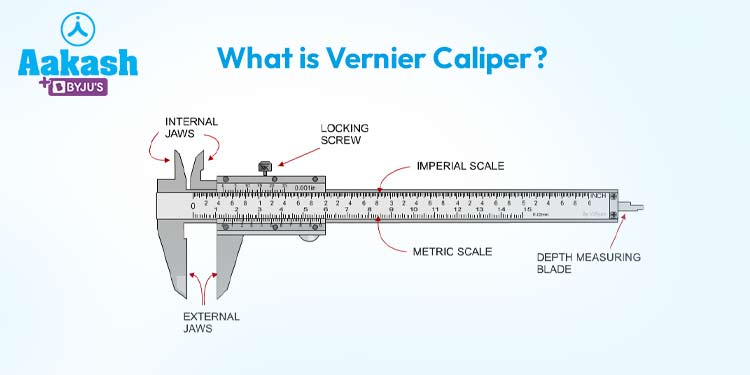
Components of a Vernier Caliper
A typical Vernier caliper comprises several essential components:
Main Scale: The main scale is a ruler-like part of the caliper that displays length measurements in centimeters (cm) or inches (in). It often features a fixed jaw that serves as a reference point.
Vernier Scale: The Vernier scale is a secondary scale that slides parallel to the main scale. It consists of divisions that are slightly smaller than those on the main scale, providing more accurate measurements.
Jaws: The movable jaw and the fixed jaw are the components that hold the object being measured. The movable jaw can be adjusted to accommodate objects of various sizes.
Depth Rod: Some Vernier calipers include a depth rod, which extends perpendicular to the caliper’s jaws. It allows users to measure depths accurately.
Using a Vernier Caliper
Using a Vernier caliper involves a few simple steps:
Opening the Jaws: Gently open the jaws of the caliper by sliding the Vernier scale along the main scale.
Inserting the Object: Insert the object being measured between the jaws. Ensure the object is held securely but not tightly.
Closing the Jaws: Gently close the jaws until they touch the object on both sides. Take care not to apply excessive force.
Reading the Measurement: To read the measurement, note the value indicated on the main scale aligned with the zero (0) mark of the Vernier scale. Then, find the Vernier scale division that lines up with a main scale division. The value of the Vernier scale division indicates the fractional part of the measurement.
Adding the Values: Combine the main scale reading with the fractional value from the Vernier scale to obtain the precise measurement.
Advantages of Vernier Calipers
Vernier calipers offer several advantages that make them indispensable in various industries:
High Precision: Vernier calipers provide accurate measurements down to fractions of a millimeter or even smaller units, ensuring precision in engineering, manufacturing, and scientific applications.
Versatility: These tools can measure both external and internal dimensions, as well as depths, making them versatile for various measurement tasks.
Non-Destructive: Vernier calipers are non-destructive measuring instruments, allowing users to measure objects without altering or damaging them.
Cost-Effective: Compared to more complex measuring instruments, Vernier calipers are cost-effective solutions that deliver reliable accuracy.
Portable: Vernier calipers are compact and portable, making them suitable for both on-site measurements and laboratory use.
Conclusion
From fine-tuning machinery to fabricating intricate components, the Vernier caliper’s precision and versatility make it an essential tool across industries. Its ability to measure dimensions with utmost accuracy, down to minute fractions, has propelled its use in engineering, manufacturing, research, and everyday applications. As technology continues to advance, the timeless precision of the Vernier caliper remains a cornerstone of accurate measurement, ensuring the quality and integrity of countless products and innovations.
FAQs on Vernier Caliper
1. What is a Vernier caliper?
A Vernier caliper is a precision measuring instrument used to measure lengths, widths, diameters, and depths of objects with high accuracy. It features a main scale and a Vernier scale that work together to provide precise measurements.
2. How does a Vernier caliper work?
A Vernier caliper works by using two scales: a main scale and a Vernier scale. The main scale provides the whole number measurement, while the Vernier scale allows users to read the fractional part of the measurement with remarkable accuracy.
3. What are the parts of a Vernier caliper?
A Vernier caliper consists of a main scale, a Vernier scale, movable and fixed jaws, and optionally, a depth rod. The main and Vernier scales provide measurements, while the jaws hold the object being measured. The depth rod allows measurement of depths.
4. How is a Vernier caliper different from a regular ruler?
Unlike a regular ruler that provides measurements in whole units, a Vernier caliper offers fractional measurements with exceptional accuracy. It includes a Vernier scale for precise fractional readings, making it suitable for tasks requiring high precision.
5. What are the units used in Vernier calipers?
Vernier calipers can use both metric units (centimeters and millimeters) and imperial units (inches) depending on the model. The main and Vernier scales display these units for measurements.
6. Can Vernier calipers measure both internal and external dimensions?
Yes, Vernier calipers are versatile and can measure both internal and external dimensions accurately. The movable jaws are used to measure external dimensions, while the internal dimensions are measured using the inside of the jaws.
7. How do you read measurements with a Vernier caliper?
To read measurements, first note the value aligned with the zero mark on the main scale. Then, locate the division on the Vernier scale that lines up with a division on the main scale. The value of the Vernier division provides the fractional part of the measurement.
8. What is the accuracy of Vernier calipers?
Vernier calipers offer high accuracy, often down to 0.02 mm or even smaller units. The accuracy depends on the quality of the caliper and the user’s skill in reading the Vernier scale.
9. Can Vernier calipers measure depth?
Yes, many Vernier calipers come with a depth rod that extends perpendicular to the jaws. This allows users to measure the depth of objects accurately.
10. Are Vernier calipers difficult to use?
While using Vernier calipers requires some practice, they are not overly difficult to use. Reading the Vernier scale correctly may take some time to master, but with practice, users can achieve accurate measurements.
11. What are the advantages of using a Vernier caliper?
Vernier calipers offer high precision, versatility in measuring various dimensions, cost-effectiveness, and portability. They are ideal for applications that demand accurate measurements without the need for complex equipment.
12. Can Vernier calipers be used for non-metallic objects?
Yes, Vernier calipers can be used to measure non-metallic objects, provided the jaws can securely hold the material without causing damage. However, users should consider the material’s properties and the instrument’s intended use.
13. Are Vernier calipers still relevant in the digital age?
Absolutely. While digital measuring instruments are becoming more prevalent, Vernier calipers remain relevant due to their accuracy, simplicity, and cost-effectiveness. They are often used alongside digital tools for cross-verification and backup measurements.