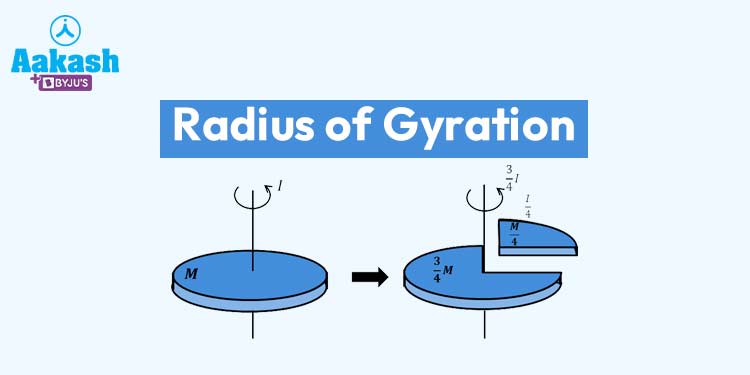

The radius of gyration is a fundamental concept in mechanics and physics, particularly in the study of rotational motion. It is a measure of how spread out the mass of an object is with respect to its axis of rotation. The unit of the radius of gyration depends on the system of units used to express the physical quantities involved.
In the International System of Units (SI), the unit of the radius of gyration is meters (m). The radius of gyration is defined as the square root of the moment of inertia divided by the total mass of the object. Mathematically, it is represented as:
Radius of Gyration (k) = √(Moment of Inertia / Mass)
Here, the moment of inertia (I) represents the rotational analog of mass in linear motion, and it quantifies the object’s resistance to changes in rotational motion. It depends on the mass distribution and the axis of rotation.
The concept of the radius of gyration is widely used in various engineering fields, such as mechanical and civil engineering, as well as in physics and sports. It plays a crucial role in understanding and designing structures, analyzing the stability of rotating objects, and predicting the behavior of systems subjected to rotational forces.
The radius of gyration provides a measure of how the mass is distributed relative to the axis of rotation. If an object has a larger radius of gyration, it means its mass is distributed farther from the axis, resulting in a higher moment of inertia and greater resistance to changes in its rotational motion. Conversely, a smaller radius of gyration indicates a more concentrated mass distribution and lower moment of inertia, making it easier to change its rotational motion.
In practical applications, knowing the radius of gyration is essential for calculating various parameters related to rotational motion, such as angular acceleration, torque, and angular momentum. Moreover, engineers and designers use the concept to determine the stability and performance of rotating equipment, such as flywheels, propellers, and various rotating machinery.
In summary, the radius of gyration is a significant concept in rotational mechanics, representing the distribution of an object’s mass with respect to its axis of rotation. Its unit in the SI system is meters (m), and understanding it is crucial in various fields of science and engineering for predicting and analyzing rotational behavior.
Frequently Asked Questions (FAQs) on Radius of Gyration
1. What is the radius of gyration, and why is it important in mechanics?
The radius of gyration is a measure of how the mass of an object is distributed relative to its axis of rotation. It quantifies an object’s resistance to changes in rotational motion. In mechanics, understanding the radius of gyration is essential for predicting the behavior of rotating systems, designing stable structures, and analyzing the performance of rotating machinery.
2. How is the radius of gyration calculated?
The radius of gyration (k) is calculated by taking the square root of the moment of inertia (I) divided by the total mass (m) of the object. Mathematically, it is expressed as k = √(I / m). The moment of inertia depends on the mass distribution and the axis of rotation.
3. What are the typical units used for the radius of gyration?
The units of the radius of gyration depend on the system of units used. In the International System of Units (SI), the unit of the radius of gyration is meters (m). However, in other unit systems, such as the imperial system, the unit may differ, such as feet (ft) or inches (in).
4. How does the radius of gyration affect the stability of rotating objects?
The radius of gyration is directly related to an object’s moment of inertia. Objects with a larger radius of gyration have higher moments of inertia, making them more stable and resistant to changes in their rotational motion. Conversely, objects with a smaller radius of gyration have lower moments of inertia and are more susceptible to changes in their rotational behavior.
5. In what practical applications is the radius of gyration important?
The concept of the radius of gyration finds extensive use in various engineering fields. It is crucial for designing stable structures, predicting the behavior of rotating machinery, and analyzing the stability of rotating objects like flywheels, propellers, and turbines. Additionally, it is employed in physics, sports, and aerospace engineering to study the dynamics of rotating systems and optimize their performance.