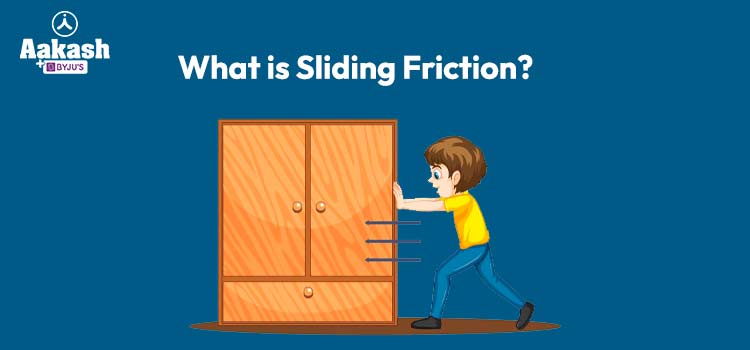

Friction is a fundamental force that affects our everyday lives in numerous ways. One of the most common types of friction is sliding friction, also known as kinetic friction. Sliding friction occurs when two surfaces are in contact and slide against each other. It plays a crucial role in our ability to walk, drive vehicles, and even pick up objects. Understanding the concept of sliding friction is essential for various engineering, industrial, and scientific applications. In this article, we will delve into the definition, factors affecting sliding friction, and its practical implications.
Sliding Friction Definition:
Sliding friction is the resistance encountered when two surfaces move or slide past each other. It arises due to the intermolecular forces between the surfaces in contact. While it might seem that smooth surfaces would have minimal friction, the microscopic irregularities in all surfaces, even seemingly smooth ones, result in contact points called asperities. As these asperities slide past each other, they create resistance, leading to the force we experience as sliding friction.
Factors Affecting Sliding Friction:
Several factors influence the magnitude of sliding friction between two surfaces:
Nature of Surfaces: The material and texture of the surfaces in contact significantly impact the amount of friction. Rough surfaces tend to have higher friction than smoother ones.
Normal Force: The force pressing the surfaces together, known as the normal force, plays a vital role in determining sliding friction. Greater normal force usually results in higher frictional force.
Lubrication: The presence of a lubricant between two sliding surfaces can significantly reduce friction by forming a protective layer, preventing direct contact between asperities.
Temperature: Temperature can influence sliding friction. In some cases, an increase in temperature may reduce friction, while in others, it may lead to an increase.
Velocity: The speed at which the surfaces slide against each other can affect sliding friction. In some situations, friction may increase with speed, whereas in others, it may remain constant.
Practical Implications:
Sliding friction has numerous practical implications in various fields:
Engineering: Understanding sliding friction is crucial for designing machinery, ensuring efficiency and safety. Engineers consider friction in the design of brakes, clutches, and other mechanical systems.
Transportation: In the automotive industry, reducing sliding friction is essential for improving fuel efficiency and extending the lifespan of vehicle components.
Manufacturing: Sliding friction plays a vital role in metalworking, woodworking, and other manufacturing processes, affecting the quality of the final product.
Sports: Athletes and sports equipment manufacturers study sliding friction to optimize performance and prevent injuries, for instance, in selecting appropriate shoe soles for different surfaces.
Everyday Life: Sliding friction impacts various activities in our daily lives, such as walking, using tools, and even opening doors.
Conclusion:
Sliding friction is a ubiquitous and essential force that influences numerous aspects of our lives. Its understanding is critical for engineers, scientists, and designers to create efficient and safe products and systems. By comprehending the factors affecting sliding friction, we can continue to improve technology and make advancements in various fields, benefiting society as a whole.
FAQs
1. What is sliding friction, and how does it differ from other types of friction?
Sliding friction, also known as kinetic friction, is the resistance encountered when two surfaces slide against each other. It differs from static friction, which occurs when there is no relative motion between the surfaces, and rolling friction, which involves the resistance encountered when an object rolls over a surface.
2. What causes sliding friction between two surfaces?
Sliding friction is caused by the intermolecular forces between the surfaces in contact. Even seemingly smooth surfaces have microscopic irregularities called asperities. As these asperities slide past each other, they create resistance, resulting in sliding friction.
3. Can sliding friction be completely eliminated?
It is challenging to eliminate sliding friction entirely, as it is a natural consequence of surface interactions. However, sliding friction can be reduced through the use of lubricants, which create a protective layer between the surfaces, reducing direct contact and friction.
4. How does sliding friction impact everyday activities?
Sliding friction affects various activities in our daily lives. It allows us to walk without slipping, enables vehicles to brake, and allows us to grip and manipulate objects effectively. It plays a significant role in ensuring safety and functionality in various tasks.
5. How can engineers and designers use knowledge of sliding friction?
Engineers and designers utilize knowledge of sliding friction in the design of machinery and mechanical systems. They consider friction when developing braking systems, clutches, and other components to ensure efficiency, safety, and durability. Additionally, in sports and manufacturing industries, understanding sliding friction helps optimize performance and product quality.