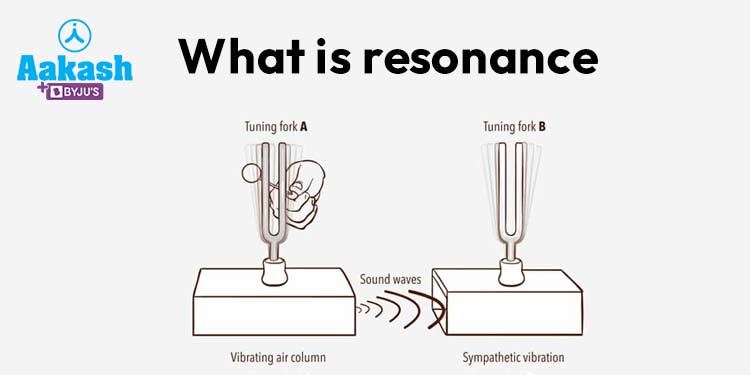

Resonance is a captivating and fundamental concept that pervades various fields of science, engineering, and everyday life. It’s a phenomenon that occurs when an external force or vibration matches the natural frequency of an object, leading to a significant increase in the amplitude of vibrations. This can result in mesmerizing and often powerful effects, shaping everything from music to architecture, and even influencing our understanding of the universe itself.
The Basics of Resonance:
At its core, resonance revolves around the concept of vibrations. Every object has a characteristic natural frequency at which it vibrates when disturbed. Imagine a child on a swing – if you push them at the right moment and with the right amount of force, they’ll start swinging higher and higher. This happens because your pushes are synchronized with the swing’s natural frequency, resulting in amplified oscillations – this is resonance in action.
In the realm of Physics, resonance occurs when the frequency of an external force aligns with the natural frequency of an object. This synchronization leads to constructive interference, where the waves reinforce each other, causing the object to vibrate more intensely. Conversely, if the frequencies are out of sync, destructive interference may occur, reducing or even eliminating vibrations.
Manifestations of Resonance:
Musical Instruments: Resonance is a fundamental principle in music. When a musician plays a musical instrument, such as a guitar or a violin, the strings vibrate at specific frequencies, producing distinct musical notes. By adjusting factors like string tension or length, musicians can control the instrument’s resonant frequencies, creating a range of captivating sounds.
Structural Engineering: Architects and engineers utilize resonance principles to design and construct stable structures. Bridges, buildings, and other structures are designed to avoid resonating with external forces, such as wind or earthquakes, to prevent catastrophic failures.
Electronics: Resonance plays a significant role in electronics, particularly in circuits containing capacitors and inductors. These components can store and release energy at specific frequencies, contributing to the operation of devices like radio receivers, filters, and oscillators.
Medicine: Resonance also finds applications in the medical field, such as in magnetic resonance imaging (MRI). In an MRI machine, strong magnetic fields and radio waves are used to excite atoms in the body, which emit signals that can be detected and translated into detailed images.
Resonance Beyond Earth:
Resonance extends its influence beyond our planet’s surface. Astronomers have observed orbital resonance in celestial bodies, such as moons and planets. One of the most famous examples is the resonance between the moons Io, Europa, and Ganymede around Jupiter. These moons’ gravitational interactions result in regular and predictable orbits, showcasing the profound impact of resonance even in the cosmos.
Conclusion:
Resonance is a captivating phenomenon that underlies much of our understanding of the physical world. Its influence can be observed from the harmonious melodies of musical instruments to the stability of bridges and the complexity of celestial motion. As science and technology continue to advance, our appreciation of resonance will undoubtedly deepen, uncovering new insights and applications that shape our world in remarkable ways.
Frequently Asked Questions (FAQs) About Resonance:
What is resonance, and how does it work?
Resonance is a phenomenon where an object vibrates at its natural frequency when exposed to an external force or vibration that matches its frequency. This synchronization leads to amplified vibrations through constructive interference, enhancing the object's oscillations.
Where is resonance commonly observed in everyday life?
Resonance is prevalent in various aspects of our lives. It's behind the sounds produced by musical instruments, the stability of buildings and bridges, the functioning of electronic circuits, and even the medical imaging technology used in MRI machines.
How does resonance impact musical instruments?
Resonance is fundamental to producing the unique sounds of musical instruments. When a musician plays a note, the instrument's strings or air columns vibrate at specific frequencies, creating harmonious tones. Adjusting factors like string tension or instrument dimensions allows musicians to control resonant frequencies and produce different notes.
Can resonance have negative effects?
Yes, resonance can lead to undesirable outcomes. In structural engineering, structures can resonate with external forces like wind, causing vibrations that might lead to damage or collapse. Engineers carefully design structures to avoid resonant frequencies. Additionally, unwanted resonance in electronic circuits can cause interference or instability in devices.
How is resonance connected to celestial bodies and space?
Resonance is not limited to Earth; it also influences celestial bodies. Orbital resonance, for instance, is observed among moons and planets. The gravitational interactions between these celestial objects result in synchronized orbits, as seen with Jupiter's moons Io, Europa, and Ganymede, showcasing the universal nature of resonance.