
When objects are in motion, their velocities often interact with one another, resulting in what is known as relative velocity. This concept plays a significant role in various fields, from physics and engineering to everyday experiences. In this article, we’ll delve into the definition of relative velocity, explore the formulas used to calculate it and discuss its practical applications.
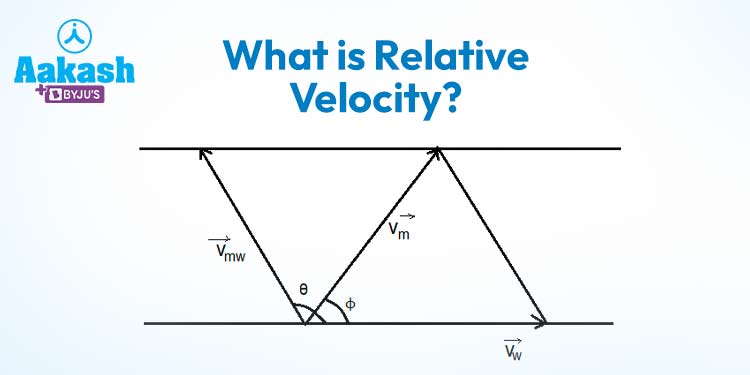
What is Relative Velocity?
Relative velocity refers to the velocity of an object in the frame of reference of another object. In simpler terms, it’s the velocity of one object as observed by another moving object. This concept is particularly important when dealing with situations where multiple objects are moving, and their motions affect one another.
Calculating Relative Velocity
The relative velocity between two objects A and B can be calculated using the following formula:
Relative Velocity (AB) = Velocity of B with respect to A – Velocity of A
This formula reflects the idea that the relative velocity is essentially the difference between the velocities of the two objects. It’s crucial to consider the direction of motion when applying this formula, as relative velocity is a vector quantity with both magnitude and direction.
Real-world Applications
1. Air Travel: Relative velocity plays a pivotal role in air travel. The concept is used when calculating the speed and direction of an airplane relative to the air around it, which affects its flight path and travel time.
2. Ocean Navigation: Ships and boats often encounter varying currents in the sea. Navigational decisions need to take into account the ship’s relative velocity compared to the water currents to ensure accurate course adjustments.
3. Sports: In sports like football or soccer, players must account for the relative velocity of the ball and other players to make accurate passes or intercepts. Similarly, baseball players need to judge the relative velocity of the ball to make successful hits.
4. Space Missions: When spacecraft are launched, their trajectories are influenced by the relative velocities of planets, moons, and other celestial bodies. Precise calculations of relative velocities are crucial for successful interplanetary missions.
5. Automotive Industry: Engineers designing autonomous vehicles must consider the relative velocities of other cars and obstacles on the road. This information is vital for collision avoidance systems.
Conclusion
Relative velocity is a fundamental concept that helps us understand the interactions between moving objects. Whether it’s for calculating trajectories, optimizing travel routes, or designing advanced technologies, relative velocity finds applications in numerous areas. By grasping the concept of relative velocity and its significance, we gain a deeper insight into the dynamic world around us.
FAQs
1. What is relative velocity?
Relative velocity refers to the velocity of one object as observed from the frame of reference of another moving object. It takes into account the motion of both objects and is a vector quantity with both magnitude and direction.
2. How is relative velocity calculated?
The relative velocity between two objects A and B can be calculated using the formula: Relative Velocity (AB) = Velocity of B with respect to A – Velocity of A. Make sure to consider the direction of motion when applying this formula.
3. Why is relative velocity important?
Relative velocity is important because it helps us understand how objects in motion interact with each other from different perspectives. It has practical applications in fields like physics, engineering, sports, and navigation.
4. What is the difference between relative velocity and absolute velocity?
Absolute velocity refers to the velocity of an object in relation to a fixed point in space (like the Earth’s surface). Relative velocity, on the other hand, takes into account the motion of another object and is observed from the perspective of that moving object.
5. Can relative velocity be negative?
Yes, relative velocity can be negative. The sign of the relative velocity depends on the directions of motion of the two objects. If the objects are moving in opposite directions, the relative velocity could be negative.
6. How does relative velocity apply to air travel?
In air travel, relative velocity is used to calculate the speed and direction of an airplane relative to the air around it. This information is crucial for flight navigation, determining flight paths, and optimizing travel times.
7. What role does relative velocity play in sports?
Relative velocity is important in sports where objects are in motion, such as football or baseball. Players need to judge the relative velocity of the ball and other players to make accurate passes, shots, or interceptions.
8. How does relative velocity affect space missions?
For space missions, precise calculations of relative velocities are necessary to navigate spacecraft in complex gravitational fields. The relative velocities of planets, moons, and other celestial bodies influence spacecraft trajectories.
9. How is relative velocity relevant in the automotive industry?
Relative velocity is crucial in the design of autonomous vehicles and collision avoidance systems. These systems rely on understanding the relative velocities of other cars and obstacles on the road to ensure safe driving.
10. Can relative velocity be applied to everyday situations?
Yes, relative velocity can be applied to everyday situations. For instance, when you’re walking on a moving train, your relative velocity with respect to the ground outside changes based on the train’s speed and direction.
11. Is relative velocity always constant between two objects in motion?
No, relative velocity is not necessarily constant between two objects in motion. It can change as the objects change their velocities or directions, leading to dynamic interactions between them.
12. How do I solve problems involving relative velocity?
To solve problems involving relative velocity, identify the objects involved, their velocities, and the direction of motion. Apply the relative velocity formula based on the given information to calculate the relative velocity between the objects.
13. Can relative velocity be used to measure the velocity of light?
No, relative velocity cannot be used to measure the velocity of light. The speed of light in a vacuum is constant for all observers, regardless of their relative velocities. This phenomenon is a fundamental principle of Einstein’s theory of special relativity.