
Refraction is a fundamental phenomenon in physics that describes the behavior of light as it passes from one medium into another. This captivating phenomenon is responsible for the way objects appear when viewed through transparent materials like water, glass, or even air. The bending of light that occurs during refraction has intrigued scientists, artists, and observers for centuries, contributing to our understanding of optics and shaping various fields of study.
Understanding Refraction:
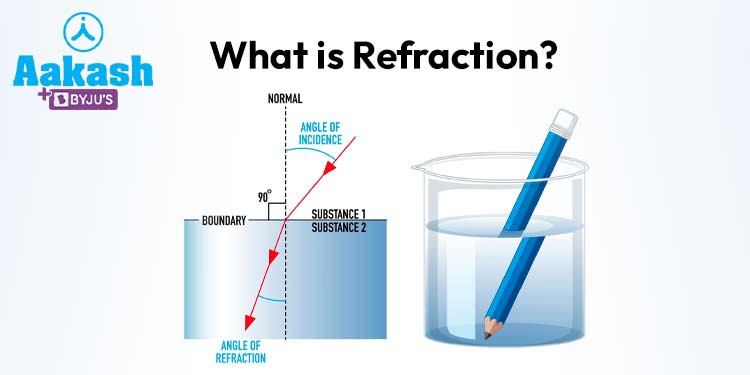
At its core, refraction occurs due to the change in the speed of light as it transitions from one medium to another. The speed of light is different in various materials, and when light encounters a boundary between two substances, its speed changes, causing it to bend. This bending is a result of the change in the light’s velocity, which causes its direction to alter.
When light passes from a less dense medium (like air) into a denser medium (like water or glass), it slows down, and as a consequence, the light waves are bent toward the normal – an imaginary line perpendicular to the boundary between the two media. Conversely, when light moves from a denser medium to a less dense one, it speeds up, causing the light waves to bend away from the normal.
The Role of Refractive Index:
The degree of bending that occurs during refraction is determined by a property known as the refractive index. The refractive index of a material indicates how much light slows down when passing through it compared to its speed in a vacuum. Mathematically, it is defined as the ratio of the speed of light in a vacuum to the speed of light in the material.
Different materials have different refractive indices, and this property governs the amount of bending that light undergoes when it enters a new medium. The greater the difference in refractive indices between two materials, the more pronounced the bending of light will be.
Real-World Examples:
Refraction is responsible for a multitude of everyday phenomena. Mirages in the desert, where distant objects appear to be reflected in pools of water, are a result of the varying refractive indices of air at different temperatures. The way a straw seems to be disjointed when placed in a glass of water is also due to refraction – the light coming from the submerged portion of the straw bends at the air-water interface, creating the illusion.
Camera lenses, eyeglasses, and telescopes all employ the principles of refraction to focus and manipulate light. These optical devices utilize carefully shaped lenses to control the bending of light and redirect it according to desired outcomes.
Conclusion:
Refraction is a captivating phenomenon that underscores the dynamic nature of light and its interaction with different materials. From the breathtaking beauty of rainbows to the precision of optical instruments, the bending of light through refraction has left an indelible mark on our understanding of the world around us. As researchers continue to delve deeper into the complexities of light and its behavior, refraction remains a timeless and fascinating subject that bridges the gap between science and the wonders of perception.
FAQs About Refraction:
1. What is refraction?
Refraction is a phenomenon in physics where light changes direction as it passes from one medium to another due to a difference in the speed of light between the two mediums. It is responsible for the bending of light and affects the way objects appear when viewed through transparent materials like water, glass, or air.
2. How does refraction occur?
Refraction occurs because the speed of light is different in different materials. When light travels from a less dense medium to a denser one, it slows down and bends towards the normal (an imaginary line perpendicular to the surface). Conversely, when light moves from a denser medium to a less dense one, it speeds up and bends away from the normal.
3. What is the refractive index?
The refractive index is a measure of how much light slows down when passing through a specific material compared to its speed in a vacuum. It is defined as the ratio of the speed of light in a vacuum to the speed of light in the material. Different materials have different refractive indices, which influence the amount of bending that occurs during refraction.
4. What are some real-world examples of refraction?
Refraction is behind many everyday phenomena. Mirages in deserts, where distant objects seem to be reflected in pools of water, are due to varying air temperatures causing changes in the refractive index. The “broken” appearance of a straw in a glass of water and the functioning of lenses in cameras, eyeglasses, and telescopes are also examples of refraction in action.
5. How does refraction impact vision correction?
Eyeglasses and contact lenses utilize the principles of refraction to correct vision problems. When light passes through corrective lenses, it is refracted in a way that compensates for the eye’s focusing errors, enabling clear vision. Different lens shapes and curvatures are used to manipulate the path of light and address specific vision issues like nearsightedness, farsightedness, and astigmatism.