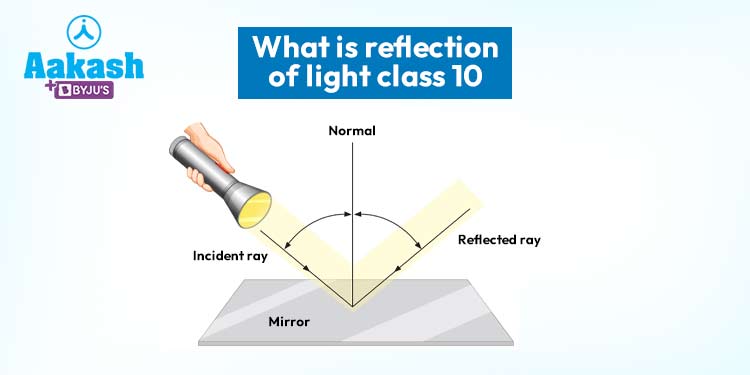

The reflection of light is a fascinating and fundamental phenomenon that plays a significant role in our everyday lives. It is the process by which light waves bounce off a surface and change direction, allowing us to perceive the world around us through vision. This natural phenomenon has intrigued scientists, philosophers, and artists for centuries, leading to groundbreaking discoveries and artistic creations.
Basic Principles of Reflection:
At its core, the reflection of light is governed by two fundamental principles: the law of reflection and the wave nature of light.
Law of Reflection: When light rays encounter a reflective surface, such as a mirror or a calm body of water, they follow a specific pattern known as the law of reflection. This law states that the angle of incidence (the angle between the incident light ray and the normal, an imaginary line perpendicular to the surface) is equal to the angle of reflection (the angle between the reflected light ray and the normal). This principle holds true for all types of reflective surfaces and helps us understand how light interacts with various materials.
Wave Nature of Light: Light is composed of electromagnetic waves, which can be described as oscillating electric and magnetic fields. When these waves strike a surface, they interact with the atoms and molecules present, causing the light to be absorbed, transmitted, or reflected. The way in which these interactions occur determines the appearance and characteristics of the reflected light.
Types of Reflection:
Reflection can be broadly categorized into two types: regular (specular) reflection and diffuse reflection.
Regular (Specular) Reflection: This type of reflection occurs when light waves strike a smooth, polished surface, such as a mirror. The reflected rays remain parallel, maintaining their original direction and forming a clear image. Regular reflection is responsible for creating accurate reflections and is commonly used in mirrors, telescopes, and other optical devices.
Diffuse Reflection: When light rays encounter a rough or uneven surface, such as paper or a textured wall, they scatter in various directions. This phenomenon is known as diffuse reflection. Unlike regular reflection, diffuse reflection does not produce well-defined images but instead creates a soft, even illumination by scattering light in all directions.
Applications and Significance:
The reflection of light has a wide range of practical applications and significance across various fields:
Optics and Imaging: Mirrors and lenses are integral components of optical devices such as cameras, microscopes, and telescopes. The precise control of reflected light allows us to capture and magnify images, aiding scientific research, photography, and visual communication.
Art and Aesthetics: Artists have long utilized the principles of reflection to create realistic and captivating paintings. Understanding how light reflects off different surfaces helps artists accurately depict textures, colors, and lighting conditions in their works.
Architectural Design: Architects and interior designers leverage reflective surfaces to enhance the visual appeal of spaces. Mirrors, glass, and polished materials are strategically incorporated to manipulate light, create illusions of space, and improve overall ambiance.
Safety and Visibility: Reflective materials are commonly used in road signs, vehicle license plates, and safety clothing. These materials reflect light from headlights, increasing visibility and reducing accidents, especially during low-light conditions.
Communication: Fiber-optic communication systems rely on the principle of total internal reflection to transmit data as light signals through optical fibers. This technology enables high-speed data transfer over long distances with minimal signal loss.
In conclusion, the reflection of light is a captivating phenomenon that underpins many aspects of our daily lives, from the way we perceive our surroundings to the technological advancements that shape our modern world. Its principles have influenced fields as diverse as art, science, and technology, making it a crucial concept to grasp for a deeper understanding of the natural and man-made phenomena that surround us.
Frequently Asked Questions (FAQs) about the Reflection of Light:
1. What is the Law of Reflection?
The law of reflection states that when a light ray strikes a reflective surface, the angle of incidence (the angle between the incident ray and the normal to the surface) is equal to the angle of reflection (the angle between the reflected ray and the normal). This principle holds true for all types of reflective surfaces and is essential for understanding how light interacts with different materials.
2. What’s the Difference Between Regular and Diffuse Reflection?
Regular (specular) reflection occurs on smooth, polished surfaces like mirrors, where light rays maintain their parallel arrangement and create well-defined images. Diffuse reflection, on the other hand, happens on rough or uneven surfaces, causing light to scatter in various directions, producing a soft, even illumination rather than distinct images.
3. How Does Reflection Impact Vision and Perception?
Reflection plays a crucial role in how we perceive the world. When light from an object reflects off its surface and enters our eyes, it forms an image on the retina. Our brain processes these reflected images to create our visual perception of the object’s appearance, color, and texture.
4. What Are Some Real-World Applications of Reflection?
Reflection of light has diverse applications. It’s used in optics for creating mirrors and lenses in cameras, telescopes, and microscopes. Architects and designers use reflective materials to manipulate lighting and create aesthetic effects in spaces. Reflective materials also enhance safety in road signs, vehicle plates, and safety clothing. Fiber-optic communication relies on total internal reflection for high-speed data transfer.
5. How Does Understanding Reflection Benefit Art and Photography?
Artists and photographers use the principles of reflection to create realistic and visually appealing works. By understanding how light interacts with different surfaces, artists can accurately portray textures, lighting conditions, and the interplay of colors. Reflection effects can add depth and dimension to artworks, making them more captivating and engaging to viewers.