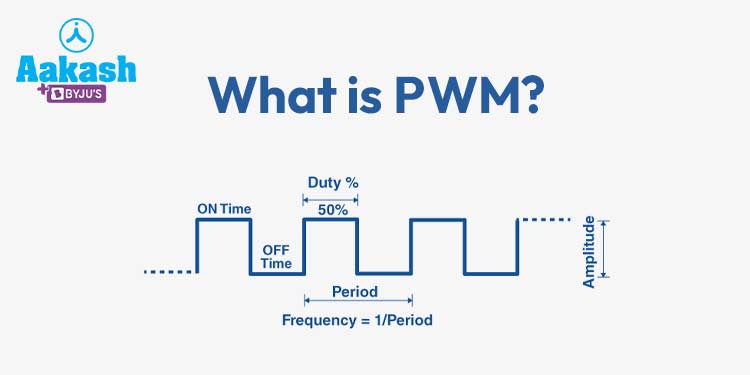

PWM, or Pulse Width Modulation, is a widely used technique in electronics and control systems for efficiently regulating the power supplied to various devices, such as motors, LEDs, and heaters. This method of modulation involves varying the width of pulses in a regular sequence to achieve precise control over the average power delivered to a load.
How does PWM work?
At its core, PWM works by rapidly turning a device on and off within a defined period, known as the “period” or “cycle.” During each cycle, the duration for which the device is on is called the “duty cycle.” The duty cycle is expressed as a percentage and represents the ratio of time the device is on to the total cycle time. By adjusting the duty cycle, you can control the average power delivered to the load.
Here’s a simple example: If you have an LED and you want it to shine at half its maximum brightness, you would set a duty cycle of 50%. This means the LED is turned on for half the time in each cycle, and it appears to emit light at half its full capacity.
Applications of PWM:
Motor Control: PWM is commonly used in motor control applications to regulate the speed of motors. By varying the duty cycle, you can change the speed of the motor without altering the voltage supplied.
Lighting Control: LEDs and other light sources can be dimmed using PWM. By adjusting the duty cycle, you can achieve varying levels of brightness, making PWM a crucial technique in modern lighting systems.
Temperature Control: In heating and cooling systems, PWM can be used to control the power delivered to a heating element, enabling precise temperature regulation.
Power Conversion: PWM is also used in power converters, like DC-DC converters and inverters, to transform and regulate electrical power efficiently.
Audio Amplification: Class-D audio amplifiers use PWM to recreate audio signals, allowing for high-efficiency amplification with minimal heat generation.
Advantages of PWM:
Efficiency: PWM is highly efficient as it regulates power by rapidly switching devices on and off. This minimizes energy loss and heat generation.
Precise Control: PWM offers precise and fine-grained control over the output, making it suitable for applications where accuracy is critical.
Reduced Heat Generation: Unlike linear regulation, which dissipates excess energy as heat, PWM minimizes heat generation, making it ideal for high-power applications.
Digital Compatibility: PWM is well-suited for digital control systems, as it inherently involves on/off switching, which is easily controlled by microcontrollers and digital circuits.
Challenges of PWM:
Electromagnetic Interference (EMI): The rapid switching of devices in PWM can generate EMI, which may require additional filtering and shielding in sensitive applications.
Acoustic Noise: In some applications like motor control, the rapid switching of PWM can produce audible noise, which needs to be managed.
In conclusion, Pulse Width Modulation (PWM) is a versatile and efficient technique used in a wide range of applications for controlling power output. Its ability to provide precise and digital control over devices makes it an essential tool in modern electronics and control systems, contributing to energy efficiency and improved performance.
FAQs about Pulse Width Modulation (PWM):
1. What is the main purpose of PWM?
PWM is primarily used to control the average power delivered to electronic devices, allowing for precise and efficient regulation of various parameters, such as speed, brightness, and temperature in applications like motor control, lighting, and heating systems.
2. How does PWM differ from analog voltage control?
PWM differs from analog voltage control in that it rapidly switches the device on and off, whereas analog control adjusts the voltage directly. PWM is digital in nature and is often more energy-efficient because it minimizes heat generation.
3. What is the significance of the duty cycle in PWM?
The duty cycle in PWM is crucial because it determines the ratio of time the device is on to the total cycle time. By adjusting the duty cycle, you can control the average power delivered to the load, which, in turn, influences the device’s behavior, such as its speed or brightness.
4. Are there any drawbacks to using PWM in electronic circuits?
While PWM is highly efficient and versatile, it can introduce challenges such as electromagnetic interference (EMI) and audible noise in certain applications, particularly those involving high-frequency switching. These issues may need to be addressed through additional circuit design or filtering.
5. Can PWM be used with both low-power and high-power applications?
Yes, PWM can be applied to a wide range of applications, from low-power devices like LEDs to high-power systems such as motor control and power converters. Its ability to provide precise control and reduce heat generation makes it adaptable to various power levels.