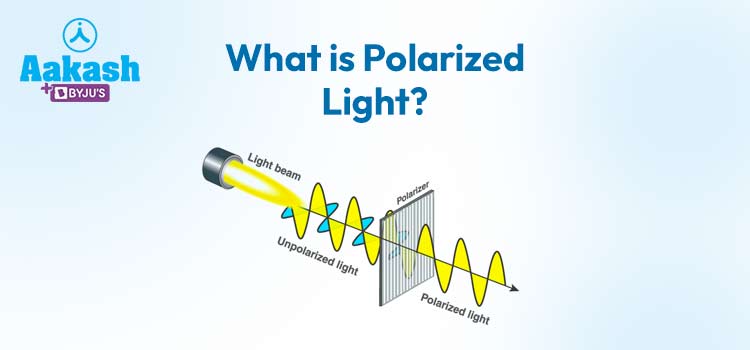

Polarized light is a fascinating phenomenon that occurs when light waves vibrate predominantly in a single plane, rather than in all directions. Unlike regular light, which consists of oscillating electromagnetic waves in various directions, polarized light exhibits a specific alignment of its electric and magnetic fields. This unique property of light arises when it interacts with certain materials or when it is filtered through specialized optical devices.
Understanding Polarization:
To comprehend polarized light, one must first understand the nature of light waves. Light is an electromagnetic wave, and it has both electric and magnetic fields associated with it. These fields oscillate perpendicular to the direction of the light’s propagation. In an unpolarized light wave, these electric and magnetic fields can oscillate in any direction perpendicular to the direction of travel, resulting in light that appears to be vibrating randomly in all planes.
Polarization Process
Polarization can occur through various mechanisms, but the most common methods include:
Transmission through Polarizing Filters: Polarizing filters are optical devices that can selectively block or allow light waves based on their orientation. They contain microscopic aligned molecules or crystals that absorb light waves with certain polarization angles while letting others pass through. As a result, the transmitted light becomes polarized with its electric field predominantly vibrating in a single plane.
Reflection or Refraction: When light reflects off a smooth surface at a particular angle (called the Brewster angle), the reflected light becomes polarized parallel to the reflecting surface. Similarly, when light passes through a transparent medium like glass, it can also become partially polarized based on the angle of incidence and the refractive index of the material.
Scattering: Light can become partially polarized when it scatters off particles or molecules in the atmosphere. This polarization is typically more pronounced at specific angles, such as during sunset when the scattered light from the sky becomes polarized, resulting in vibrant colors.
Applications of Polarized Light:
Polarized light finds numerous practical applications across various fields:
Polarized Sunglasses: Polarized sunglasses are popular for reducing glare and enhancing visibility, particularly in outdoor activities like driving, fishing, and skiing. The lenses block horizontally polarized light, which is responsible for glare from flat surfaces like water or roads.
Liquid Crystal Displays (LCDs): LCDs utilize the polarization of light to create images on screens. The liquid crystals in the display can control the polarization of light passing through them, allowing precise manipulation of pixels to form images.
3D Movies and Stereoscopic Vision: In 3D movies and stereoscopic displays, polarized glasses are used to separate left-eye and right-eye images, providing a sense of depth and three-dimensionality.
Mineral Identification: Geologists use polarized light microscopes to identify and study minerals based on their unique polarizing properties. Different minerals produce characteristic interference patterns when viewed under polarized light.
Biomedical Imaging: Polarized light can be used in various medical imaging techniques, such as polarized light microscopy, to study biological tissues and structures.
Remote Sensing and Satellite Imaging: Polarized light can be utilized in remote sensing applications to analyze the properties of Earth’s surfaces, monitor environmental changes, and gather information about the atmosphere.
Conclusion:
Polarized light is a captivating aspect of optics, offering a deeper understanding of how light behaves and interacts with matter. Its applications span across multiple disciplines, from everyday uses like sunglasses to advanced scientific and technological fields. By harnessing the unique properties of polarized light, scientists and engineers continue to push the boundaries of innovation and improve our understanding of the natural world.
FAQs on Polarized Light:
1. What is polarized light, and how is it different from regular light?
Polarized light is a type of light in which the electric and magnetic fields predominantly vibrate in a single plane. Unlike regular light, which has its fields oscillating in all directions perpendicular to its propagation, polarized light exhibits a specific alignment. This property arises through interactions with certain materials or by passing through specialized optical devices like polarizing filters.
2. How does polarization occur naturally in the environment?
Polarization can occur naturally through various processes. One common natural occurrence is polarization through scattering. When light interacts with particles or molecules in the atmosphere, it becomes partially polarized, especially at certain angles. This natural polarization is responsible for some of the vibrant colors we observe during sunsets.
3. What are polarizing filters, and what do they do?
Polarizing filters are optical devices made up of microscopic aligned molecules or crystals. They selectively block or allow light waves based on their orientation. When unpolarized light passes through a polarizing filter, it transmits only the light waves aligned with the filter’s polarization axis, while blocking the rest. This results in the output light being polarized, with its electric field predominantly vibrating in a single plane.
4. What are the practical applications of polarized light in everyday life?
Polarized light has several practical applications in our daily lives. Some of the common uses include:
Polarized sunglasses: They reduce glare from reflective surfaces and enhance visibility in outdoor activities.
Liquid Crystal Displays (LCDs): LCD screens use polarized light to create images by controlling the polarization of light passing through liquid crystals.
3D movies and stereoscopic vision: Polarized glasses are used to provide a 3D viewing experience by separating left-eye and right-eye images.
Mineral identification: Geologists use polarized light microscopes to study and identify minerals based on their unique polarizing properties.
Biomedical imaging: Polarized light is used in various medical imaging techniques to study biological tissues and structures.
5. Can polarized light be harmful to the eyes or have any adverse effects?
Polarized light itself is not harmful to the eyes. In fact, polarized sunglasses can be beneficial for eye health by reducing glare and eye strain in bright outdoor conditions. However, it is essential to ensure that polarized lenses are of good quality and meet safety standards to avoid any potential issues. Additionally, polarized lenses may affect the visibility of certain digital displays like LCD screens, so users should be mindful of this when using electronic devices.