
In the world of electrical engineering and physics, few principles are as fundamental as Ohm’s Law. Named after the German physicist Georg Simon Ohm, this law defines the relationship between voltage, current, and resistance in an electrical circuit. Whether you are a student, a hobbyist, or a professional in the field of electronics, understanding Ohm’s Law is essential. In this blog, we will delve into the intricacies of Ohm’s Law, explore its significance, and learn how it governs the behavior of electrical circuits.
What is Ohm’s Law?
Ohm’s Law is a basic principle of electricity that establishes a linear relationship between voltage, current, and resistance in an electrical circuit. It states that the current flowing through a conductor is directly proportional to the voltage applied across it and inversely proportional to the resistance of the conductor
The Mathematical Expression
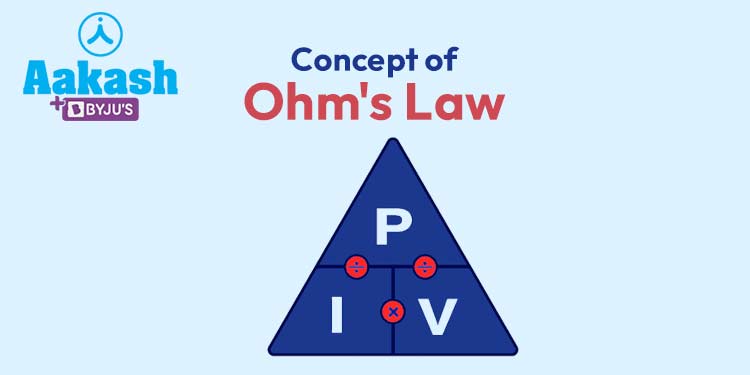
Ohm’s Law can be mathematically expressed as:
V = I * R
Where:
V is the voltage across the conductor,
I is the current flowing through the conductor, and
R is the resistance of the conductor.
In this equation, voltage is measured in volts (V), current in amperes (A), and resistance in ohms (Ω).
Understanding the Components
Voltage (V):
Voltage is the electrical potential difference between two points in a circuit, representing the force that pushes electrons through the circuit. It is measured using a voltmeter and can be positive or negative, depending on the direction of current flow.
Current (I):
Current is the flow of electric charge (electrons) through a conductor in a circuit. It is measured using an ammeter and flows from the higher voltage point (positive terminal) to the lower voltage point (negative terminal).
Resistance (R):
Resistance is the opposition offered by a conductor to the flow of current. It is dependent on the material and physical properties of the conductor and is measured in ohms (Ω). Higher resistance reduces the current flow, while lower resistance allows for a higher current.
Applications of Ohm’s Law
Ohm’s Law is a foundational principle used in numerous applications, including:
Circuit Analysis:
Engineers and technicians use Ohm’s Law to analyze and design electrical circuits, calculating voltage, current, and resistance values.
Circuit Troubleshooting:
When dealing with malfunctioning circuits, Ohm’s Law helps identify faulty components and diagnose issues.
Electronics Design:
Ohm’s Law is essential in designing electronic devices and ensuring that the components operate within safe and functional parameters.
Power Management:
In power systems, Ohm’s Law is employed to calculate power dissipation, ensuring components can handle the generated heat.
Conclusion:
Ohm’s Law is the bedrock of electrical engineering and plays a critical role in understanding and designing electrical circuits. It serves as a guiding principle for professionals and enthusiasts alike, enabling us to comprehend the interactions between voltage, current, and resistance in various electrical systems. By embracing Ohm’s Law, we unlock the potential to create safer, more efficient, and innovative electrical devices that power the modern world. Whether you are a student beginning your journey into electronics or an experienced engineer, Ohm’s Law will forever remain an indispensable tool in your arsenal.
| What is Wave | What is Rectifier |
| What is Scalar Quantity | What is Led |
| What is Electric Charge | What is Zener Diode |
| What is Electric Circuit | What is SI Unit |
| What is EMF | What is Conservative Force |
FAQs
What is Ohm's Law?
Ohm's Law is a fundamental principle in electricity that establishes a direct relationship between voltage, current, and resistance in an electrical circuit. It states that the current flowing through a conductor is directly proportional to the voltage applied across it and inversely proportional to the resistance of the conductor.
Who discovered Ohm's Law?
Ohm's Law was discovered and formulated by the German physicist Georg Simon Ohm in 1827.
What is the mathematical expression of Ohm's Law?
Ohm's Law can be mathematically expressed as V = I * R, where V represents voltage (measured in volts), I represents current (measured in amperes), and R represents resistance (measured in ohms).
What are the units of voltage, current, and resistance in Ohm's Law?
Voltage is measured in volts (V), current in amperes (A), and resistance in ohms (Ω).
How is Ohm's Law applied in electrical circuits?
Ohm's Law is used to calculate the voltage, current, or resistance in a circuit when the other two values are known. It allows engineers and technicians to analyze and design electrical circuits, troubleshoot issues, and ensure that components operate within safe and functional parameters.
Can Ohm's Law be used in AC (alternating current) circuits?
Yes, Ohm's Law can be used in AC circuits. However, since AC involves changing voltage and current values over time, impedance (a complex quantity that includes resistance) is used instead of resistance to calculate the relationship between voltage and current.
How important is Ohm's Law in electrical engineering and everyday life?
Ohm's Law is fundamental in electrical engineering and plays a crucial role in designing, analyzing, and troubleshooting electrical circuits. It is also relevant in everyday life for understanding and using electrical devices safely and efficiently.