
Light, with its diverse array of colors and wavelengths, is a fascinating phenomenon that plays a pivotal role in our perception of the world. Among its intriguing forms is “monochromatic light,” a concept that holds significance not only in science but also in various applications. In this article, we’ll delve into the world of monochromatic light, exploring its definition, properties, sources, and real-world applications.
Defining Monochromatic Light
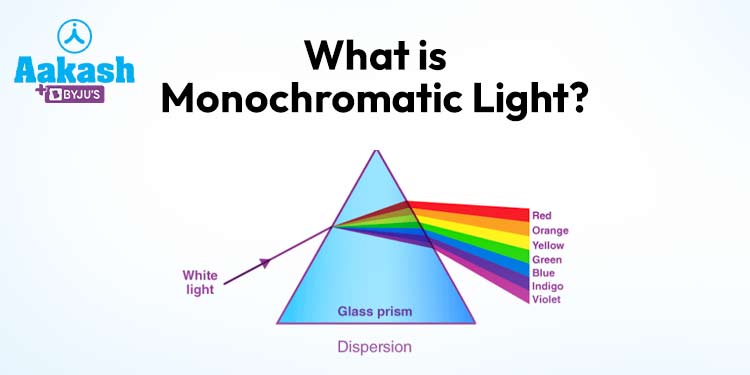
Monochromatic light refers to light composed of a single wavelength or color. In other words, it consists of photons oscillating at the same frequency, resulting in a uniform color appearance. Unlike white light, which is a mixture of various wavelengths that together create a spectrum of colors, monochromatic light appears as a pure and consistent hue.
Properties of Monochromatic Light
Single Wavelength: Monochromatic light is characterized by having a single, well-defined wavelength. This property is the foundation of its uniform color appearance.
Homogeneity: Due to its single-wavelength nature, monochromatic light exhibits homogeneity in color across the entire beam.
Absence of Spectral Spread: Unlike white light, which contains a range of wavelengths, monochromatic light has an absence of spectral spread, resulting in a clean and distinct color.
Sources of Monochromatic Light
Lasers: Lasers are a primary source of monochromatic light. The stimulated emission process in lasers produces light of a single wavelength, making them invaluable in applications ranging from scientific research to medical treatments.
Filters: Optical filters can be used to isolate specific wavelengths from a light source, effectively creating a monochromatic beam. These filters selectively transmit the desired wavelength while blocking others.
Atomic Emission: Certain elements and molecules emit light at distinct wavelengths when excited. This emission can produce monochromatic light that provides insights into atomic and molecular structures.
Real-world Applications
Spectroscopy: Monochromatic light is essential in spectroscopy, a technique used to study the interaction between light and matter. By illuminating a sample with monochromatic light and analyzing the resulting spectra, scientists can identify substances and gain insights into their properties.
Holography: Holograms are created using monochromatic light to produce three-dimensional images. The coherent nature of monochromatic light enhances the quality and clarity of holographic images.
Medical Imaging: Monochromatic light is used in medical imaging techniques such as fluorescence microscopy. The precise wavelength of monochromatic light can help distinguish specific biological structures and molecules.
Optical Communication: In fiber optics, monochromatic light is often used to transmit data signals efficiently. Its single wavelength minimizes dispersion and interference during transmission.
Precision Manufacturing: Monochromatic light aids in precision manufacturing processes such as lithography, where precise patterns are transferred onto surfaces.
Conclusion
Monochromatic light’s remarkable uniformity and pure color make it an invaluable tool in various scientific and practical applications. From unraveling the mysteries of matter through spectroscopy to revolutionizing medical imaging, its unique properties continue to shape our understanding of the world and enhance technological advancements. As we continue to harness the power of light, the role of monochromatic light remains a fascinating aspect of this ever-evolving field.
FAQs on Monochramatic Light
1. What is monochromatic light?
Monochromatic light refers to light composed of a single wavelength or color. Unlike white light that contains a mixture of colors, monochromatic light appears as a pure and uniform hue.
2. How is monochromatic light different from white light?
White light is a combination of all colors in the visible spectrum, while monochromatic light consists of a single wavelength, resulting in a distinct and consistent color.
3. What are some sources of monochromatic light?
Common sources include lasers, optical filters, and certain atomic and molecular emissions. Lasers produce coherent monochromatic light, while filters selectively allow specific wavelengths to pass through.
4. How is monochromatic light used in spectroscopy?
Monochromatic light is crucial in spectroscopy to analyze the interaction between light and matter. By illuminating a sample with monochromatic light and studying the resulting spectra, scientists can identify substances and learn about their properties.
5. Can monochromatic light be observed naturally?
Monochromatic light is rare in nature because natural light sources emit a range of wavelengths. However, certain phenomena, like the emission lines of certain gases in space, can produce light that is close to monochromatic.
6. What is the significance of monochromatic light in holography?
Monochromatic light is used in holography to create high-quality holograms. The coherent nature of monochromatic light enhances the clarity and detail of three-dimensional holographic images.
7. How is monochromatic light applied in medical imaging?
Monochromatic light is used in techniques like fluorescence microscopy. Its precise wavelength helps differentiate specific biological structures and molecules, aiding in accurate medical imaging.
8. Can monochromatic light be used for communication?
Yes, monochromatic light is used in optical communication, particularly in fiber optics. Its single wavelength is advantageous for transmitting data signals with minimal dispersion and interference.
9. Is monochromatic light only used in scientific applications?
While monochromatic light has significant scientific applications, it also finds use in practical fields like manufacturing and technology, where its precise properties are beneficial for producing accurate and detailed results.
10. How is the color of monochromatic light determined?
The color of monochromatic light is determined by its wavelength. Different wavelengths correspond to different colors in the visible spectrum, ranging from violet to red.
11. Can monochromatic light be seen by the naked eye?
Yes, monochromatic light can be seen by the naked eye. When you observe a laser pointer emitting a specific color, you are actually observing monochromatic light.
12. Does monochromatic light have any applications in art or design?
While monochromatic light itself might not have direct applications in art or design, the concept of using a single color or wavelength can be creatively applied in various artistic and design contexts to evoke specific moods or effects.
13. How does monochromatic light impact energy efficiency?
Monochromatic light can contribute to energy efficiency in applications like LED lighting, where specific wavelengths can be selected for optimal brightness and energy consumption.
14. Can monochromatic light be used for security purposes?
Yes, monochromatic light can be used for security purposes, such as in laser-based security systems. The focused and coherent nature of monochromatic light can be employed in various security applications.