
Gravitational force, often referred to simply as gravity, is one of the fundamental forces of nature that governs the behavior of objects on a cosmic scale. It is a force of attraction that exists between all masses in the universe, from the tiniest particles to the largest celestial bodies. First described by Sir Isaac Newton in the 17th century, the concept of gravitational force revolutionized our understanding of the cosmos and continues to shape modern physics and astronomy.
Origins and Nature of Gravitational Force:
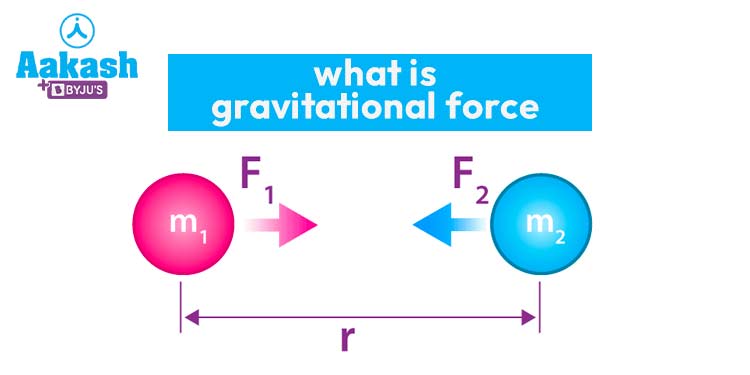
Gravitational force arises due to the presence of a mass in an object. Every object with mass generates a gravitational field around it, which interacts with the gravitational fields of other objects. This interaction is what gives rise to the force of gravity. According to Newton’s law of universal gravitation, the force between two masses is directly proportional to the product of their masses and inversely proportional to the square of the distance between their centers. Mathematically, this law can be expressed as:
F = G * (m1 * m2) / r^2
Where:
F is the gravitational force between the two masses.
G is the gravitational constant, a fundamental constant of nature.
m1 and m2 are the masses of the two objects.
r is the distance between the centers of the two masses.
Key Concepts and Effects of Gravitational Force:
Orbits and Planetary Motion: Gravitational force plays a crucial role in the motion of planets, moons, and other celestial bodies within our solar system and beyond. The balance between the gravitational pull of a star (like the Sun) and the velocity of an orbiting body determines the shape and stability of its orbit. Kepler’s laws of planetary motion, formulated based on observational data, describe the precise relationships between the periods, distances, and masses of orbiting bodies.
Weight and Mass: Gravitational force is responsible for the sensation of weight we feel when standing on the surface of a planet. Weight is the force exerted by a gravitational field on an object with mass. Mass, on the other hand, is a measure of the amount of matter in an object and remains constant regardless of location, whereas weight can vary depending on the strength of the local gravitational field.
Tidal Forces: Gravitational forces also give rise to tidal effects, where the gravitational pull of one celestial body causes deformations in another. This phenomenon is particularly evident in the ocean tides on Earth, where the Moon’s gravitational pull creates tidal bulges.
Black Holes: Gravitational force becomes immensely powerful near extremely dense objects known as black holes. These regions of space exhibit such intense gravitational pull that nothing, not even light, can escape their grasp. The concept of black holes, predicted by Einstein’s theory of general relativity, highlights the profound effects of gravitational force.
Cosmological Effects: On cosmological scales, the cumulative effect of gravitational forces determines the large-scale structure of the universe. The distribution of galaxies, galaxy clusters, and cosmic voids is influenced by the interplay between gravitational attraction and the expansion of space.
Beyond Newton: Einstein’s General Relativity:
While Newton’s law of universal gravitation works well in most situations, it was eventually refined by Albert Einstein’s theory of general relativity. General relativity provides a more accurate description of gravity, especially in extreme conditions such as near massive objects or when dealing with the curvature of spacetime.
In summary, gravitational force is an awe-inspiring phenomenon that shapes the motion of celestial bodies, influences the structure of the universe, and underpins our everyday experiences on Earth. Its universal nature and far-reaching effects continue to captivate the minds of scientists, philosophers, and curious individuals, driving us to explore the mysteries of the cosmos and deepen our understanding of the fundamental forces that govern our existence.
Frequently Asked Questions (FAQs) about Gravitational Force:
What is gravitational force?
Gravitational force, often referred to as gravity, is a fundamental force of nature that causes objects with mass to be attracted to one another. It is responsible for the motion of planets, stars, and galaxies, as well as the sensation of weight on the surface of a planet.
Who discovered gravitational force?
Gravitational force was first described by Sir Isaac Newton in the 17th century. His law of universal gravitation mathematically quantified the relationship between masses and the distance between them, providing a groundbreaking framework for understanding the force of gravity.
How does gravitational force affect planetary motion?
Gravitational force is central to the motion of planets within our solar system and beyond. The gravitational pull between a planet and its star (e.g., Earth and the Sun) determines the planet's orbit, speed, and shape of its path. This interaction is described by Kepler's laws of planetary motion.
What are tidal forces and how do they relate to gravitational force?
Tidal forces are the result of gravitational force causing deformations in objects due to varying gravitational pull across their surfaces. A classic example is ocean tides on Earth, where the Moon's gravitational pull causes tidal bulges. Tidal forces also play a role in shaping celestial bodies, such as moons, by causing tidal locking.
How does Einstein's theory of general relativity relate to gravitational force?
Einstein's theory of general relativity refined our understanding of gravitational force by describing it as the curvature of spacetime caused by mass and energy. It explains phenomena like the bending of light around massive objects and predicts the existence of black holes, where gravitational force is so strong that nothing can escape their grasp.