
Friction is a fundamental force that exists all around us and plays a crucial role in our everyday lives. It is a force that opposes the relative motion or attempted motion between two objects in contact with each other. In simpler terms, it is the resistance encountered when one object slides or tries to slide over another.
The Nature of Friction:
Friction is a result of the interaction between the surfaces of two objects in contact. Even seemingly smooth surfaces at a microscopic level have irregularities, bumps, and imperfections. When these surfaces come into contact and slide against each other, the irregularities interlock and create resistance, impeding the relative motion. This interlocking action leads to the force we call friction.
Types of Friction:
There are mainly four types of friction:
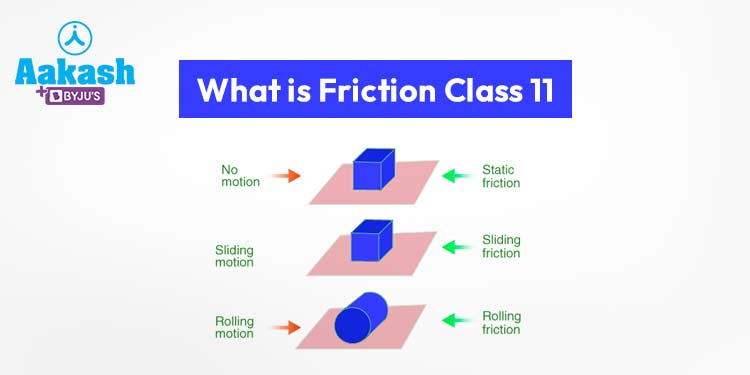
Static Friction: This type of friction occurs when two objects are in contact but not in relative motion. It prevents the objects from starting to move against each other. For instance, pushing a heavy box on the floor requires overcoming static friction.
Kinetic Friction: Also known as dynamic friction, it happens when two objects are in motion relative to each other. Kinetic friction opposes the motion and acts in the direction opposite to the object’s velocity.
Rolling Friction: This type of friction occurs when an object rolls over a surface. It is generally lower than sliding friction, making it easier for objects like wheels to move smoothly.
Fluid Friction: When an object moves through a fluid (liquid or gas), it experiences fluid friction, also called drag. This type of friction can significantly affect the speed and efficiency of moving objects.
Factors Affecting Friction:
Several factors influence the magnitude of friction between two surfaces:
Surface Texture: Rougher surfaces tend to have higher friction than smoother surfaces because the irregularities interlock more effectively.
Force Pressing the Surfaces Together: Increasing the normal force between two surfaces enhances friction. The normal force is the force pressing the surfaces together perpendicular to the contact area.
Type of Material: Different materials have different coefficients of friction, which quantify the frictional force between two materials in contact.
Temperature: Friction can be influenced by temperature changes. In some cases, increasing the temperature can reduce friction, while in others, it might increase it.
Importance of Friction:
Friction is both a friend and a foe, depending on the context. Some of the significant roles of friction are:
Motion and Transportation: Friction enables us to walk, drive vehicles, and ride bicycles by providing the necessary traction between our feet or wheels and the ground.
Holding Objects in Place: Friction helps us hold objects and prevents them from slipping out of our hands.
Braking Systems: Friction is essential in braking systems, allowing vehicles to slow down and stop safely.
Grip and Stability: Friction is crucial for maintaining grip and stability in various sports, such as in shoes during running or in tires during racing.
However, friction also has some negative effects, such as causing wear and tear on moving parts, reducing energy efficiency, and generating heat in machinery. Therefore, engineers and designers often work to minimize friction in certain applications to improve performance and efficiency.
Conclusion:
Friction is a vital force that governs how objects interact with each other and the environment. It affects numerous aspects of our lives, from basic daily activities to the functioning of complex machinery and vehicles. Understanding friction and its effects is crucial for various fields, including engineering, physics, and everyday problem-solving.
FAQs on Friction:
1. What is friction, and why does it occur?
Friction is a force that opposes the relative motion or attempted motion between two objects in contact. It occurs due to the interlocking of microscopic irregularities on the surfaces of objects in contact, creating resistance when they slide against each other.
2. What are the different types of friction?
Friction can be categorized into four main types:
Static Friction: Prevents objects from starting to move against each other.
Kinetic Friction: Opposes the motion of two objects sliding against each other.
Rolling Friction: The resistance experienced when an object rolls over a surface.
Fluid Friction: Occurs when an object moves through a fluid (liquid or gas), creating drag.
3. How does friction affect everyday activities?
Friction plays a crucial role in our daily lives. It allows us to walk, drive, hold objects, and write with pens. It provides traction, which is essential for movement, and it helps in braking systems for vehicles, enabling safe stopping. Friction also influences sports activities by providing grip and stability.
4. Can friction be both helpful and harmful?
Yes, friction can have both positive and negative effects. On one hand, it enables us to perform various tasks and movements, as mentioned in the previous answer. On the other hand, friction can lead to wear and tear on machinery, reduce energy efficiency, and generate heat, which can be undesirable in certain applications.
5. How can engineers and designers reduce friction in specific applications?
Engineers and designers can employ various techniques to minimize friction in specific applications. Some common methods include using lubricants to create a slippery barrier between surfaces, incorporating smoother materials, and employing rolling elements like ball bearings to reduce sliding friction. Reducing contact area and employing aerodynamic designs can also help in reducing fluid friction. By carefully managing friction, they can enhance efficiency, reduce energy consumption, and extend the lifespan of mechanical systems.