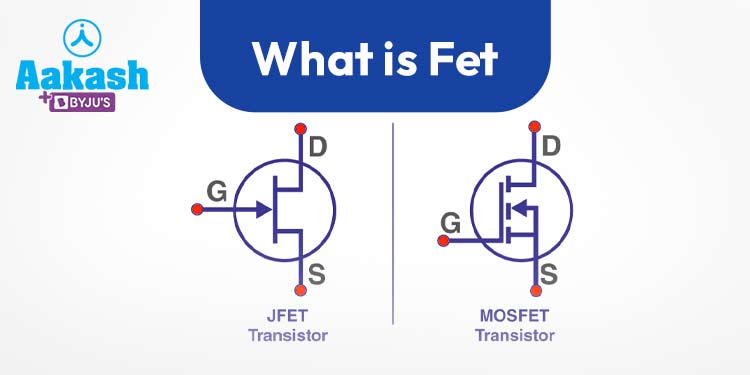

FET stands for Field Effect Transistor, and it is one of the most fundamental semiconductor devices used in modern electronics. It is a type of transistor that controls the flow of electric current through a semiconductor channel with the application of an electric field. FETs come in various types, including Metal-Oxide-Semiconductor FETs (MOSFETs), Junction FETs (JFETs), and Insulated-Gate Bipolar Transistors (IGBTs), but the most commonly used and widely known FET is the MOSFET.
Basic Working Principle:
The core principle behind FET operation is the modulation of conductivity within the semiconductor channel by an external electric field. The transistor has three terminals: the source, the drain, and the gate. The source and drain are connected to the ends of the semiconductor channel, while the gate is placed close to the channel, but electrically insulated from it by a thin oxide layer.
When a voltage is applied to the gate terminal, it creates an electric field across the oxide layer, which affects the conductivity of the semiconductor channel beneath it. In the case of an n-channel MOSFET, a positive voltage applied to the gate creates an electric field that attracts free electrons in the channel, allowing current to flow from the source to the drain. Conversely, in a p-channel MOSFET, a negative gate voltage repels free electrons, allowing current to flow from the drain to the source.
Types of FETs:
MOSFET (Metal-Oxide-Semiconductor FET): This is the most commonly used type of FET in modern electronics. It further includes two subtypes: n-channel MOSFET (NMOS) and p-channel MOSFET (PMOS).
NMOS: Conducts when a positive voltage is applied to the gate terminal.
PMOS: Conducts when a negative voltage is applied to the gate terminal.
JFET (Junction FET): This type of FET uses a single semiconductor material and relies on the formation of a depletion region near the gate to control current flow.
N-channel JFET: Conduction occurs when the gate-source voltage is zero or negative.
P-channel JFET: Conduction occurs when the gate-source voltage is zero or positive.
IGBT (Insulated-Gate Bipolar Transistor): This is a combination of MOSFET and bipolar transistor technology. It has a MOSFET input and a bipolar transistor output, making it suitable for high-power applications.
Applications of FETs:
FETs have revolutionized the world of electronics and are widely used in various applications, including:
Digital Electronics: FETs serve as the building blocks for digital integrated circuits (ICs) such as microprocessors, memory chips, and logic gates due to their ability to switch and amplify electrical signals with high efficiency.
Analog Electronics: FETs are used in analog circuits like audio amplifiers, voltage regulators, and signal processing circuits.
Switching Circuits: FETs act as efficient switches in electronic circuits, enabling control over current flow and providing on-off states.
Radio Frequency (RF) Devices: FETs are essential components in RF amplifiers, mixers, and oscillators in communication systems.
Power Electronics: High-power FETs are used in power converters, motor drives, and power supplies due to their ability to handle large currents.
Sensors: FET-based sensors are used in various applications like temperature sensing, gas sensing, and light detection.
FETs have played a pivotal role in advancing technology and are central to the operation of modern electronic devices we use daily, contributing to the growth and innovation in the field of electronics.
FAQs (Frequently Asked Questions) about FET:
What is a Field Effect Transistor (FET), and how does it work?
A FET is a semiconductor device used to control the flow of electric current. It operates by applying an electric field to a semiconductor channel, which modulates its conductivity. When a voltage is applied to the gate terminal, it creates an electric field that allows or restricts the flow of current between the source and drain terminals.
What are the different types of FETs, and how do they differ in operation?
There are several types of FETs, including MOSFETs, JFETs, and IGBTs. The most common type is the MOSFET, which includes n-channel (NMOS) and p-channel (PMOS) variants. JFETs rely on the formation of a depletion region near the gate to control current flow. IGBTs combine the advantages of MOSFET and bipolar transistor technologies.
What are the applications of FETs in modern electronics?
FETs have a wide range of applications, including digital electronics (microprocessors, memory chips), analog electronics (audio amplifiers, voltage regulators), switching circuits, radio frequency (RF) devices, power electronics (power converters, motor drives), and sensors (temperature sensing, gas sensing).
How do NMOS and PMOS FETs differ in their conduction characteristics?
NMOS FET conducts when a positive voltage is applied to the gate terminal, attracting free electrons and allowing current flow from source to drain. PMOS FET, on the other hand, conducts when a negative voltage is applied to the gate terminal, repelling electrons and enabling current flow from drain to source.
What are the advantages of FETs over other types of transistors?
FETs offer several advantages, including high input impedance, low power consumption, fast switching speeds, and excellent linearity. They are suitable for integrated circuit technology, making them a crucial component in modern electronic devices and systems. Additionally, FETs are less prone to thermal noise and have higher packing density in ICs compared to bipolar transistors.
Also Read
Difference Between NPN and PNP Transistors
PNP Transistor
NPN Transistor
What is a Transistor
What is Fet?
Bipolar Junction Transistor (BJT)
Characteristics of a Transistor
Uses of Transistors