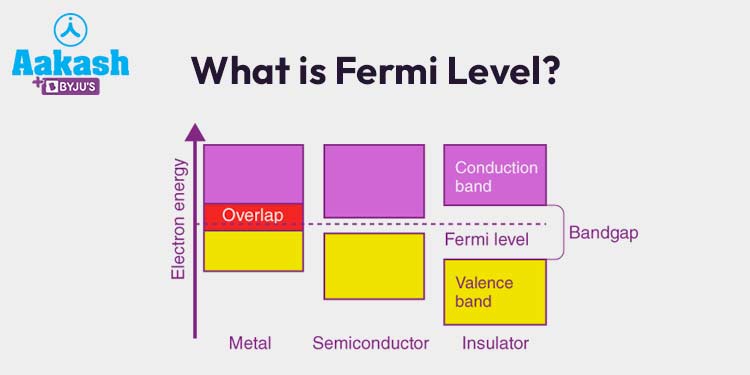

In the realm of solid-state physics and semiconductor devices, the Fermi level holds the utmost importance. Named after the Italian physicist Enrico Fermi, this concept serves as a vital cornerstone in understanding the behavior of electrons in materials. The Fermi level plays a crucial role in determining the electrical and thermal properties of semiconductors and insulators, and it is essential in explaining phenomena such as electrical conductivity, energy band diagrams, and charge carrier concentration.
Let’s delve deeper into what the Fermi level is and its significance in the world of solid-state physics.
Defining the Fermi Level
The Fermi level, denoted as Ef, represents the energy level at which, at absolute zero temperature (0 Kelvin or -273.15°C), a material’s electrons have filled all available quantum states up to that energy. In other words, the Fermi level separates the highest energy states occupied by electrons from the vacant states above them in a solid material. It acts as a reference point for determining the electron energy distribution within a material.
Quantum Mechanics and Fermi-Dirac Distribution
To comprehend the Fermi level better, we must consider the principles of quantum mechanics and the Fermi-Dirac distribution function. According to quantum mechanics, electrons in a material are governed by discrete energy levels, forming bands in the energy spectrum. The Fermi-Dirac distribution function describes the statistical behavior of electrons, dictating the probability of an energy level being occupied by an electron at a given temperature.
At absolute zero temperature, the Fermi-Dirac distribution function dictates that all energy states below the Fermi level are filled with electrons, while all energy states above it remain unoccupied. As temperature increases, electrons gain thermal energy, and some of them transition from filled energy states below the Fermi level to vacant states above it.
Role of the Fermi Level in Conductors, Semiconductors, and Insulators
Conductors:
In metals and highly doped semiconductors, the Fermi level lies within the energy band known as the “valence band.” This band contains numerous available energy states, allowing electrons to move freely and contribute to electrical conductivity. The abundance of free electrons is what makes conductors efficient in carrying electric current.
Semiconductors:
For intrinsic (undoped) semiconductors, the Fermi level is located close to the middle of the energy band gap between the valence and conduction bands. This position indicates that, at absolute zero, a small number of electrons are promoted to the conduction band due to thermal energy, creating a small concentration of charge carriers responsible for electrical conductivity.
Insulators:
In insulators, the Fermi level resides deep within the energy bandgap, which means there are very few, if any, electrons available to participate in electrical conduction. The energy required to promote electrons from the valence band to the conduction band is significant, resulting in a near-zero conductivity.
Conclusion:
In summary, the Fermi level is a fundamental concept in solid-state physics that defines the energy level separating occupied and unoccupied states in a material at absolute zero temperature. It plays a critical role in determining the electrical and thermal properties of conductors, semiconductors, and insulators. Understanding the Fermi level and its behavior is essential for designing and developing electronic devices and forms the basis for various technological applications in modern electronics.
FAQs (Frequently Asked Questions) about the Fermi Level
What is the Fermi level, and why is it essential in solid-state physics?
The Fermi level represents the energy level at which, at absolute zero temperature, a material's electrons have filled all available quantum states up to that energy. It serves as a reference point for determining the electron energy distribution within a material. The Fermi level is crucial in explaining electrical conductivity, energy band diagrams, and charge carrier concentration in conductors, semiconductors, and insulators.
How does the Fermi-Dirac distribution function relate to the Fermi level?
The Fermi-Dirac distribution function is a key concept in understanding the behavior of electrons in materials at different temperatures. It dictates the probability of electrons occupying different energy states. At absolute zero temperature, the Fermi-Dirac distribution function ensures that all energy states below the Fermi level are filled with electrons, while all states above it remain empty. As temperature increases, some electrons gain thermal energy and transition to higher energy states.
What is the significance of the Fermi level in electrical conductivity?
The Fermi level's position in a material's energy band structure directly influences its electrical conductivity. In conductors, the Fermi level resides within the valence band, where numerous available energy states allow electrons to move freely and contribute to electrical conduction. In contrast, insulators have the Fermi level deep within the energy bandgap, resulting in minimal electron movement and almost no electrical conduction.
How does the Fermi level influence semiconductor behavior?
In intrinsic (undoped) semiconductors, the Fermi level is located close to the middle of the energy bandgap between the valence and conduction bands. This position means that at absolute zero temperature, only a small number of electrons are promoted to the conduction band due to thermal energy. These electrons create a small concentration of charge carriers responsible for electrical conductivity in semiconductors.
Can the Fermi level change with temperature or doping?
Yes, the Fermi level can change with temperature and doping. As the temperature increases, electrons gain thermal energy, leading to their transition from filled energy states below the Fermi level to vacant states above it. Doping, which involves introducing impurities into a material, can also shift the Fermi level position. In n-type doping, additional electrons are added to the material, raising the Fermi level, while p-type doping introduces holes, lowering the Fermi level. These changes in the Fermi level significantly impact the electrical and thermal properties of the material.