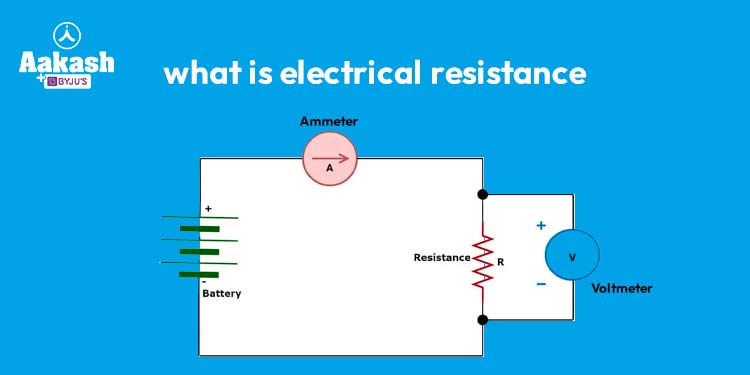

Electrical resistance is a fundamental concept in physics and electrical engineering that describes the opposition or hindrance an electrical conductor offers to the flow of electric current. It is a property inherent to all materials and components through which electricity passes. Understanding electrical resistance is crucial for designing efficient electrical systems, and it plays a significant role in various aspects of modern technology.
The Nature of Electrical Resistance:
The flow of electric current through a conductor involves the movement of electrons. These electrons encounter resistance as they travel through the conductor. The resistance arises due to the interactions between electrons and the atoms or ions of the material. As electrons move through the conductor, they collide with the lattice structure of the material, creating a “friction” effect that impedes their motion. The resistance is quantified in ohms (Ω).
Ohm’s Law:
Ohm’s Law is a fundamental principle in electrical engineering that describes the relationship between voltage (V), current (I), and resistance (R). It states that the current passing through a conductor is directly proportional to the voltage across the conductor and inversely proportional to the resistance of the conductor:
V = I * R
where:
V is the voltage (potential difference) across the conductor,
I is the current passing through the conductor, and
R is the resistance of the conductor.
Ohm’s Law is essential for analyzing and predicting the behavior of electrical circuits and allows engineers to calculate the voltage, current, or resistance if the other two values are known.
Factors Affecting Electrical Resistance:
Several factors influence the electrical resistance of a material or component:
Material: Different materials have different atomic structures and electron configurations, resulting in varying levels of resistance. For example, metals typically have low resistance, making them excellent conductors, while insulators have high resistance and restrict the flow of current.
Length: The length of the conductor directly affects its resistance. Longer conductors offer more resistance compared to shorter ones, as electrons have to travel a greater distance, encountering more collisions along the way.
Cross-Sectional Area: The cross-sectional area of the conductor also influences resistance. A larger area allows more electrons to flow, reducing the likelihood of collisions and, consequently, reducing resistance.
Temperature: Resistance generally increases with temperature. As the temperature rises, the atoms in the material vibrate more, leading to more frequent collisions with electrons, and thus, increased resistance.
Applications of Electrical Resistance:
The understanding of electrical resistance is essential for various applications, including:
Electrical Circuits: Engineers use the concept of resistance to design and analyze electrical circuits, ensuring proper functioning and preventing damage to components.
Heating Elements: Electrical resistance is employed in devices like electric heaters, toasters, and stovetops, where it converts electrical energy into heat.
Lighting: Resistors are used to control the current in light-emitting diodes (LEDs) and other lighting applications.
Electronics: Resistors are vital components in electronic circuits to limit current flow, divide voltage, and provide biasing.
Thermistors: Thermistors are temperature-sensitive resistors used in temperature measurement and control applications.
In summary, electrical resistance is a critical concept that governs the behavior of electric current in various materials and components. It forms the basis of many electronic and electrical devices, enabling the efficient and controlled flow of electricity in our modern world. Understanding electrical resistance is essential for engineers and scientists alike to design safe, reliable, and efficient electrical systems.
Frequently Asked Questions (FAQs) About Electrical Resistance:
What is electrical resistance, and why is it important in electrical systems?
Electrical resistance refers to the opposition offered by a material or component to the flow of electric current. It is crucial in electrical systems as it determines the amount of current flowing through a circuit. Understanding resistance helps engineers design efficient systems, prevent component damage, and ensure safe operation.
How is electrical resistance measured?
Electrical resistance is measured in ohms (Ω). It can be measured using a device called a multimeter, which applies a known voltage across the component or material and measures the resulting current. The resistance is then calculated using Ohm's Law: R = V/I, where R is the resistance, V is the voltage, and I is the current.
What factors affect the resistance of a conductor?
Several factors influence the resistance of a conductor:
Material: Different materials have different resistivity, affecting their resistance.
Length: Longer conductors have higher resistance than shorter ones.
Cross-Sectional Area: A larger area reduces resistance, as it allows more current to flow.
Temperature: Resistance generally increases with temperature for most materials.
How does electrical resistance impact electronic devices?
In electronic circuits, resistance is utilized in various ways:
Limiting current: Resistors are used to control the current flow and protect sensitive components.
Voltage division: Resistors are used to divide voltage and provide specific voltage levels.
Biasing: Resistors are used in biasing circuits to stabilize transistor operation.
Can electrical resistance be beneficial in any applications?
Yes, electrical resistance can be beneficial in some applications. For instance:
Heating elements: High resistance wires are used in heating elements to convert electrical energy into heat for appliances like toasters and stovetops.
Thermistors: Thermistors are temperature-sensitive resistors used in temperature measurement and control applications, such as in thermostats.
Understanding electrical resistance is essential for designing efficient electrical systems, ensuring the proper functioning of devices, and making informed engineering decisions in various applications.