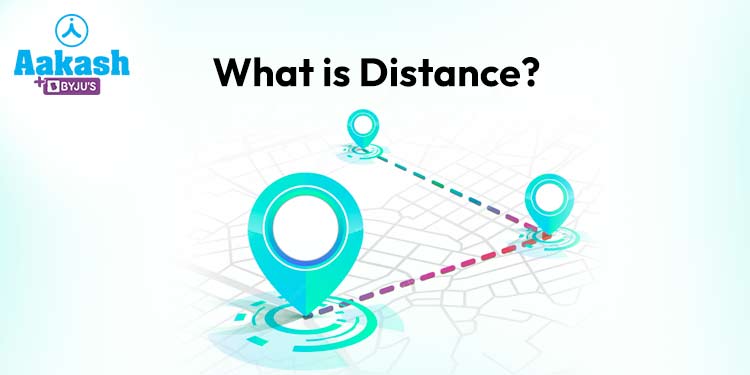

Distance, in its essence, is the measurement of the space that separates two points or objects. It is a fundamental concept that underpins our understanding of the physical world and plays a crucial role in various fields such as physics, mathematics, geography, and everyday life. This seemingly simple notion carries profound implications across a spectrum of contexts, from the cosmos to the microcosm, and even in the intangible spaces between individuals.
Measuring Physical Separation:
In the realm of physics, distance serves as a critical metric for gauging how far apart objects are from each other in space. Whether we’re discussing the distance between celestial bodies in the universe or the distance a vehicle travels along a road, this concept helps us make sense of spatial relationships. In physics, distance can be measured in various units, including meters, kilometers, miles, and astronomical units, each tailored to the specific scale being studied.
Euclidean and Non-Euclidean Perspectives:
The classical Euclidean geometry introduced by ancient mathematicians, such as Euclid, defines distance in a straightforward manner. In an Euclidean space, the distance between two points is the length of the shortest path connecting them—what we commonly visualize as a straight line. However, as the field of mathematics expanded, so did our understanding of distance. Non-Euclidean geometries, such as spherical and hyperbolic geometries, showed that there can be different ways to measure distance on curved surfaces, revealing the rich complexity of spatial relationships.
Quantifying More Than Space:
While distance often conveys the idea of physical separation, it’s important to note that it can also encapsulate metaphorical and abstract concepts. Emotional and social distances, for instance, refer to the emotional or psychological gap between individuals. Two people might be physically close yet emotionally distant, highlighting how distance can extend beyond physical space to encompass our relationships and interactions.
Technological Advancements and Shrinking Distances:
Advancements in technology have significantly impacted our perception of distance. The advent of transportation technologies, from trains to airplanes, has drastically reduced the time it takes to travel long distances. The rise of communication technologies, notably the internet and social media, has further blurred the lines of distance by enabling instantaneous communication across vast geographical divides. This phenomenon has transformed how we connect, learn, and collaborate, effectively collapsing temporal and spatial gaps.
Philosophical Musings:
Distance also finds its way into philosophical contemplations. Thinkers have pondered questions about the nature of distance and its influence on our perceptions of reality. Is distance an inherent aspect of the universe, or is it a construct of human cognition and measurement? Some philosophical discussions delve into the idea that distance might not be an absolute concept but rather a product of our perspective and the way we interact with the world.
In conclusion, distance is a multifaceted concept that extends beyond mere physical measurement. It shapes our understanding of space, relationships, and even philosophical inquiries. From the microscopic to the cosmic, from the tangible to the abstract, distance threads through the fabric of our existence, guiding our exploration of the world around us and the spaces that connect us all.
FAQs About Distance: Exploring the Space Between Points
1. What is the distance in physics, and why is it important?
Distance in physics refers to the measurement of the space that separates two objects or points. It plays a crucial role in understanding spatial relationships and calculating various physical quantities. For instance, distance is essential for determining the displacement of objects, calculating speed, and studying the interactions between celestial bodies.
2. Can distance be measured differently on curved surfaces?
Yes, distance can be measured differently on curved surfaces compared to flat ones. In Euclidean geometry, the shortest path between two points is a straight line. However, in non-Euclidean geometries like spherical or hyperbolic geometry, the concept of distance changes due to the curvature of the surface. These different approaches to measuring distance have profound implications for understanding space on a larger scale.
3. How does technology influence our perception of distance?
Technology has significantly altered our perception of distance. Transportation advancements have made it possible to travel vast distances in relatively short periods. Communication technologies, such as the Internet and social media, have virtually eliminated the barriers of distance by enabling instant global communication. This has revolutionized how we connect, collaborate, and experience the world.
4. Can distance exist beyond physical space?
Yes, distance can extend beyond physical space. Emotional and social distances refer to the psychological or emotional gaps between individuals, even if they are physically close. These concepts highlight the complexity of human relationships and interactions. Distance, in this context, is about more than just physical separation; it delves into the intricacies of our emotions and connections.
5. Is distance an absolute concept or a human construct?
The nature of distance is a subject of philosophical debate. Some philosophers ponder whether distance is an inherent aspect of the universe or merely a construct of human perception and measurement. This raises questions about the nature of reality and how we interact with our surroundings. The idea that distance might be a product of our perspective adds a layer of complexity to our understanding of space and its role in our lives.