
The basic principle behind a DC motor’s operation is the interaction between a magnetic field and a current-carrying conductor.
A DC motor, short for a Direct Current motor, is a type of electric motor that converts electrical energy into mechanical energy through the interaction of magnetic fields. These motors are widely used in various applications due to their simplicity, versatility, and controllability. DC motors have been in use for over a century and remain essential components in many devices and industries.
How Does a DC Motor Work?
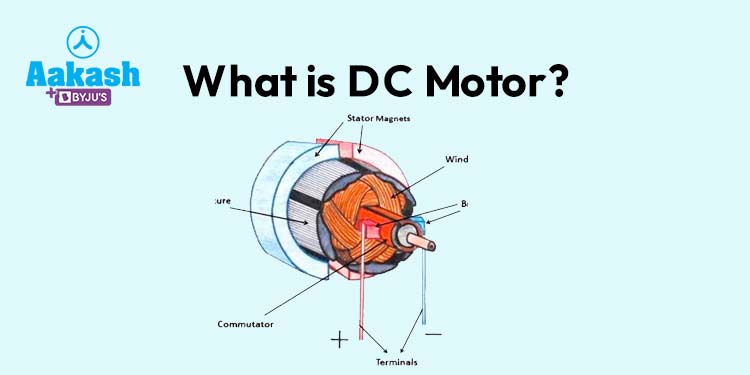
The basic principle behind a DC motor’s operation is the interaction between a magnetic field and a current-carrying conductor. A typical DC motor consists of two essential parts: a stator (the stationary part) and a rotor (the rotating part).
Stator:
The stator comprises a permanent magnet or an electromagnet that generates a constant magnetic field. In some cases, field coils are used, where an external power source supplies the current to create the magnetic field.
Rotor:
The rotor is an armature, usually made up of conductive material, such as copper windings, wrapped around a core. The rotor is mounted on an axle or shaft and can freely rotate within the magnetic field created by the stator.
When an electric current flows through the rotor’s windings, it creates a magnetic field around the rotor. This magnetic field interacts with the stator’s magnetic field, resulting in a force that causes the rotor to rotate. The direction of rotation is determined by the direction of the current in the rotor windings and the orientation of the stator’s magnetic field.
Types of DC Motors
Permanent Magnet DC Motors (PMDC):
These motors use permanent magnets to create the stator’s magnetic field. PMDC motors are commonly used in small applications, such as household appliances, toys, and power tools, due to their simplicity and cost-effectiveness.
Series Wound DC Motors:
In this type of motor, the field coils are connected in series with the armature windings. Series motors have high starting torque, making them suitable for applications requiring high initial power, like electric locomotives and heavy machinery.
Shunt Wound DC Motors:
Shunt motors have field coils connected in parallel with the armature windings. They provide steady speed and are often used in applications where speed regulation is essential, such as conveyors and machine tools.
Compound Wound DC Motors:
Compound motors combine features of both series and shunt motors. They offer a balance of starting torque and speed regulation, making them suitable for various applications, including industrial drives and automotive systems.
Advantages of DC Motors
Speed Control:
DC motors offer excellent speed control by varying the voltage applied to the motor. This feature makes them ideal for applications requiring precise speed adjustments.
High Starting Torque:
DC motors can deliver high starting torque, making them useful for devices requiring an initial boost of power during startup.
Reliability:
DC motors are known for their reliability and durability, especially in applications with well-maintained commutators and brushes.
Ease of Reversal:
Changing the direction of rotation in a DC motor is simple by reversing the polarity of the applied voltage.
Limitations of DC Motors
Brush and Commutator Wear:
DC motors with brushes and commutators require regular maintenance due to wear and tear, which can lead to increased maintenance costs.
Efficiency:
Compared to some modern motor types, such as AC induction motors, DC motors can be less efficient, particularly at higher power ratings.
Conclusion:
DC motors are vital components used in a wide range of applications, from household devices to industrial machinery. Their ability to provide precise speed control and high starting torque makes them versatile and valuable in various industries. As technology advances, the limitations of DC motors are being addressed, ensuring their continued relevance in the evolving landscape of electrical motors and drives.
FAQs
What is a DC motor, and how does it work?
A DC motor is an electric motor that converts electrical energy into mechanical energy. It operates on the principle of electromagnetic induction, where a magnetic field created by the stator interacts with the rotor's magnetic field (created by the flow of current in the armature windings) to produce rotational motion.
What are the main types of DC motors?
There are several types of DC motors, including:
Permanent Magnet DC Motors (PMDC)
Series Wound DC Motors
Shunt Wound DC Motors
Compound Wound DC Motors
What are the advantages of using a DC motor?
DC motors offer several advantages, such as:
Precise speed control through voltage adjustment.
High starting torque for applications requiring initial power boost during startup.
Reliability and durability with proper maintenance.
Easy reversibility of rotation by changing the polarity of the applied voltage.
Where are DC motors commonly used?
DC motors find applications in various industries and devices, including:
Household appliances (e.g., electric fans, blenders).
Power tools (e.g., drills, grinders).
Electric vehicles (e.g., electric cars, scooters).
Industrial machinery (e.g., conveyor belts, pumps).
Robotics and automation systems.
What are the limitations of DC motors?
While DC motors are widely used, they have some limitations:
Brush and commutator wear may lead to increased maintenance needs.
Efficiency may be lower compared to some modern motor types, especially at higher power ratings.
More complex speed control mechanisms might be required for certain high-performance applications.