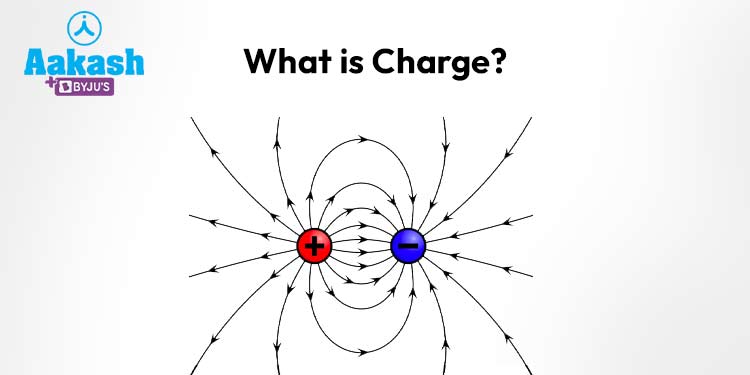

Charge is a fundamental concept in physics that lies at the heart of the electromagnetic force, one of the four fundamental forces of nature. It is a property of particles that gives rise to electric and magnetic interactions, playing a crucial role in shaping the behavior of matter and energy in the universe. In this article, we will delve into the concept of charge, exploring its types, properties, and its significance in our understanding of the physical world.
The Nature of Charge:
Charge is an intrinsic property of elementary particles, such as electrons and protons, which make up atoms. There are two types of charge: positive and negative. Protons carry a positive charge, while electrons carry a negative charge. This duality forms the foundation of the concept of charge, with like charges repelling each other and opposite charges attracting.
Quantization of Charge:
One of the intriguing aspects of charge is its quantization. All known charged particles have charges that are integer multiples of the elementary charge (denoted as ‘e’). The elementary charge is approximately 1.602 x 10^-19 coulombs, a fundamental constant of nature. This quantization of charge implies that charges cannot exist in fractional amounts, leading to discrete and predictable interactions between charged particles.
Conservation of Charge:
An essential principle in the realm of charge is the conservation of charge. This principle states that the total electric charge in an isolated system remains constant over time. In other words, charge cannot be created or destroyed; it can only be transferred from one object to another. This conservation law is a fundamental concept in electromagnetism and has far-reaching implications in understanding various phenomena in nature.
Electromagnetic Force:
Charge is intricately linked to the electromagnetic force, which governs the interactions between charged particles. This force is responsible for a wide range of phenomena, from the attraction and repulsion of magnets to the behavior of electric currents in circuits. The electromagnetic force is conveyed through the exchange of virtual particles called photons, which mediate the interactions between charged particles.
Applications of Charge:
Our understanding of charge has led to a plethora of technological advancements that shape our modern world. From electricity generation and transmission to the operation of electronic devices and telecommunications, charge plays a pivotal role. The principles of charge also underlie concepts in chemistry, biology, and even astronomy, contributing to a holistic comprehension of the universe.
Conclusion:
A charge is a fundamental property of matter that influences the behavior of particles and gives rise to electromagnetic force, an essential component of the physical world. Its quantization, conservation, and interactions form the basis for understanding a wide range of natural phenomena and technological innovations. By unraveling the mysteries of charge, scientists have unlocked a deeper understanding of the universe and harnessed its power for the betterment of society.
FAQs About Charge
1. What is charge and why is it important in physics?
A charge is a fundamental property of particles, either positive or negative, that gives rise to electric and magnetic interactions. It is essential in physics because it underlies the behavior of matter, influences electromagnetic force, and contributes to our understanding of various natural phenomena.
2. How is charge quantized, and what is the significance of this quantization?
Charge quantization refers to the fact that the charges of all known particles are integer multiples of the elementary charge (approximately 1.602 x 10^-19 coulombs). This quantization ensures that charge exists in discrete amounts, leading to predictable and understandable interactions between charged particles.
3. What is the conservation of charge, and how does it impact our daily lives?
The conservation of charge states that the total electric charge in an isolated system remains constant over time. This principle explains why charges cannot be created or destroyed, only transferred. In our daily lives, this principle governs how electrical devices function, ensuring that electric currents behave predictably and enabling the design of efficient power systems.
4. How does charge relate to electromagnetic force, and what role does it play in technology?
Charge is intimately connected to the electromagnetic force, which governs interactions between charged particles. This force is responsible for a range of phenomena, from the behavior of magnets to the operation of electronic devices. Charge’s role in technology is evident in electricity generation, transmission, and applications like telecommunications and electronics.
5. Can charge be negative and positive simultaneously?
No, the charge cannot be both negative and positive simultaneously. A charge is a fundamental property of particles, and a particle carries either a positive charge (protons) or a negative charge (electrons), but not both at the same time. The interaction between positive and negative charges is what leads to the attractive and repulsive forces that shape the behavior of matter.