
Average velocity is a fundamental concept in physics and kinematics that describes the average rate of change of an object’s position over a given time interval. It is an essential concept in understanding the motion of objects and plays a crucial role in various fields such as physics, engineering, and even sports. Whether you are calculating the speed of a car, the motion of a rocket, or analyzing the performance of an athlete, average velocity is a key parameter to consider.
Definition of Average Velocity
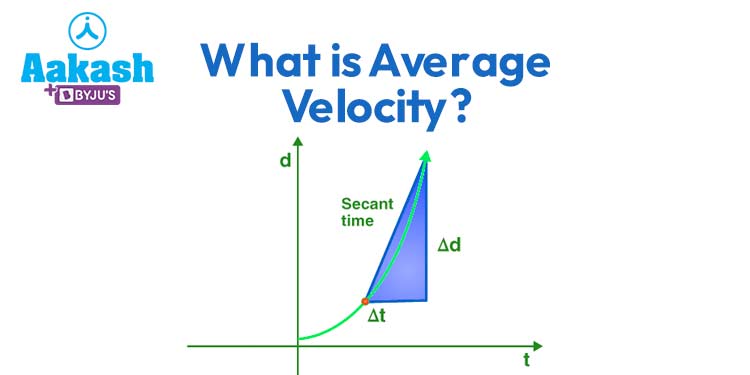
Average velocity is defined as the displacement of an object divided by the time it takes to cover that displacement. Displacement refers to the change in an object’s position from its initial point to its final point, while time refers to the duration taken to cover that displacement. The average velocity is a vector quantity, which means it has both magnitude (speed) and direction. It is expressed in units of distance per time, such as meters per second (m/s) in the International System of Units (SI).
Mathematical Representation
The mathematical representation of average velocity can be given by the following formula:
Average Velocity (v_avg) = (Change in Position (Δx)) / (Change in Time (Δt))
Where:
Δx represents the displacement (change in position) of the object.
Δt represents the time taken to cover that displacement.
For example, if a car moves from point A to point B, the change in position (displacement) is 100 meters, and the time taken is 10 seconds, then the average velocity can be calculated as follows:
v_avg = 100 meters / 10 seconds = 10 m/s (in the direction from A to B)
Positive and Negative Average Velocity
The sign of the average velocity indicates the direction of motion. If the object is moving in a positive direction (e.g., from left to right), the average velocity will be positive. Conversely, if the object is moving in a negative direction (e.g., from right to left), the average velocity will be negative. If the object returns to its starting point, the average velocity will be zero since the displacement is zero.
Comparing Average Velocity and Instantaneous Velocity
Average velocity should not be confused with instantaneous velocity. Instantaneous velocity refers to the velocity of an object at a specific instant in time, and it is calculated by considering an infinitesimally small time interval around that particular instant. On the other hand, average velocity considers the overall displacement and time over a finite interval. In situations with uniform motion, the average velocity and instantaneous velocity will be the same, but this is not always the case in scenarios with varying motion.
Conclusion:
Average velocity is a critical concept in the study of motion, allowing us to understand an object’s overall movement over a given time period. By considering the displacement and time, we can calculate the average velocity of an object and determine its speed and direction. This concept finds applications in numerous fields, from simple everyday scenarios to complex scientific and engineering endeavors. Understanding average velocity enhances our comprehension of the physical world and contributes to solving real-world problems.
FAQs on Average Velocity
What is average velocity, and how is it different from average speed?
Average velocity is a measure of an object's average rate of change in position over time, taking both magnitude and direction into account. It is a vector quantity. On the other hand, average speed is the total distance traveled by an object divided by the total time taken, considering only the magnitude of motion without considering direction.
How is average velocity calculated when an object changes direction during motion?
When an object changes direction during motion, the average velocity is calculated by considering the total displacement and the total time taken for the entire journey, irrespective of the path taken. The direction of motion is essential, as it influences the sign of the average velocity.
Can the average velocity be zero even if the object has moved during a time interval?
Yes, the average velocity can be zero even if the object has moved during a time interval. This happens when the object returns to its starting point at the end of the journey, resulting in zero displacement. For example, if a car travels 30 kilometers to the east and then returns 30 kilometers to the west, its total displacement is zero, yielding an average velocity of zero.
How is average velocity different from instantaneous velocity?
Average velocity represents an object's overall rate of change in position over a finite time interval. It considers the total displacement and total time taken during that interval. In contrast, instantaneous velocity refers to the object's velocity at a specific instant in time, considering an infinitesimally small time interval around that instant.
Can average velocity be negative? If so, what does it signify?
Yes, average velocity can be negative. The negative sign indicates that the object is moving in the opposite direction to the positive coordinate axis. For example, if an object travels 50 meters to the west in 10 seconds, the average velocity will be -5 m/s (negative because it moves in the opposite direction to the positive direction of the coordinate system). The negative sign simply indicates the direction of motion, not the magnitude of the velocity.