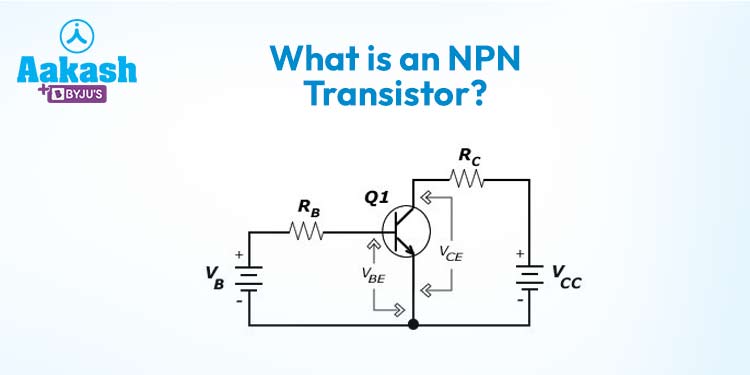

Transistors are fundamental components in modern electronics, serving as miniature electronic switches that control the flow of electrical current. NPN transistors are one of the most common types of transistors used in electronic circuits. In this article, we’ll explore what an NPN transistor is, how it works, and its applications in various electronic devices.
NPN Transistor Basics
NPN stands for “Negative-Positive-Negative,” which refers to the arrangement of semiconductor materials within the transistor. An NPN transistor consists of three layers of semiconductor materials: the N-type layer (negative), the P-type layer (positive), and another N-type layer. These layers are typically made of silicon or germanium. The NPN transistor is a type of bipolar junction transistor (BJT), a class of transistors characterized by the use of both electron and hole charge carriers.
How Does an NPN Transistor Work?
The functioning of an NPN transistor is based on the principle of amplification. It can be used as an electronic switch or an amplifier depending on how it’s biased or connected in a circuit.
Emitter (E): The N-type layer is called the emitter and is the source of electrons. When a small current flows from the emitter to the base, it controls a much larger current from the collector to the emitter.
Base (B): The P-type layer is known as the base. The base current controls the flow of electrons from the emitter to the collector.
Collector (C): The second N-type layer is called the collector, and it collects the electrons that flow from the emitter when the transistor is in an active state.
In an NPN transistor, the collector-base junction is reverse-biased, meaning a voltage is applied such that the collector is more positive than the base. This creates a depletion region at the junction, blocking the flow of electrons from the collector to the base.
When a small current (the base current) is applied to the base-emitter junction, it allows electrons to move from the emitter to the collector. This controlled flow of electrons from the emitter to the collector results in amplification, making NPN transistors valuable for signal amplification and switching applications.
Applications of NPN Transistors
NPN transistors find widespread use in various electronic circuits and devices, including:
Amplifiers: NPN transistors are commonly used in audio and radio frequency amplifiers to increase the strength of weak electrical signals.
Switches: They can be used as electronic switches in digital logic circuits, turning devices on and off in response to control signals.
Signal Modulation: In radio transmitters, NPN transistors help modulate the carrier signal with information, allowing us to transmit audio or data wirelessly.
Digital Logic Gates: NPN transistors are essential components in digital logic gates like NAND and NOR gates, used extensively in computers and digital electronics.
Signal Processing: They play a role in various signal-processing circuits, such as oscillators and voltage-controlled amplifiers.
Conclusion
NPN transistors are fundamental building blocks in the world of electronics, offering control and amplification capabilities critical for the operation of countless electronic devices and circuits. Their versatility, reliability, and ability to amplify and switch electrical signals make them essential components in modern technology. Understanding how NPN transistors work is a fundamental step for anyone entering the field of electronics.
FAQs about NPN transistors:
1. What does NPN stand for in NPN transistors?
NPN stands for “Negative-Positive-Negative.” It refers to the arrangement of the three semiconductor layers in the transistor: the first layer is N-type (negative), the middle layer is P-type (positive), and the last layer is N-type again.
2. How does an NPN transistor amplify signals?
NPN transistors amplify signals by controlling a larger current flow from the collector to the emitter with a smaller current applied to the base. This amplification process is achieved through the controlled movement of electrons from the emitter to the collector.
3. What are the primary differences between NPN and PNP transistors?
The key difference lies in the arrangement of the semiconductor layers. In an NPN transistor, the middle layer is P-type, while in a PNP transistor, the middle layer is N-type. In NPN transistors, electrons flow from the emitter to the collector when the transistor is active, while in PNP transistors, holes flow from the emitter to the collector.
4. Where are NPN transistors commonly used?
NPN transistors have a wide range of applications. They are used in amplifiers for audio and radio frequencies, digital logic gates, signal modulation in radio transmitters, and as electronic switches in various devices, including computers, to control the flow of electrical signals.
5. What is the importance of biasing in NPN transistors?
Biasing is crucial for NPN transistors to operate correctly. It involves applying specific voltage levels to the base-emitter and collector-base junctions. Proper biasing ensures that the transistor is either in an active (amplifying) or off (non-amplifying) state, depending on the circuit requirements. It helps control the flow of current and prevents the transistor from overheating or getting damaged.