
In today’s digital age, understanding user behavior is the key to unlocking success for businesses across various industries. With the advent of advanced analytics tools, companies now have the means to delve deep into how users interact with their products, services, and platforms. One such powerful tool that has gained significant attention is Amplitude.
What is Amplitude?
Amplitude is a fundamental concept in physics and engineering, playing a crucial role in understanding various types of waves and oscillations. Whether you’re studying sound waves, electromagnetic waves, or mechanical vibrations, amplitude is a key parameter that influences how these phenomena behave and interact with the environment. In this comprehensive guide, we’ll explore the definition of amplitude, its uses, key features, and the factors that affect it. By the end, you’ll have a solid understanding of why amplitude is important and how it applies to different fields.
Definition of Amplitude
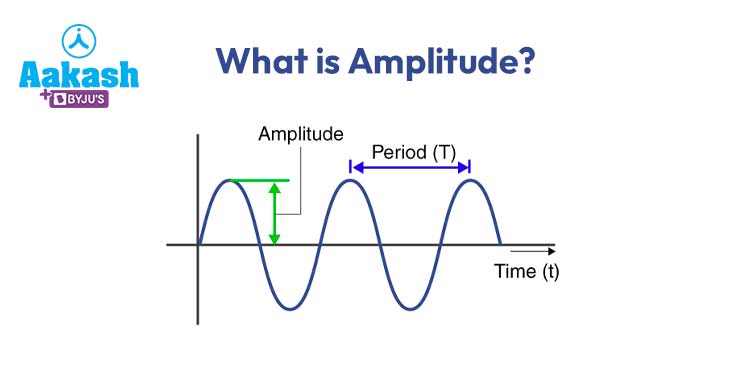
In the context of waves and oscillations, amplitude refers to the maximum displacement or distance that a point on a wave moves from its equilibrium (rest) position. It is a measure of the wave’s strength or intensity. For example, in a sound wave, amplitude determines the loudness of the sound; in a light wave, it affects the brightness.
Amplitude is typically represented by the symbol AA and is measured in units that correspond to the type of wave or oscillation being studied. For instance, in mechanical waves like sound, amplitude is measured in meters (m), while in electrical signals, it may be measured in volts (V).
Uses of Amplitude
Amplitude plays a critical role in various scientific, engineering, and everyday applications. Let’s explore some of the most common uses of amplitude across different domains:
Sound Waves
Determining Loudness:
In sound waves, amplitude is directly related to loudness. A larger amplitude means a louder sound, while a smaller amplitude results in a quieter sound. This concept is widely used in audio engineering, music production, and acoustic design.
Electromagnetic Waves
Signal Strength:
Amplitude is crucial in telecommunications, where it determines the strength of a transmitted signal. In radio broadcasting, higher amplitude waves can travel longer distances, ensuring clear reception.
Mechanical Oscillations
Vibration Analysis:
In mechanical systems, amplitude is used to assess the severity of vibrations. For example, in machinery, excessive amplitude in vibrations can indicate a malfunction or imbalance, requiring maintenance.
Medical Imaging
Ultrasound:
In medical ultrasound imaging, amplitude helps in visualizing different tissues within the body. By analyzing the amplitude of the reflected sound waves, doctors can distinguish between various structures, aiding in diagnosis.
Seismology
Earthquake Analysis:
Amplitude is vital in seismology for measuring the strength of earthquakes. The amplitude of seismic waves helps determine the magnitude of an earthquake, which is essential for assessing damage and issuing warnings.
Music and Acoustics
Volume Control:
In musical instruments and sound systems, amplitude adjustments allow for controlling the volume. Musicians and sound engineers use amplitude to create dynamic contrasts in performances and recordings.
Key Features of Amplitude
Amplitude, as a fundamental property of waves and oscillations, has several key features that make it an essential concept in science and engineering. Here are some of the most important characteristics of amplitude:
Magnitude
Amplitude is a scalar quantity, meaning it only has magnitude and no direction. It represents the maximum extent of displacement from the equilibrium position in a wave.
Relation to Energy
The energy carried by a wave is directly proportional to the square of its amplitude. This means that a wave with a higher amplitude carries more energy than one with a lower amplitude. For example, doubling the amplitude of a sound wave quadruples its energy.
Phase Independence
Amplitude is independent of the phase of the wave. The phase determines the position of the wave at a given time, but the amplitude remains constant regardless of the phase.
Frequency Independence
Amplitude is also independent of the frequency of the wave. Frequency refers to the number of oscillations or cycles per second, while amplitude measures the wave’s strength. Two waves with the same frequency can have different amplitudes.
Peak-to-Peak Amplitude
In some cases, amplitude is expressed as peak-to-peak amplitude, which is the total distance between the highest and lowest points of the wave. This is particularly useful in analyzing alternating current (AC) signals and other periodic waveforms.
Effect on Perception
In sensory experiences like hearing and seeing, amplitude significantly affects perception. For example, in sound waves, higher amplitude results in louder sounds, and in light waves, higher amplitude results in brighter light.
Factors Affecting Amplitude
Several factors can influence the amplitude of a wave or oscillation. Understanding these factors is important for controlling and optimizing wave behavior in various applications:
Energy Input
The amount of energy introduced into a system directly affects the amplitude of the resulting wave. For example, striking a drum with greater force produces sound waves with higher amplitude, resulting in a louder sound.
Medium Properties
The properties of the medium through which a wave travels can impact its amplitude. In sound waves, for example, the amplitude may decrease if the wave passes through a medium that absorbs energy, such as a soft material.
Distance from Source
As a wave propagates away from its source, its amplitude typically decreases due to the spreading of energy over a larger area. This phenomenon is known as attenuation. For instance, the sound of a distant thunderstorm is quieter than that of one nearby.
Damping
Damping refers to the reduction of amplitude over time due to energy loss in a system. In mechanical systems, damping can occur due to friction or resistance, gradually reducing the amplitude of vibrations.
Interference
When multiple waves interact, they can interfere with each other, leading to changes in amplitude. Constructive interference occurs when waves combine to increase amplitude, while destructive interference results in a decrease or cancellation of amplitude.
External Forces
External forces, such as wind or mechanical impacts, can alter the amplitude of a wave or oscillation. For example, wind blowing across the surface of the ocean can increase the amplitude of waves, leading to larger swells.
Why is Amplitude Important?
Amplitude’s significance lies in its ability to transform raw data into actionable insights. By understanding user behavior on a granular level, businesses can make informed decisions that lead to improved user experiences, optimized marketing strategies, and ultimately, higher conversion rates.
Whether you’re launching a new feature, refining your product, or planning a marketing campaign, Amplitude equips you with the data-driven insights necessary to make strategic choices that resonate with your audience.
Key Differences Between Amplitude and Other Wave Properties
| Property | Amplitude | Frequency | Wavelength | Phase |
|---|---|---|---|---|
| Definition | Maximum displacement from equilibrium | Number of cycles per second | Distance between successive wave crests | Position of the wave at a specific point in time |
| Units | Meters (m), Volts (V), etc. | Hertz (Hz) | Meters (m) | Radians (rad) |
| Effect on Perception | Affects loudness, brightness | Determines pitch in sound | Influences color in light | Determines the timing of wave cycles |
| Energy Relation | Proportional to the square of amplitude | Independent of amplitude | Independent of amplitude | Independent of amplitude |
| Independence | Independent of frequency, wavelength | Independent of amplitude and wavelength | Independent of amplitude and frequency | Independent of amplitude and frequency |
In the digital landscape where user experience is paramount, Amplitude emerges as a vital tool for businesses seeking to unravel the complexities of user behavior. By offering in-depth insights, actionable analytics, and the power to optimize strategies, Amplitude empowers businesses to enhance their offerings, strengthen user engagement, and drive sustainable growth.
What is Amplitude? FAQs
Q1. What is Amplitude, and how does it work?
Amplitude is a user behavior analytics platform that helps businesses analyze user interactions with their digital products or services. It collects data on user actions, events, and behaviors and presents insights through visualizations and reports. By tracking user journeys, defining events, and applying various analytical techniques, Amplitude provides businesses with a deeper understanding of user engagement.
Q2. What are some key features of Amplitude?
Amplitude offers several essential features, including user journey tracking, event tracking, funnel analysis, cohort analysis, retention analysis, segmentation, and predictive analytics. These features enable businesses to measure, analyze, and optimize user experiences and engagement on their digital platforms.
Q3. How can Amplitude benefit my business?
Amplitude can benefit your business by providing data-driven insights into user behavior. These insights can help you identify pain points in user journeys, optimize conversion funnels, personalize user experiences through segmentation, predict future user behavior, and make informed decisions to enhance overall user engagement and satisfaction.
Q4. Is Amplitude suitable for businesses of all sizes?
Yes, Amplitude is designed to cater to a wide range of businesses, from startups to enterprises. Its flexible features and scalability make it suitable for companies seeking to understand user behavior, improve their products, and drive growth by leveraging data analytics.
Q5. How does Amplitude ensure data privacy and security?
Amplitude takes data privacy and security seriously. It employs industry-standard security measures to protect user data. It offers options for data retention policies and allows businesses to define which data is collected and analyzed. By adhering to data protection regulations and best practices, Amplitude helps businesses maintain the confidentiality and integrity of their user data.