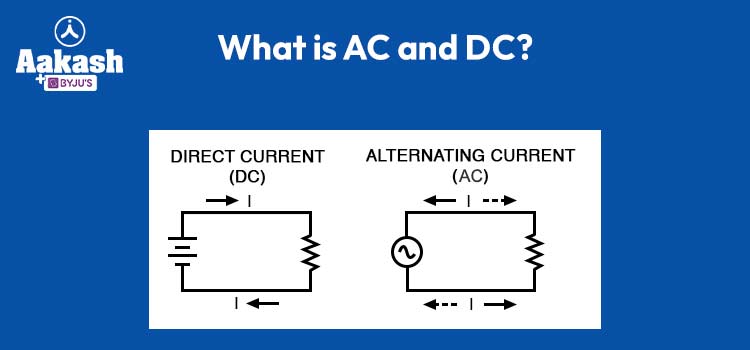

Electricity is an essential part of modern life, powering our homes, industries, and technological devices. Two common types of electrical current used for various purposes are Alternating Current (AC) and Direct Current (DC). Understanding the differences between AC and DC is fundamental to grasp the functioning of electrical systems and their applications.
Alternating Current (AC):
Alternating Current (AC) is a type of electrical current that periodically changes direction. In AC, the flow of electrons alternates back and forth, reversing its direction in a regular pattern. This oscillation creates a sinusoidal wave, known as the AC waveform. AC is the most common type of electrical power used in homes, offices, and power grids. It was adopted for widespread distribution due to its ability to travel long distances with minimal loss of energy.
Characteristics of AC:
Waveform: The AC waveform oscillates smoothly, changing direction at regular intervals.
Voltage Control: AC voltage can easily be transformed to higher or lower values using transformers.
Power Transmission: AC power transmission is efficient over long distances.
Applications: AC is used in household appliances, lighting, motors, industrial machinery, and power distribution.
Direct Current (DC):
Direct Current (DC) is a type of electrical current that flows in one direction only. In DC, electrons move from the negative terminal to the positive terminal of a voltage source, such as a battery or a solar cell. Unlike AC, the DC waveform remains constant, showing a straight line on a graph.
Characteristics of DC:
Waveform: The DC waveform remains constant without any reversal of direction.
Voltage Control: DC voltage can be controlled using voltage regulators, but it’s not as easily transformed as AC.
Power Transmission: DC power transmission is less efficient over long distances, leading to higher energy losses.
Applications: DC is commonly used in batteries, electronic devices (e.g., laptops, smartphones), and some specialized industrial applications.
Differences between AC and DC:
The direction of Current Flow: The most apparent difference between AC and DC is the direction of current flow. AC alternates its direction periodically, while DC flows in one direction only.
Waveform: AC has a sinusoidal waveform, whereas DC has a constant, flat-line waveform.
Voltage Control: AC voltage can be easily stepped up or down using transformers, while DC voltage regulation is typically achieved with voltage regulators.
Power Transmission: AC power transmission is more efficient for long-distance transmission due to lower energy losses. DC requires high-voltage transmission lines or specialized systems for efficient long-distance transmission.
Applications: AC is more commonly used in household power, commercial buildings, and power grids, while DC finds applications in batteries, electronic devices, and certain industrial processes.
Generation: Many power plants generate electricity in the form of AC, while some renewable energy sources like solar panels and batteries produce DC power.
In conclusion, AC and DC are two different types of electrical currents with distinct characteristics and applications. Alternating Current is widely used for its efficiency in power distribution and transmission, whereas Direct Current is essential for portable electronic devices and specialized industrial processes. Understanding the differences between AC and DC helps us appreciate the versatility and significance of electricity in our daily lives.
Frequently Asked Questions (FAQs) on AC and DC:
1. What is Alternating Current (AC), and where is it used?
AC is a type of electrical current that changes direction periodically. It is used in our homes, offices, and industries for power distribution, running household appliances, lighting, and operating motors and machinery.
2. What is Direct Current (DC), and what are its primary applications?
Direct Current (DC) is an electrical current that flows in one direction only. It is commonly used in batteries for portable devices like smartphones and laptops, as well as in electronic circuits and certain industrial processes.
3. Why is AC preferred for power transmission over long distances?
AC is preferred for long-distance power transmission due to its ability to be easily transformed using transformers. This transformation allows for efficient voltage stepping, reducing energy losses during transmission, and making it more practical for power grids.
4. Can I convert AC to DC and vice versa?
Yes, you can convert AC to DC and vice versa using specific devices. AC to DC conversion is achieved using rectifiers, while DC to AC conversion is done using inverters. These conversions are crucial for adapting electricity to the requirements of various electronic devices and applications.
5. Which type of current is safer for household use: AC or DC?
AC is generally considered safer for household use. This is because AC periodically changes its direction, which allows for the development of safety mechanisms, such as circuit breakers, that can automatically disconnect the circuit in case of a fault. Additionally, AC’s higher voltage levels facilitate power distribution over longer distances, reducing the need for high-voltage electricity in homes, and making it less hazardous. However, low-voltage DC systems used in electronics and devices can still be safe when designed and used properly.