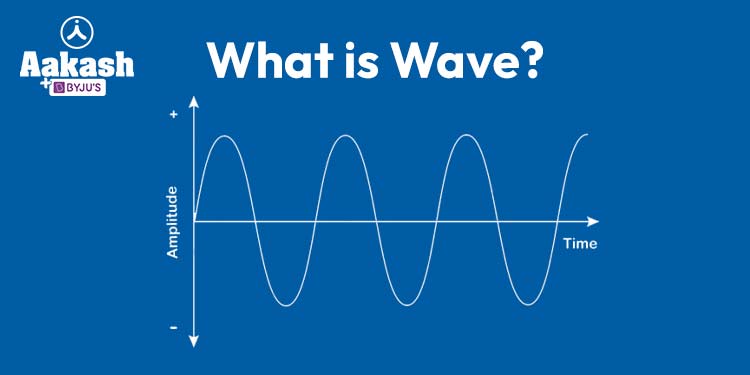

Waves are an integral part of our everyday lives, yet many of us may not fully comprehend the profound role they play in the natural world. From the gentle lapping of ocean waves to the powerful vibrations of sound, waves are all around us. In this blog post, we will delve into the fascinating world of waves, exploring their characteristics, types, and real-world applications.
What is a Wave?
In its simplest form, a wave can be defined as a disturbance that propagates through a medium or space, transferring energy without causing any permanent displacement of the medium itself. Waves can be broadly categorized into two main types: mechanical waves and electromagnetic waves.
Mechanical Waves
Mechanical waves require a medium to travel through, such as water, air, or solids. They propagate by displacing particles in the medium. An excellent example of a mechanical wave is the ocean wave, where energy is transferred by the up-and-down motion of water particles. Other examples include sound waves and seismic waves.
Electromagnetic Waves
Unlike mechanical waves, electromagnetic waves do not require a medium and can propagate through a vacuum, which is why they can travel through space. Electromagnetic waves are composed of oscillating electric and magnetic fields that are perpendicular to each other. Examples of electromagnetic waves include visible light, radio waves, microwaves, X-rays, and gamma rays.
Characteristics of Waves
Waves possess several key characteristics that help us understand their behavior:
Amplitude:
The amplitude of a wave refers to the maximum displacement of particles in a medium from their equilibrium position. In electromagnetic waves, the amplitude represents the intensity or brightness of the wave.
Wavelength:
Wavelength is the distance between two consecutive points on a wave that is in phase, such as two adjacent peaks or troughs. It is usually represented by the Greek letter lambda (λ).
Frequency:
The frequency of a wave is the number of complete oscillations it makes in a given time. It is measured in hertz (Hz) and is inversely proportional to the wavelength. The relationship between frequency and wavelength is given by the equation: frequency = speed of the wave/wavelength.
Speed:
The speed of a wave represents how fast it propagates through a medium. It depends on the properties of the medium through which the wave travels.
Types of Waves:
Waves can be further classified based on various criteria:
Transverse Waves:
In transverse waves, the particles of the medium oscillate perpendicular to the direction of wave propagation. Examples include ocean waves, light waves, and vibrations on a stringed instrument.
Longitudinal Waves:
In longitudinal waves, the particles of the medium oscillate parallel to the direction of wave propagation. Sound waves are the most common example of longitudinal waves.
Surface Waves:
Surface waves occur at the interface between two different mediums, such as water and air. They exhibit both longitudinal and transverse motion and are responsible for phenomena like ocean waves and seismic waves.
Applications of Waves:
Waves find numerous applications in various fields, including:
Communication:
Radio waves and microwaves are essential for wireless communication, while optical fibers transmit information using light waves.
Medical Imaging:
Ultrasound waves are used in medical imaging techniques like ultrasound scans and sonograms to visualize internal organs and diagnose medical conditions.
Energy Generation:
Waves can be harnessed to generate renewable energy, such as capturing the power of ocean waves or converting sunlight into electricity using photovoltaic cells.
Seismic Monitoring:
Seismic waves help scientists monitor earthquakes and understand the structure and composition of the Earth’s interior.
FAQs
What is a wave in physics?
In physics, a wave is a disturbance or oscillation that travels through a medium, transferring energy without transporting matter. Waves can take various forms, such as mechanical waves, electromagnetic waves, and matter waves.
How do waves propagate?
Waves propagate by transferring energy from one particle or point in a medium to another. The particles of the medium vibrate or oscillate around their equilibrium positions as the wave passes through.
What are the different types of waves?
There are several types of waves in physics, including:
a. Mechanical waves: These waves require a medium to travel through, like water waves or sound waves.
b. Electromagnetic waves: These waves do not require a medium and can travel through a vacuum, such as light waves, radio waves, and microwaves.
c. Matter waves: Also known as de Broglie waves, they are associated with the motion of particles, such as electrons or atoms, and are observed in quantum mechanics.
How do waves undergo reflection and refraction?
When a wave encounters a boundary between two different media, it can undergo reflection, where the wave bounces back, and refraction, where the wave changes direction as it enters the new medium.
What are standing waves?
Standing waves are the result of the interference between two identical waves traveling in opposite directions. They appear to "stand still" at certain points, called nodes, while oscillating at maximum amplitude at other points, known as antinodes.