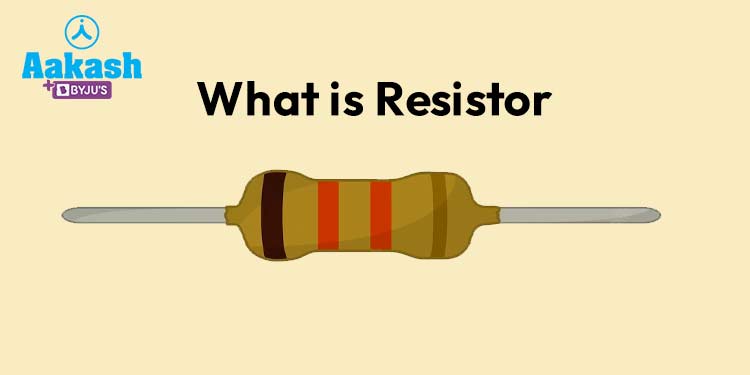

A resistor is a fundamental electronic component that plays a crucial role in controlling and managing the flow of electric current within an electrical circuit. It is a passive component, meaning it does not amplify or modify the electrical signals passing through it but rather offers resistance to the flow of current.
Function and Importance:
The primary function of a resistor is to limit the amount of current that flows through a circuit. It does this by introducing resistance, which is a property that opposes the flow of electric current. This resistance is measured in ohms (Ω), and the higher the resistance value, the more it restricts the current flow. Resistors are used for a variety of purposes, such as:
Voltage Division: Resistor networks are commonly used to divide voltage within a circuit, enabling the creation of reference voltages or signal attenuation.
Current Limiting: Resistors are used to limit the current through LEDs, transistors, and other components to prevent damage due to excessive current.
Signal Conditioning: They can alter the amplitude or shape of signals in electronic devices, ensuring compatibility between different parts of a circuit.
Temperature Sensing: Some resistors exhibit changes in resistance with changes in temperature, making them useful for temperature-sensing applications.
Noise Generation: Special types of resistors, known as noise or thermal noise resistors, are utilized in electronic circuits to generate random noise for specific applications, such as testing and analysis.
Biasing in Transistors: In transistor circuits, resistors are used for biasing to establish a specific operating point.
Timing Circuits: In combination with capacitors, resistors are used to create timing circuits, like oscillators and pulse generators.
Types of Resistors:
Resistors come in various shapes, sizes, and materials, each with its own characteristics suited for specific applications. Some common types of resistors include:
Carbon Composition: Made from a mixture of carbon particles and insulating material, these resistors are inexpensive and suitable for general-purpose use.
Film Resistors: These consist of a thin film of resistive material deposited onto an insulating substrate. They offer better tolerance and stability compared to carbon composition resistors.
Wirewound Resistors: Constructed by winding a wire around an insulating core, these resistors provide high precision and power-handling capabilities. They are often used in high-power applications.
Surface Mount Device (SMD) Resistors: These compact resistors are designed for surface mount technology (SMT) and are widely used in modern electronics due to their small size and ease of automated assembly.
Variable Resistors (Potentiometers and Rheostats): These resistors have an adjustable resistance, allowing for manual or electronic control of resistance values. Potentiometers are often used for volume controls, while rheostats are used for current control.
Resistors are an essential part of electronic design, ensuring that circuits function as intended, preventing damage from excessive current, and enabling the precise control of signals. Their wide range of applications makes them indispensable components in modern electronics and technology.
Frequently Asked Questions (FAQs) About Resistors:
What is the purpose of a resistor in an electronic circuit?
A resistor serves to regulate and control the flow of electric current within a circuit by introducing resistance. It is commonly used to limit current, divide voltage, adjust signal levels, and perform other functions critical to circuit operation.
How is the resistance of a resistor measured?
The resistance of a resistor is measured in ohms (Ω). This value indicates how much the resistor restricts the flow of current. Different types of resistors have varying resistance values, and precision resistors are often marked with color codes to denote their resistance ratings.
What are some typical applications of resistors in electronics?
Resistors find use in a wide range of electronic applications. They are used for current limiting in LEDs and transistors, voltage division in circuits, signal conditioning, temperature sensing, biasing transistors, creating timing circuits, and generating noise for testing and analysis, among other purposes.
How do different types of resistors differ from one another?
Various types of resistors, such as carbon composition, film resistors, wirewound resistors, surface mount device (SMD) resistors, and variable resistors (potentiometers and rheostats), differ in their construction, materials, power-handling capabilities, precision, and size. Each type is chosen based on the specific requirements of the circuit and application.
Can resistors change their resistance values?
In most cases, resistors have fixed resistance values that remain constant under normal operating conditions. However, there are special types of resistors called variable resistors, such as potentiometers and rheostats, that allow the resistance to be manually or electronically adjusted, making them useful for applications requiring adjustable resistance levels.