

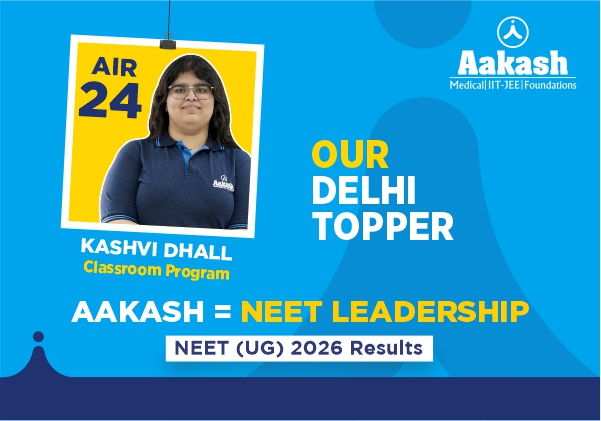

Delhi State Topper Kashvi Dhall has emerged as one of the top performers in Re-NEET 2026 by securing AIR 24 with an impressive score of 700 out of 720. Her achievement reflects years of disciplined preparation, consistent revision, and smart exam strategy. In this article, explore Kashvi Dhall’s Re-NEET 2026 journey, preparation approach, and the key lessons that can inspire NEET aspirants aiming for top ranks.
Here’s what shaped Kashvi Dhall’s NEET 2026 journey.
Delhi State Topper Kashvi Dhall at a Glance
| Detail | Information |
| AIR | 24 |
| Score | 700 marks |
| Exam | Re NEET 2026 |
| State | Delhi |
A Score Built on Balance, Not Burnout
What stands out most about Kashvi’s preparation is how ordinary it looked from the outside. There was no single dramatic turning point, no last-minute miracle strategy, just a fairly consistent routine followed for a long period of time.
Aspirants often assume that a rank like AIR 24 demands round-the-clock studying with little room for anything else. Kashvi’s story pushes back against that idea. Her preparation is understood to have followed a balanced structure, one that made space for adequate rest and breaks alongside long study hours, rather than treating exhaustion as a badge of honour.
This balance is often what allows students to sustain high-intensity preparation for the two years leading up to NEET without losing focus or motivation midway.
Biology as the Anchor
For many NEET toppers scoring close to the 700-mark range, Biology tends to be the subject that carries the most weight, and Kashvi’s preparation is believed to have reflected this. A strong, near-error-free grip on Biology, combined with steady performance in Physics and Chemistry, is typically what pushes a score from good to exceptional.
Rather than treating all three subjects with equal daily hours regardless of comfort level, toppers like Kashvi are known to lean into their strongest subject while still ensuring the other two don’t fall behind, a balancing act that takes real self-awareness to get right.
The Role of Discipline Over Motivation
Motivation is known to fluctuate, especially over a two-year preparation cycle, but discipline is what keeps students like Kashvi going on the days motivation runs low. Her preparation is said to have relied far more on fixed daily habits, revision hours, test-solving, doubt sessions, than on waiting to “feel ready” to study.
This distinction, between chasing motivation and simply showing up regardless of mood, is one of the most commonly repeated lessons across successful NEET preparation stories, and Kashvi’s journey fits well within it.
Handling Exam-Day Pressure
Scoring 700 marks isn’t only about knowing the syllabus; it’s also about performing well under the specific pressure of exam day. Aspirants who reach ranks like AIR 24 are typically those who have trained themselves, through repeated mock tests, to stay calm when a question looks unfamiliar or when time starts running short.
Kashvi’s ability to convert strong preparation into an equally strong exam-day performance is likely a result of this repeated exposure to timed, exam-like conditions well before the actual test.
Delhi NEET 2026 Topper’s Tips: Based on Kashvi Dhall’s Preparation Strategy
- Build a routine that includes proper rest, not just long study hours.
- Strengthen your strongest subject further while keeping the other two steady.
- Rely on discipline and fixed routines rather than waiting for motivation to strike.
- Practise under timed, exam-like conditions to build calm under pressure.
- Focus on long-term consistency rather than short bursts of intense preparation.
Final Words
Kashvi Dhall’s journey to AIR 24 with 700 marks in NEET 2026 is a reminder that top ranks are rarely built on extraordinary shortcuts. More often, they’re the result of ordinary habits, balance, discipline, and calm under pressure, followed with extraordinary consistency.
For aspirants preparing for future NEET cycles, her story is proof that steady, sustainable effort can lead to results that stand out on a national scale.
