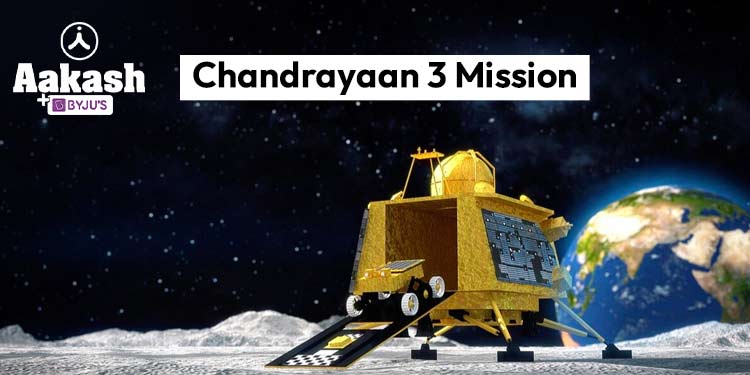

In the realm of space exploration, the allure of the moon has captivated the imagination of humanity for centuries. Over the years, several missions have been launched to study and understand our closest celestial neighbor. India’s space agency, ISRO (Indian Space Research Organisation), has been at the forefront of this endeavor with its Chandrayaan missions. While Chandrayaan-1 and Chandrayaan-2 achieved significant milestones, the prospect of a successful soft landing on the lunar surface, as planned in the Chandrayaan-3 mission, remains a complex challenge. This blog explores the intricacies of a soft landing on the moon and why it continues to be a formidable task.
The Chandrayaan Missions: A Brief Overview:
Chandrayaan-1, launched in 2008, marked India’s debut mission to the moon. It successfully mapped the moon’s surface and discovered water molecules on the lunar surface. Chandrayaan-2, launched in 2019, comprised an orbiter, a lander (Vikram), and a rover (Pragyan). Although the orbiter continued to send valuable data, the soft landing of the Vikram lander ended in a hard crash, showcasing the difficulties of landing safely on the moon’s uneven terrain. In response to this, ISRO announced the Chandrayaan-3 mission, focused solely on achieving a successful soft landing.
The Challenge of Soft-Landing:
Complex Terrain: The lunar surface is far from uniform; it features rugged highlands, vast plains, and treacherous craters. This uneven terrain complicates the landing process and demands precise navigation and control.
Reduced Gravity: The moon’s gravitational force is about 1/6th that of Earth’s. While this might seem advantageous, it poses a challenge in terms of controlling the descent velocity of the lander and ensuring a gentle landing without bouncing back into space.
Communication Lag: During a lunar mission, the communication between the Earth and the spacecraft faces a time delay due to the vast distance. This delay hinders real-time control, making autonomous systems and advanced algorithms crucial for navigating the lander during the critical descent phase.
Limited Margin for Error: Unlike Earth, the moon lacks a substantial atmosphere to slow down spacecraft during descent. This means that landing trajectories must be precisely calculated, leaving little room for error.
Technological Innovations for Success:
ISRO is leaving no stone unturned in addressing these challenges and enhancing the prospects of a successful soft landing in the Chandrayaan-3 mission. Here are some technological innovations being employed:
Enhanced Autonomy: Chandrayaan-3’s lander is expected to feature advanced autonomous navigation systems that will enable real-time decision-making during the descent. These systems will help the lander respond to unexpected changes in the landing site, enhancing the chances of a safe landing.
Terrain Mapping: The utilization of high-resolution mapping data obtained from previous missions, like Chandrayaan-1 and lunar orbiters from other countries, will enable a more accurate selection of landing sites with relatively flat and stable surfaces.
Simulations and Testing: ISRO employs rigorous simulations and testing to replicate lunar conditions on Earth. This aids in fine-tuning landing algorithms and improving the overall landing strategy.
Conclusion:
The Chandrayaan-3 mission is poised to be a testament to India’s commitment to lunar exploration and technological advancement. While the challenge of soft-landing on the lunar surface remains formidable, ISRO’s innovative approach and lessons learned from previous missions provide optimism for a successful outcome. As humanity continues to push the boundaries of space exploration, each mission—whether triumphant or met with challenges—contributes to the wealth of knowledge and experience necessary for future lunar endeavors.