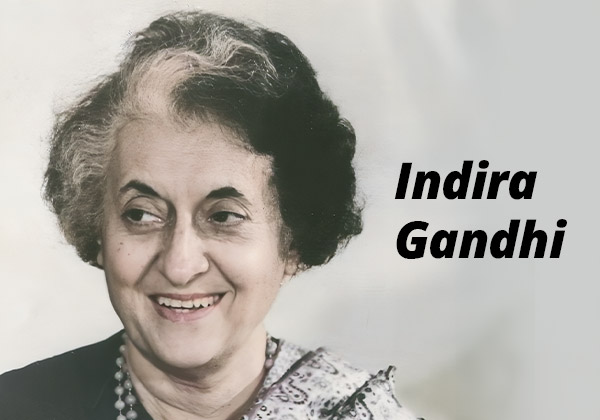

The Bharat Ratna is India’s highest civilian award, bestowed upon individuals for their exceptional service and contributions to the nation in various fields such as art, literature, science, and public service. Among the few eminent personalities who have been honored with this prestigious award, Indira Gandhi stands out as the first Indian woman to receive the Bharat Ratna. This content delves into her life, achievements, and the significance of this recognition.
All About Indira Gandhi
Indira Gandhi, the only daughter of Jawaharlal Nehru, India’s first Prime Minister, was a central figure in Indian politics. Her leadership and influence were instrumental in shaping modern India. As the first woman Prime Minister of India and a prominent leader in the Indian National Congress, Indira Gandhi’s contributions to the country were immense, earning her the Bharat Ratna in 1971.
Early Life and Education
Indira Priyadarshini Gandhi was born on November 19, 1917, in Allahabad, Uttar Pradesh, into a politically prominent family. Her father, Jawaharlal Nehru, was a close associate of Mahatma Gandhi and played a crucial role in India’s struggle for independence. Indira’s mother, Kamala Nehru, was also actively involved in the freedom movement.
From a young age, Indira was exposed to the world of politics and social service. She attended schools in India and Switzerland before studying at the University of Oxford. Her education abroad provided her with a broader perspective on global politics, which later influenced her leadership style.
Political Career and Leadership
Indira Gandhi’s entry into politics was almost inevitable, given her background. She initially served as an aide to her father and later became the President of the Indian National Congress in 1959. Her ascent to the Prime Minister’s office in 1966 marked a significant turning point in Indian politics.
During her tenure as Prime Minister, Indira Gandhi implemented several bold policies and initiatives that had a lasting impact on the nation. Some of her notable achievements include:
Green Revolution:
To address food shortages and improve agricultural productivity, Indira Gandhi introduced the Green Revolution, which led to a significant increase in food grain production, particularly in wheat and rice.
Nationalization of Banks:
In 1969, she nationalized 14 major banks in India, aiming to extend banking services to the rural population and ensure the flow of credit to key sectors of the economy.
War and Creation of Bangladesh:
Indira Gandhi’s decisive leadership during the 1971 Indo-Pak war played a crucial role in the creation of Bangladesh. Her diplomatic skills and strong stance against Pakistan garnered international recognition.
Nuclear Program:
Under her leadership, India conducted its first nuclear test in 1974, marking the country’s entry into the league of nuclear-capable nations.
Significance of the Bharat Ratna Award
The Bharat Ratna was instituted in 1954 and is awarded in recognition of exceptional service or performance of the highest order. It is the highest civilian honor in India, symbolizing the nation’s gratitude and respect for the recipient’s contributions.
Indira Gandhi was awarded the Bharat Ratna in 1971, making her the first Indian woman to receive this honor. This recognition was a testament to her leadership during one of the most challenging periods in Indian history, particularly the 1971 war and the creation of Bangladesh. The award highlighted her influence not only within India but also on the global stage.
Impact on Indian Society and Politics
Indira Gandhi’s policies and leadership style had a profound impact on Indian society and politics. Her tenure was marked by both praise and criticism, reflecting the complex nature of her legacy.
Empowerment of Women:
Indira Gandhi’s position as the first woman Prime Minister of India served as an inspiration for women across the country. Her leadership demonstrated that women could hold the highest offices in the land and make significant contributions to the nation’s development.
Centralization of Power:
Indira Gandhi was known for her centralization of power, often making decisions that bypassed traditional political structures. While this approach allowed for swift decision-making, it also led to criticism for undermining democratic institutions.
Emergency Period:
One of the most controversial aspects of Indira Gandhi’s rule was the imposition of the Emergency from 1975 to 1977. During this period, civil liberties were curtailed, and political opponents were imprisoned. This move remains a contentious part of her legacy.
Economic Reforms:
Indira Gandhi’s economic policies, including bank nationalization and the Green Revolution, had a long-term impact on India’s economic landscape. These measures helped in alleviating poverty and improving agricultural productivity, although they also faced criticism for being overly state-controlled.
Legacy
Indira Gandhi’s legacy is one of resilience, determination, and complex political strategies. She remains a figure of both admiration and controversy. Her contributions to the nation are undeniable, and her recognition with the Bharat Ratna cemented her place in Indian history.
After her assassination in 1984, Indira Gandhi’s legacy continued to influence Indian politics. Her son, Rajiv Gandhi, succeeded her as Prime Minister, and the Gandhi-Nehru family remains a significant force in Indian politics.
| Year | Event/Policy | Significance |
| 1966 | Became Prime Minister | First woman to hold the office in India |
| 1969 | Nationalization of Banks | Extended banking services to rural areas |
| 1971 | Bharat Ratna Awarded | First Indian woman to receive the highest civilian honor |
| 1971 | Indo-Pak War and Creation of Bangladesh | Played a pivotal role in the liberation of Bangladesh |
| 1974 | First Nuclear Test | Established India as a nuclear-capable nation |
| 1975-1977 | Imposition of Emergency | Controversial period with suspension of civil liberties |
Indira Gandhi’s recognition as the first Indian woman to receive the Bharat Ratna is a reflection of her indomitable spirit and unparalleled contributions to the nation. Her legacy, marked by significant achievements and controversial decisions, continues to shape Indian politics and society. The Bharat Ratna awarded to her in 1971 remains a symbol of her extraordinary impact on India and the world