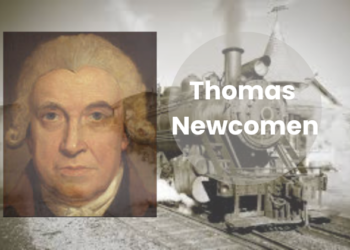
The Steam Engine: A History of Innovation
The steam engine is a heat engine that performs mechanical work using steam as its working fluid. The steam engine uses the force produced by steam pressure to push a piston back and forth inside a cylinder. This pushing force can be transformed, by a connecting rod and crank, into rotational force for work.
The steam engine was a major technological development that had a profound impact on the Industrial Revolution. It was used to power a wide variety of machines, including pumps, mills, and locomotives. The steam engine also made it possible to build ships and boats that could travel long distances without having to rely on wind power.
Who Invented the Steam Engine for the First Time?
Who Created Steam?
Who is Thomas Newcomen?
Thomas Newcomen (February 28, 1663–August 5, 1729) was a blacksmith from Dartmouth, England who assembled the prototype for the first modern steam engine. His machine, built in 1712, was known as the “Atmospheric Steam Engine.”Thomas Newcomen was born on February 28, 1663, one of six children of Elias Newcomen (d. 1702) and his wife Sarah (d. 1666). The family was solidly middle-class.
Steam Engines in the Earlier Times
The first steam engines were invented in the 17th century. The first commercially successful steam engine was invented by Thomas Newcomen in 1712. The Newcomen engine was a simple device that used steam pressure to lift a piston, which was then connected to a pump that could be used to remove water from mines.
Another early steam engine was invented by Thomas Savery in 1698. The Savery engine was also a pump, but it used steam pressure to create a vacuum in a chamber, which was then used to draw water up into the chamber.
James Watt’s Improvements
In the late 18th century, James Watt made a number of improvements to the steam engine that made it much more efficient. Watt’s improvements included the use of a separate condenser, which allowed the steam to be reused, and a flyball governor, which automatically controlled the speed of the engine.
Watt’s improvements to the steam engine made it much more practical for use in a wide variety of applications. As a result, the steam engine became a major driving force of the Industrial Revolution.
Later Developments
In the 19th century, the steam engine continued to be developed and improved. One of the most important developments was the invention of the high-pressure steam engine by Richard Trevithick in 1800. The high-pressure steam engine was much more powerful than the earlier low-pressure engines, and it made it possible to build steam locomotives and steamships.
The steam engine continued to be used as a major source of power until the early 20th century, when it was gradually replaced by the internal combustion engine. However, the steam engine still has some important applications today, such as in power plants and in steam locomotives used for heritage railways.
The steam engine was a revolutionary invention that had a profound impact on the world. It helped to drive the Industrial Revolution and made it possible to build machines that could do work that would have been impossible before. The steam engine is still used today in some applications, and it is a reminder of the ingenuity and creativity of the engineers who invented it.
FAQs
Who invented the steam engine?
There is no single answer to this question, as the steam engine was invented by a number of different people over a period of time. However, the two most commonly credited inventors are Thomas Newcomen and James Watt.
Newcomen invented the first commercially successful steam engine in 1712. His engine was a simple device that used steam pressure to lift a piston, which was then connected to a pump that could be used to remove water from mines.
Watt made a number of improvements to the steam engine in the late 18th century, including the use of a separate condenser and a flyball governor. These improvements made the steam engine much more efficient and practical, and they helped to drive the Industrial Revolution.
What are the different types of steam engines?
There are many different types of steam engines, but they can be broadly divided into two categories: low-pressure engines and high-pressure engines.
Low-pressure engines, such as the Newcomen engine, use steam pressure to lift a piston. These engines are relatively inefficient, but they were the first type of steam engine to be developed.
High-pressure engines, such as the Watt engine, use steam pressure to drive a piston directly. These engines are much more efficient than low-pressure engines, and they made it possible to build steam locomotives and steamships.
How did the steam engine impact the Industrial Revolution?
The steam engine had a profound impact on the Industrial Revolution. It allowed factories to be powered by steam, which made them much more efficient and productive. The steam engine also made it possible to build new machines, such as the steam locomotive and the steamship, which helped to revolutionize transportation.
What are some of the modern applications of the steam engine?
The steam engine is still used in some applications today, such as in power plants and in steam locomotives used for heritage railways. However, it has largely been replaced by the internal combustion engine as a source of power.
What are some of the challenges of using steam engines?
Steam engines can be inefficient and difficult to control. They also require a lot of water, which can be a problem in some areas. Additionally, steam engines can be dangerous if they are not properly maintained.