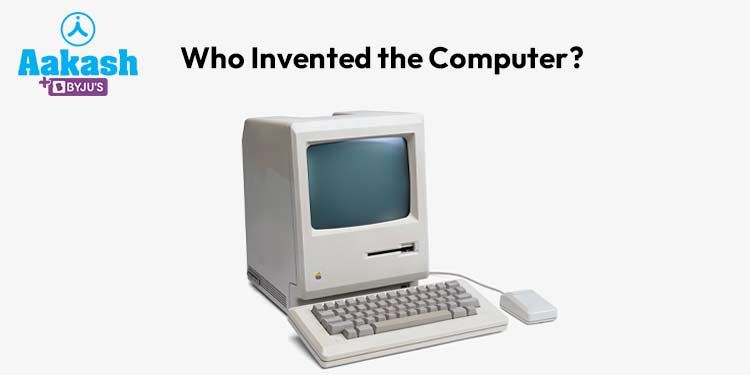

Computers, love them or hate them, we rely on them every day. You’re using one right now! But have you ever stopped to think about who invented computers and how they came to dominate our lives? So who created the first computer, and whom can I blame for all those wasted hours? The invention of the computer is a story filled with contributions from many brilliant minds over several decades. While there is no single inventor of the computer, several key figures and developments played a crucial role in its evolution.
Let’s delve into the fascinating history of how the computer came into existence.
The First Computer
Early computers were actually people, not machines — it was a job title. The word dates back to 1613. “Computers” performed complex calculations; they were mathematicians and bookkeepers. The first-word “computer” was used to describe a machine was 1897.
Name of the First Computer
The first computer, that we know about, is the Antikythera mechanism (200 BC — 70 BC). It is an ancient-Geek, hand-powered mechanical device. Archeologists believe it was used to calculate eclipses and other astronomical events. The Antikythera mechanism was a 34 cm × 18 cm × 9 cm (13.4 in × 7.1 in × 3.5 in) inscription covered, wooden box with at least 30 gears.
Who Invented the Computer?
Charles Babbage, an English polymath, is often thought of as “the man who invented computers.” From 1822 until his death in 1871, he designed three computers, but never actually constructed any of them due to lack of funding
Charles Babbage (1791-1871):
Often regarded as the “father of the computer,” Charles Babbage was an English mathematician and inventor who conceptualized the idea of a mechanical general-purpose computer in the early 19th century. His most famous creation, the “Analytical Engine,” was designed to perform various mathematical calculations automatically. While Babbage never completed the Analytical Engine during his lifetime, his groundbreaking work laid the foundation for modern computing.
Ada Lovelace (1815-1852):
Ada Lovelace, an English mathematician and writer, collaborated with Charles Babbage on the Analytical Engine. She is known for creating the world’s first algorithm intended to be processed by a machine. Ada’s insights into the potential of computers extended beyond mere number-crunching and included ideas about using them for creative and scientific purposes, making her one of the earliest computer programmers.
Konrad Zuse (1910-1995):
A German engineer, Konrad Zuse, is credited with building the world’s first electromechanical binary programmable computer, the Z3, in 1941. This machine used telephone switching equipment and punched tape to execute calculations. Zuse’s work was significant in advancing computer technology, especially in Germany during World War II.
Alan Turing (1912-1954):
Alan Turing, a British mathematician and logician, made groundbreaking contributions to computer science and artificial intelligence. During World War II, he played a crucial role in breaking the German Enigma code, which helped the Allies win the war. Turing also developed the concept of the Turing machine, a theoretical device that laid the foundation for modern computing theory.
John Presper Eckert and John Mauchly:
In the mid-1940s, American engineers John Presper Eckert and John Mauchly designed and built the Electronic Numerical Integrator and Computer (ENIAC), which is often considered the world’s first fully electronic general-purpose computer. ENIAC used vacuum tubes and was capable of performing a wide range of calculations at unprecedented speeds.
John von Neumann:
Hungarian-American mathematician and physicist John von Neumann played a pivotal role in the development of computer architecture. His work on the “von Neumann architecture” laid the groundwork for how modern computers are designed, with a central processing unit (CPU), memory, input/output devices, and an instruction set stored in memory.
The Transistor Revolution:
The invention of the transistor in the late 1940s by John Bardeen, Walter Brattain, and William Shockley at Bell Labs marked a significant turning point in computer technology. Transistors replaced bulky and unreliable vacuum tubes, making computers smaller, faster, and more reliable.
Early Calculating Machines
Abacus
The earliest known tool for calculation is the abacus, used by ancient civilizations such as the Sumerians, Egyptians, and Chinese. It consisted of a wooden frame with beads sliding on wires and was used for basic arithmetic operations.
Mechanical Calculators
Blaise Pascal
In 1642, French mathematician Blaise Pascal invented the Pascaline, a mechanical calculator capable of performing addition and subtraction. It used a series of gears and wheels to represent and manipulate numbers.
Gottfried Wilhelm Leibniz
In 1673, German mathematician Gottfried Wilhelm Leibniz improved upon Pascal’s design with his Stepped Reckoner. This machine could perform addition, subtraction, multiplication, and division, using a stepped drum mechanism
The Evolution of Modern Computers
Transistors and Integrated Circuits
The invention of the transistor in 1947 by John Bardeen, Walter Brattain, and William Shockley at Bell Labs revolutionized computing by replacing bulky vacuum tubes with smaller, more efficient devices. This led to the development of integrated circuits (ICs) in the late 1950s, which further miniaturized and improved the performance of computers.
Personal Computers
Altair 8800
The Altair 8800, released in 1975 by Micro Instrumentation and Telemetry Systems (MITS), is considered the first personal computer. It featured an Intel 8080 microprocessor and became popular among hobbyists and enthusiasts, sparking the home computer revolution.
Apple I and Apple II
In 1976, Steve Wozniak and Steve Jobs co-founded Apple Inc. and introduced the Apple I, a single-board computer. The following year, they released the Apple II, which became one of the first highly successful mass-produced personal computers, featuring color graphics and a user-friendly interface.
IBM PC
In 1981, IBM entered the personal computer market with the IBM PC. Its open architecture allowed third-party manufacturers to produce compatible hardware and software, establishing the standard for personal computers and leading to widespread adoption in businesses and homes.
Modern Computing
Internet and World Wide Web
The development of the Internet and the World Wide Web in the late 20th century transformed computing and communication. The Internet, a global network of interconnected computers, originated from research by the U.S. Department of Defense in the 1960s. The World Wide Web, invented by Tim Berners-Lee in 1989, made information easily accessible through web browsers and hyperlinks.
Mobile Computing
The rise of mobile computing in the 21st century, driven by smartphones and tablets, has further revolutionized the way we interact with technology. Devices like the iPhone, introduced by Apple in 2007, combined computing power with portability, connectivity, and a wide range of applications.
The Birth of the Personal Computer:
In the 1970s and 1980s, pioneers like Steve Jobs and Steve Wozniak (Apple), Bill Gates (Microsoft), and others contributed to the popularization of personal computers, bringing computing power into homes and businesses around the world.
The Benefits of Using a Computer
1. Increased Productivity
Computers significantly boost productivity across various tasks and industries. Here’s how:
A. Automation and Efficiency
- Automated Tasks: Computers can automate repetitive tasks, saving time and reducing human error. For example, data entry, report generation, and scheduling can be efficiently managed with specialized software.
- Quick Calculations: Complex calculations that would take hours manually can be done in seconds using computer applications like spreadsheets and specialized software.
B. Multitasking
- Simultaneous Operations: Computers allow users to run multiple applications simultaneously. This means you can work on a document, browse the internet, and listen to music all at the same time without any lag.
- Resource Management: Advanced operating systems efficiently manage resources, ensuring that even with multiple tasks running, the system remains stable and responsive.
2. Enhanced Connectivity
Computers play a crucial role in connecting people and information globally. Here’s how they enhance connectivity:
A. Communication
- Email and Messaging: Computers facilitate instant communication through email, chat applications, and social media platforms. This makes it easy to stay in touch with friends, family, and colleagues regardless of geographical distances.
- Video Conferencing: Tools like Zoom, Skype, and Google Meet enable face-to-face meetings and collaboration, breaking down barriers of location and time zones.
B. Information Access
- Internet Access: With a computer, you have access to the vast resources of the internet. Whether it’s research, news, entertainment, or education, the information is just a few clicks away.
- Online Services: Many services, such as banking, shopping, and government services, are accessible online, making life more convenient and efficient.
3. Educational Advancement
Computers are invaluable tools for education and learning:
A. E-Learning
- Online Courses: Numerous platforms offer online courses and certifications in a wide range of subjects, enabling lifelong learning and skill development.
- Interactive Learning: Educational software and applications provide interactive learning experiences, making education engaging and effective.
B. Research and Resources
- Digital Libraries: Access to digital libraries and databases enhances research capabilities, providing vast amounts of information that were previously inaccessible.
- Multimedia Resources: Videos, animations, and simulations help in understanding complex concepts better than traditional textbooks.
4. Creative Expression
Computers open up new avenues for creativity:
A. Digital Art and Design
- Graphic Design Software: Tools like Adobe Photoshop, Illustrator, and CorelDRAW enable artists and designers to create stunning visuals and designs.
- 3D Modeling: Software like Blender and Autodesk Maya allow for the creation of intricate 3D models and animations.
B. Music and Video Production
- Music Composition: Programs like FL Studio and Ableton Live provide powerful tools for music composition and production.
- Video Editing: Software such as Adobe Premiere Pro and Final Cut Pro offers advanced video editing capabilities, enabling the creation of professional-quality videos.
5. Career Opportunities
Proficiency with computers opens up a wide range of career opportunities:
A. IT and Software Development
- Programming and Development: Skills in programming and software development are highly sought after in the tech industry, offering lucrative career paths.
- IT Support: Knowledge of computer systems and networks can lead to roles in IT support and system administration.
B. Remote Work
- Flexibility: Computers enable remote work, providing flexibility and the opportunity to work from anywhere. This has become increasingly important in the modern workforce.
- Global Opportunities: With the internet, job opportunities are no longer limited by location. Professionals can work for companies worldwide, broadening their career prospects.
The invention of the computer was not the work of a single individual but the result of cumulative efforts by many brilliant minds. It evolved from mechanical calculators and electromechanical machines to the powerful, compact, and ubiquitous devices we use today. This ongoing journey of innovation and advancement continues to shape the world in ways that Charles Babbage, Ada Lovelace, and their fellow pioneers could only have imagined.
Who Invented the Computer – FAQs
Q1. Who is considered the father of the computer?
Charles Babbage is often referred to as the father of the computer. He conceptualized the Difference Engine and the Analytical Engine in the 19th century, which laid the groundwork for modern computing.
Q2. What was the first mechanical calculator, and who invented it?
The first mechanical calculator was the Pascaline, invented by French mathematician Blaise Pascal in 1642. It could perform basic arithmetic operations like addition and subtraction.
Q3. Who invented the first programmable computer?
The first programmable computer, the Z3, was built by German engineer Konrad Zuse in 1941. It used binary arithmetic and floating-point arithmetic, making it a significant advancement in computing.
Q4. Who created the first algorithm intended for a machine?
Ada Lovelace, an English mathematician, created the first algorithm intended for a machine. She wrote an algorithm for Charles Babbage's Analytical Engine, making her the world's first computer programmer.
Q5. What was the significance of the ENIAC computer?
The ENIAC (Electronic Numerical Integrator and Computer), developed by John Presper Eckert and John Mauchly in 1945, was the first general-purpose electronic digital computer. It could perform a wide range of calculations using vacuum tubes to switch electronic signals.