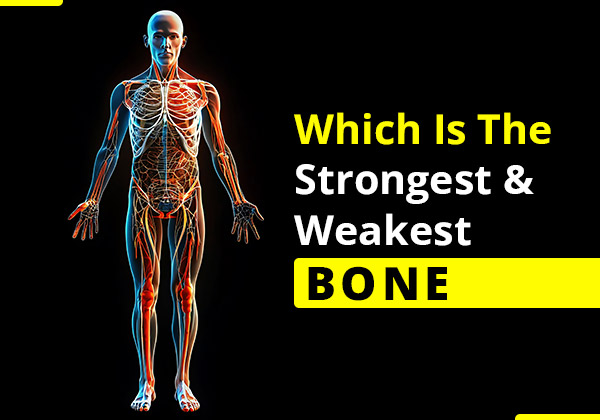

The human skeleton is a complex system that gives our body shape, supports movement, and shields vital organs like the heart and lungs. It is made up of 206 bones, each serving a unique purpose. Some bones, like the femur, are very strong and carry most of the body’s weight, while others, like the clavicle, are more fragile and prone to breaking.
This article talks about the strongest and weakest bones in the human body, explaining their structure, functions, and why some bones are sturdier than others. Understanding this helps us appreciate how our bodies work and stay protected.
Introduction to Human Bones
The human skeleton is made up of 206 bones, each with its own size, shape, and strength. Bones are essential for many reasons: they provide a framework that gives the body its shape, allow us to move by working with muscles and joints, and protect vital organs like the brain, heart, and lungs from damage.
Some bones, such as the femur (thigh bone), are very strong and dense, built to support weight and withstand pressure. Other bones, like the clavicle (collarbone), are thinner and more delicate, making them more prone to fractures. Knowing which bones are the strongest and weakest helps us understand their specific roles and how they contribute to our body’s movement and protection.
It also guides us on how to prevent injuries by taking care of weaker bones and maintaining overall bone health through proper nutrition, exercise, and safety practices.
What Makes a Bone Strong or Weak?
Bones are built from various materials like calcium, collagen, and bone marrow, which all contribute to their strength. Calcium gives bones their hardness and density, while collagen provides flexibility, making bones both strong and slightly bendable to absorb impacts. The strength of a bone is also determined by its density and size. Dense, large bones like the femur can handle more stress and pressure, making them stronger and less likely to break.
Weaker bones, on the other hand, have a lower density and a thinner structure, making them more fragile and prone to fractures.
Several factors affect bone strength. Age plays a significant role, as bones tend to lose density and become weaker over time.
- Nutrition is also crucial—adequate intake of calcium and vitamin D is necessary for strong bones.
- Physical activity, especially weight-bearing exercises, helps build and maintain bone density, while genetics can determine overall bone structure and strength.
The Strongest Bone in the Human Body: The Femur
The femur, commonly called the thigh bone, is the strongest and longest bone in the human body. It runs from the hip to the knee and is vital for supporting the body’s upper weight. This bone is incredibly dense and strong, allowing it to handle a significant amount of pressure. This makes it crucial for everyday activities like walking, running, and jumping. The femur’s strength is due to its large size and cylindrical shape, which provides both stability and the ability to distribute weight evenly. Its structure helps it absorb impacts and prevent fractures.
The bone is also made of compact, tough materials that give it the ability to withstand forces up to 30 times a person’s body weight.
Because of its key role in mobility and strength, the femur is one of the most essential bones for maintaining balance, movement, and overall skeletal integrity.
Why Is the Femur the Strongest Bone?
The femur is the strongest bone in the human body because of its unique size, structure, and composition, which enable it to withstand immense pressure and stress.
- Size and Density: The femur is the longest bone in the human body, extending from the hip to the knee. Its length and size give it a high density, which contributes significantly to its strength. This density allows the femur to bear large amounts of weight and endure forces generated by activities like walking, running, and jumping.
- Structure: The femur’s cylindrical shape and slightly curved design are key to its strength. This shape helps the bone absorb shocks and distribute forces evenly across its length. When a person moves or encounters impact, the femur’s structure prevents localized stress that could lead to fractures.
- Composition: The femur is composed of a thick outer layer of compact bone tissue, which makes it extremely hard and durable. Inside, it contains spongy bone tissue that provides some flexibility, allowing it to bend slightly without breaking. This combination of compact and spongy bone tissues ensures the femur can withstand both compression and tension forces, reducing the risk of fractures and making it one of the most resilient bones in the body.
Functions of the Femur in Human Body Movement
The clavicle, or collarbone, plays several vital roles in the human body, contributing to shoulder function and overall upper body mechanics.
- Support and Stabilization: The clavicle acts as a key support structure for the shoulder. It connects the sternum to the shoulder blade, helping to stabilize the shoulder joint and maintain its alignment with the rest of the body. This support is crucial for proper arm movement and balance.
- Protection: The clavicle also serves an important protective function. It guards major blood vessels and nerves that travel from the neck to the arm. By acting as a shield, it helps prevent injuries to these critical structures during impacts or falls.
- Attachment for Muscles: The clavicle provides essential attachment points for several important muscles, including the deltoid and pectoralis major. These muscles are crucial for various shoulder movements, such as lifting, rotating, and swinging the arm. The clavicle’s ability to anchor these muscles enhances the range and effectiveness of upper body movements.
The Weakest Bone in the Human Body: The Clavicle
The clavicle, also known as the collarbone, is considered the weakest bone in the human body. It is a long, thin bone that runs horizontally between the sternum (breastbone) and the shoulder blade.
- The clavicle plays a crucial role in connecting the arm to the body and supporting shoulder movement, but its slender structure makes it more fragile compared to other bones.
- Due to its location and thin shape, the clavicle is more prone to fractures and breaks, especially during falls or impacts to the shoulder area. It often absorbs the force from falls, making it vulnerable.
- The clavicle’s weakness comes from its relatively small size and lack of surrounding muscle and fat to protect it from direct hits or stress.
- Despite being the weakest, the clavicle is important for maintaining shoulder stability and allowing a wide range of arm movements, contributing to overall upper body flexibility and function.
Why Is the Clavicle the Weakest Bone?
The clavicle, or collarbone, is known for being one of the weakest bones in the human body, and several factors contribute to its vulnerability.
- Thin Structure: The clavicle is relatively thin and narrow compared to other bones. Its slender shape means it has less mass to absorb and distribute forces. This makes it less capable of withstanding heavy impacts or stress, increasing its risk of fractures. When subjected to strong forces, such as from a fall or a direct blow, the clavicle is more likely to break because it cannot absorb the shock effectively.
- Position in the Body: Positioned between the sternum (breastbone) and the shoulder, the clavicle is quite exposed. It does not have much surrounding muscle or fat to cushion it. This exposure leaves it vulnerable to injury from impacts or falls. Unlike bones like the femur, which are protected by surrounding tissues, the clavicle’s exposed location means it is directly hit during accidents, making it more prone to damage.
- High Impact Risk: Due to its central location connecting the arm to the torso, the clavicle is often involved in accidents or falls. It is frequently subjected to direct impacts, especially during activities like sports or accidents. When someone falls on their shoulder or gets hit in the chest, the force is often transferred to the clavicle, making it prone to fractures and breaks. The high risk of impact combined with its thin structure makes the clavicle particularly susceptible to injury.
Functions of the Clavicle in the Human Body
Despite being the weakest bone, the clavicle performs several important functions that are crucial for upper body movement and stability.
- Support and Stabilization: The clavicle plays a key role in supporting the shoulder and maintaining its alignment with the body. By connecting the sternum to the shoulder blade, it helps stabilize the shoulder joint. This support is essential for proper arm movement and overall upper body balance. Without the clavicle, the shoulder would be less stable, leading to difficulties in performing many daily activities.
- Protection: Another critical function of the clavicle is to protect vital structures underneath it. It acts as a shield for major blood vessels and nerves that run from the neck to the arm. This protective role is important because these blood vessels and nerves are crucial for arm movement and sensation. The clavicle’s position helps ensure these critical structures are less likely to be damaged during impacts or injuries.
- Attachment for Muscles: The clavicle provides attachment points for several important muscles, including the deltoid and pectoralis major. These muscles are vital for arm and shoulder movements. The deltoid helps with lifting and rotating the arm, while the pectoralis major is involved in pushing and pulling motions. By serving as an anchor for these muscles, the clavicle supports a wide range of arm movements and contributes to the overall functionality of the shoulder.
Common Injuries Related to the Clavicle
The clavicle, or collarbone, is one of the most commonly fractured bones due to its relatively weak structure. Because the clavicle is thin and exposed, it is highly susceptible to breaks from various types of impacts.
- Common Causes of Fractures: The most frequent causes of clavicle fractures include falls, sports injuries, and car accidents. When someone falls onto their shoulder or directly hits the clavicle, the bone can easily fracture. In sports, particularly contact sports like football or hockey, the clavicle is at risk due to tackles or collisions. Car accidents also often involve sudden impacts that can break the clavicle, especially if the seatbelt exerts force on the shoulder.
- Symptoms: When a clavicle fracture occurs, several symptoms usually appear. The most noticeable is pain at the site of the injury, which can be sharp or aching. This pain often gets worse with movement. There is also likely to be swelling and bruising around the clavicle area. The shoulder may feel tender to touch, and difficulty moving the shoulder and arm is common. These symptoms are signs that medical attention may be needed to properly treat and heal the fracture.
How to Strengthen Weak Bones Like the Clavicle?
Strengthening weaker bones, like the clavicle, involves adopting several key lifestyle practices to improve bone health and reduce the risk of fractures.
- Calcium and Vitamin D: Calcium is essential for building and maintaining strong bones. Foods like dairy products, leafy greens, and fortified cereals are excellent sources. Vitamin D helps the body absorb calcium effectively. Sunlight exposure and foods such as fatty fish and fortified milk can boost vitamin D levels. Together, these nutrients enhance bone density and make bones more resistant to fractures.
- Regular Exercise: Engaging in weight-bearing exercises is crucial for bone health. Activities like walking, running, and strength training stimulate bone growth and increase density. These exercises help strengthen bones by putting them under gentle stress, which encourages the development of stronger bone tissue.
- Avoiding Smoking and Alcohol: Smoking and excessive alcohol consumption can negatively affect bone health. Smoking reduces blood flow to the bones, and alcohol impairs bone formation. Avoiding these habits can help maintain stronger, healthier bones.
- Protective Gear: When participating in sports or activities with a risk of injury, wearing protective gear like shoulder pads or helmets can shield the clavicle from impacts. This precaution helps prevent fractures and ensures safer participation in physical activities.
Comparison Between the Femur and Clavicle: Strength and Weakness
Here is a detailed comparison between the femur (the strongest bone) and the clavicle (the weakest bone):
| Aspect | Femur (Thigh Bone) | Clavicle (Collarbone) |
| Strength | The femur is the strongest bone in the body, capable of withstanding significant weight and stress. It can endure forces up to 30 times a person’s body weight due to its dense, robust structure. | The clavicle is one of the weakest bones in the body, making it more susceptible to fractures from impacts or falls. Its thin and narrow structure does not handle heavy stress well. |
| Location | The femur is located in the thigh, extending from the hip joint to the knee. Its central position supports the weight of the upper body and is crucial for lower body movements. | The clavicle is situated at the top of the chest, connecting the sternum (breastbone) to the shoulder blade (scapula). It acts as a bridge between the torso and the arm. |
| Structure | The femur has a thick, dense, cylindrical structure with a slight curve, which helps it absorb and distribute weight evenly. Its robust, compact bone tissue provides strength and durability. | The clavicle has a thin, narrow, and curved structure, which makes it less able to withstand strong forces. It is less dense compared to the femur and is more prone to breaking under stress. |
| Function | The femur supports the weight of the body during activities like walking, running, and jumping. It also facilitates movement and stability of the lower body by connecting to the hip and knee joints. | The clavicle supports the shoulder and maintains its alignment with the rest of the body. It also protects major nerves and blood vessels running from the neck to the arm and provides attachment points for shoulder muscles. |
| Injury Risk | The risk of injury to the femur is lower due to its strong, dense structure. However, severe trauma or high-impact accidents can still cause fractures, though this is less common. | The clavicle has a higher risk of injury because of its exposed position and thin structure. It is often fractured during falls, sports injuries, or direct blows to the shoulder. |
Which Is The Strongest And Weakest Bone In The Human Body? FAQs
Q1. What is the strongest bone in the human body?
The strongest bone in the human body is the femur or thigh bone. It is the longest and densest bone, capable of withstanding forces up to 30 times a person’s body weight, making it crucial for supporting the body's weight and enabling movement.
Q2. What is the weakest bone in the human body?
The weakest bone in the human body is the clavicle, or collarbone. Its thin and narrow structure makes it highly susceptible to fractures, especially from falls or direct impacts to the shoulder area.
Q3. Why is the femur the strongest bone in the body?
The femur is the strongest bone due to its thick, dense, cylindrical structure. Its design allows it to absorb and distribute weight effectively, making it capable of handling significant stress and force.
Q4. What makes the clavicle the weakest bone in the body?
The clavicle is the weakest bone because of its thin, exposed structure. Its position at the top of the chest leaves it vulnerable to impacts and falls, which often result in fractures.
Q5. How can I protect my clavicle from injury?
To protect your clavicle, consider wearing protective gear during high-risk activities such as sports. Additionally, maintaining good overall bone health through a diet rich in calcium and vitamin D, regular exercise, and avoiding smoking and excessive alcohol can help strengthen bones and reduce the risk of injury.