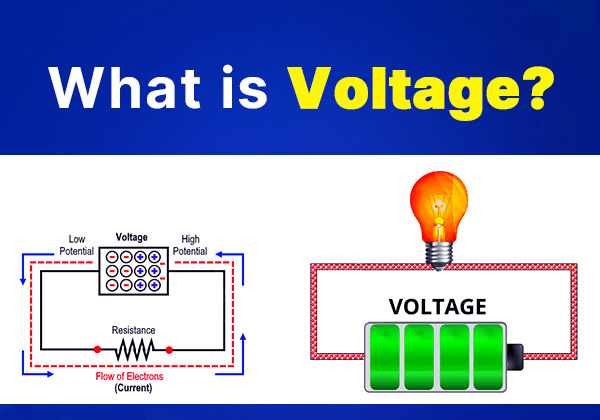

Voltage, a fundamental concept in electrical engineering and physics, is pivotal in understanding how electrical systems operate. It plays a crucial role in powering our everyday devices, from the smallest gadget to the largest industrial machines. This blog will delve into the definition of voltage, its uses, and its effects, providing a comprehensive understanding of this essential electrical parameter.
Definition of Voltage
What is Voltage?
Voltage, also known as electric potential difference, is the measure of electric potential energy per unit charge between two points in an electric field. It is the force that pushes electric charges through a conductor, such as a wire, and is measured in volts (V). In simpler terms, voltage can be thought of as the pressure that drives electrons to move from one point to another in a circuit.
How is Voltage Measured?
Voltage is measured using a device called a voltmeter. A voltmeter is connected in parallel with the component or section of the circuit where the voltage needs to be measured. The voltmeter provides a reading in volts, indicating the potential difference between the two points.
Types of Voltage
There are two main types of voltage:
- Direct Current (DC) Voltage: This type of voltage remains constant over time and flows in one direction. Common sources of DC voltage include batteries and solar panels.
- Alternating Current (AC) Voltage: AC voltage varies periodically with time and changes direction. It is the type of voltage supplied by power plants and used in household electrical outlets. The standard frequency of AC voltage in most countries is 50 or 60 Hz.
Uses of Voltage
Voltage is ubiquitous in modern life, serving a wide range of applications across various fields. Here are some key uses of voltage:
1. Powering Electronic Devices
One of the most common uses of voltage is to power electronic devices. Everything from smartphones, laptops, and televisions to kitchen appliances, electric cars, and industrial machinery relies on voltage to function. The voltage supplied to these devices enables the flow of electric current, which powers their operation.
2. Lighting
Voltage is crucial for lighting systems. It powers various types of lighting, including incandescent bulbs, fluorescent lamps, and LED lights. Each type of lighting requires a specific voltage to operate efficiently and provide the desired illumination.
3. Communication Systems
Communication systems, such as radios, televisions, and telecommunication networks, rely on voltage to transmit signals. Voltage variations are used to modulate carrier waves, enabling the transmission of audio, video, and data signals over long distances.
4. Industrial Applications
In industrial settings, voltage is used to power heavy machinery, motors, and equipment. Industrial processes, such as manufacturing, assembly lines, and material handling, depend on a stable and adequate voltage supply to maintain productivity and efficiency.
5. Transportation
Voltage is essential in the transportation sector, particularly in electric and hybrid vehicles. Electric vehicles (EVs) use high-voltage batteries to power their motors, providing a cleaner and more sustainable alternative to traditional internal combustion engines.
6. Medical Equipment
In the medical field, voltage is critical for the operation of various diagnostic and therapeutic equipment. Devices like MRI machines, X-ray machines, and defibrillators rely on precise voltage control to ensure accurate and effective performance.
Effects of Voltage
Voltage has several effects on electrical systems and components. Understanding these effects is important for designing and maintaining safe and efficient electrical systems.
1. Current Flow
The most direct effect of voltage is its ability to drive electric current through a conductor. The relationship between voltage and current is described by Ohm’s Law, which states that the current (I) through a conductor is directly proportional to the voltage (V) across it and inversely proportional to the resistance (R) of the conductor:
I=VRI = \frac{V}{R}
This means that for a given resistance, an increase in voltage will result in an increase in current, and vice versa.
2. Power Consumption
Voltage plays a crucial role in determining the power consumption of an electrical device. The power (P) consumed by a device is given by the product of the voltage (V) and the current (I):
P=V×IP = V \times I
This equation shows that for a constant current, an increase in voltage will lead to an increase in power consumption. Managing voltage levels is therefore important for energy efficiency and cost savings.
3. Heat Generation
When electric current flows through a conductor, it generates heat due to the resistance of the conductor. This effect, known as Joule heating, is proportional to the square of the current and the resistance:
Q=I2×RQ = I^2 \times R
Since current is directly related to voltage, higher voltage levels can result in increased heat generation, which can cause overheating and damage to electrical components if not properly managed.
4. Insulation Breakdown
High voltage levels can cause the breakdown of insulating materials used in electrical systems. Insulation breakdown can lead to short circuits, equipment failure, and safety hazards. It is important to ensure that insulation materials are rated for the maximum voltage they will encounter in a system.
5. Electromagnetic Interference
Voltage variations can cause electromagnetic interference (EMI), which can disrupt the operation of nearby electronic devices and communication systems. Shielding and grounding techniques are used to mitigate the effects of EMI and ensure the reliable operation of electrical and electronic systems.
6. Electrochemical Effects
Voltage can induce electrochemical reactions, which are the basis for batteries and electroplating processes. In batteries, voltage drives the movement of ions between electrodes, storing and releasing energy. In electroplating, voltage is used to deposit a thin layer of metal onto a surface.
Practical Applications and Considerations
Understanding voltage and its effects is crucial for designing and operating safe and efficient electrical systems. Here are some practical applications and considerations:
1. Voltage Regulation
Voltage regulation is essential for maintaining stable voltage levels in electrical systems. Voltage regulators are devices that automatically adjust the output voltage to a desired level, ensuring that electronic devices receive a consistent and safe voltage supply. This is particularly important in power distribution systems to protect sensitive equipment from voltage fluctuations.
2. Voltage Conversion
Voltage conversion is necessary when devices or systems require different voltage levels. Transformers are commonly used to step up or step down voltage levels in AC systems. For DC systems, converters such as DC-DC converters are used to adjust voltage levels. Voltage conversion is critical for the compatibility of electrical devices with different power sources.
3. Safety Precautions
Working with high voltage systems requires strict safety precautions to prevent electric shocks, burns, and other hazards. Insulating materials, protective equipment, and safety protocols are essential for minimizing risks when handling high voltage. Proper grounding and circuit protection devices, such as fuses and circuit breakers, are also crucial for ensuring safety.
4. Energy Efficiency
Optimizing voltage levels can improve the energy efficiency of electrical systems. Devices that operate at optimal voltage levels consume less power and generate less heat, leading to energy savings and extended lifespan of components. Energy-efficient practices include using energy-saving devices, proper maintenance, and avoiding over-voltage conditions.
5. Renewable Energy Systems
In renewable energy systems, such as solar and wind power, voltage plays a key role in energy generation and storage. Solar panels generate DC voltage, which is converted to AC voltage for use in homes and businesses. Voltage regulation and conversion are essential for integrating renewable energy sources into the grid and ensuring reliable power supply.
6. Electronic Circuit Design
In electronic circuit design, voltage considerations are crucial for the proper functioning of components. Voltage levels determine the operating range of transistors, integrated circuits, and other components. Designers must ensure that circuits are designed to handle the expected voltage levels to prevent damage and ensure reliable performance.
Voltage is a fundamental concept in electrical engineering that plays a crucial role in powering devices, transmitting signals, and enabling various technological advancements. Understanding voltage, its uses, and its effects is essential for designing and operating safe and efficient electrical systems. From powering electronic devices and lighting to driving industrial machinery and medical equipment, voltage is an integral part of modern life. By managing voltage levels and adhering to safety practices, we can harness the power of voltage to improve energy efficiency, reliability, and overall performance of electrical systems.
In conclusion, voltage is not just a measure of electric potential difference; it is a driving force that powers our world. Whether in everyday applications or advanced technological systems, voltage remains a key player in the field of electrical engineering. By exploring and understanding the intricacies of voltage, we can continue to innovate and enhance the capabilities of electrical systems, paving the way for a brighter and more electrified future.
What is Voltage? – FAQs