
Full form of TPN in Medical: In the medical field, TPN stands for Total Parenteral Nutrition. It is a method of feeding that bypasses the usual process of eating and digestion. TPN is used when a person cannot or should not get their nutrition through the mouth or digestive system. Instead, nutrients are given directly into the bloodstream through an intravenous (IV) line. This method ensures that the patient receives essential nutrients needed for survival and healing.
What is the full form of TPN in Medical?
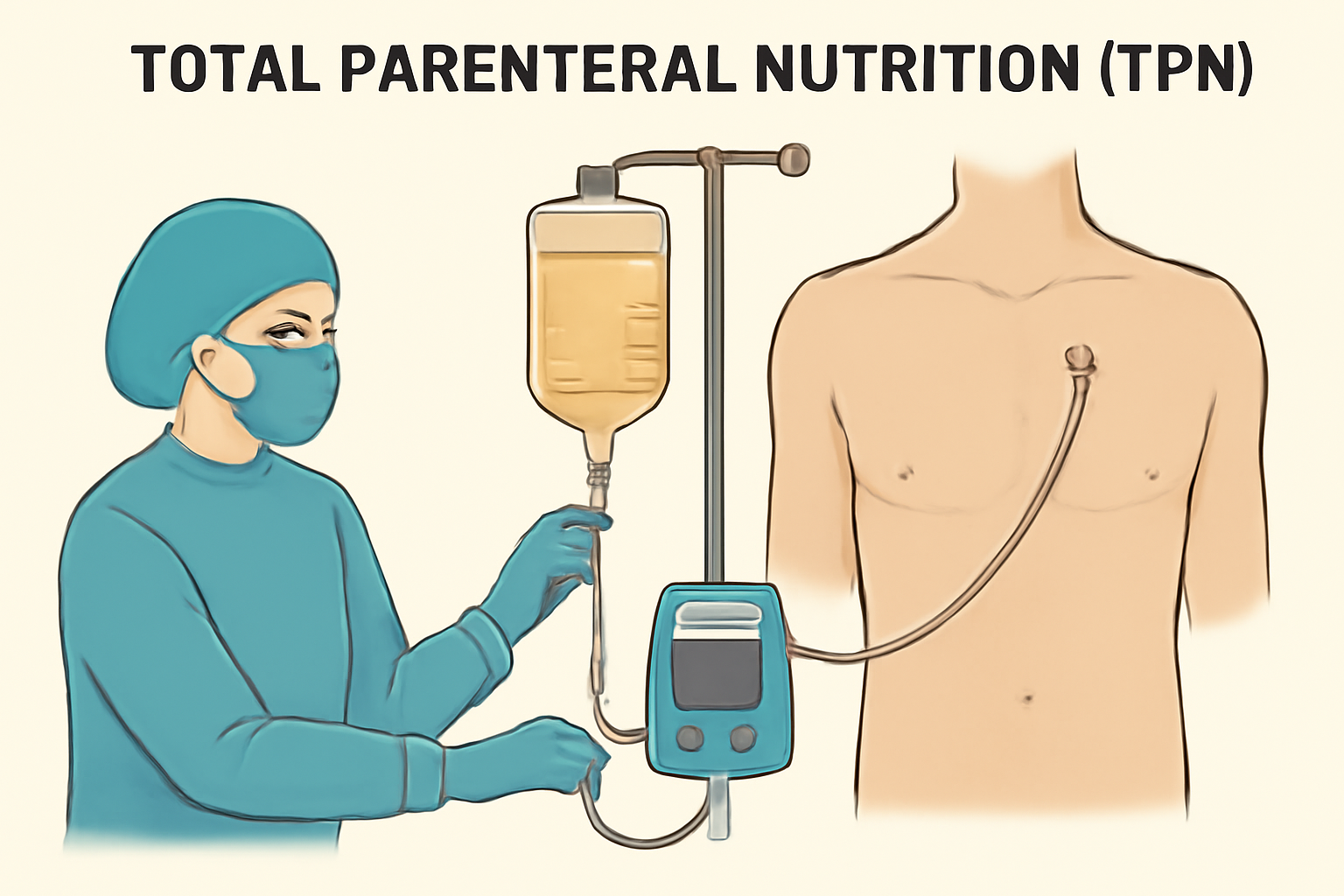
The full form of TPN in medical is Total Parenteral Nutrition (TPN). It is a special medical treatment used to provide nutrition to people who cannot use their digestive system for food absorption. This solution contains all necessary nutrients like carbohydrates, proteins, fats, vitamins, and minerals. TPN is usually delivered through a large vein in the chest using a central venous catheter.
Why is TPN Used?
TPN is typically used in patients who:
-
Have problems with their stomach or intestines
-
Are recovering from surgery that affects the digestive system
-
Suffer from severe digestive disorders like Crohn’s disease or bowel obstruction
-
Are undergoing cancer treatment that damages the gut
-
Have severe malnutrition or cannot absorb enough nutrients from food
What Does TPN Contain?
A TPN solution includes:
-
Carbohydrates—mainly in the form of glucose
-
Proteins—in the form of amino acids
-
Fats—as emulsions for energy and cell function
-
Vitamins and minerals—essential for body processes
-
Electrolytes—to maintain fluid balance and body function
-
Water—to keep the body hydrated
All these nutrients are carefully mixed and measured to match the patient’s needs.
How is TPN Given?
TPN is usually given through a central venous catheter placed in a large vein. This is done because the solution is concentrated and needs to be delivered into a large blood vessel to avoid irritation.
It can be delivered.
-
Continuously—over 24 hours using a pump
-
Cyclically—for shorter periods like 12-14 hours, usually at night
This allows the patient some freedom of movement during the day.
Who Prepares and Monitors TPN?
A team of healthcare professionals works together to manage TPN therapy. This includes:
-
Doctors
-
Dietitians
-
Pharmacists
-
Nurses
They ensure the solution is made correctly, monitor the patient’s response, and make adjustments if needed. Regular blood tests are done to check for any imbalances or complications.
Benefits of TPN
-
Provides complete nutrition when eating is not possible
-
Helps patients maintain or gain weight
-
Supports recovery and healing
-
Prevents malnutrition in long-term illnesses
Risks and Complications of TPN
While TPN is life-saving, it can also have some risks:
-
Infections – at the catheter site or in the bloodstream
-
Liver problems – due to long-term use
-
Electrolyte imbalances – if the solution is not adjusted correctly
-
Blood sugar changes – especially in diabetic patients
-
Vein damage – due to the IV line
These risks are managed through regular monitoring and care.
How Long Can a Person Be on TPN?
Some patients may need TPN for a short time, such as during recovery after surgery. Others, especially those with chronic digestive issues, may need it for a longer period, even for life. The duration depends on the individual’s health condition and the ability to digest food naturally.
Conclusion
TPN, or Total Parenteral Nutrition, is a medical technique used to give complete nutrition to patients who cannot eat or absorb food through the digestive system. It involves a carefully balanced mix of nutrients delivered directly into the bloodstream. While it has some risks, TPN plays a vital role in keeping patients nourished and supporting their recovery when regular eating is not possible.