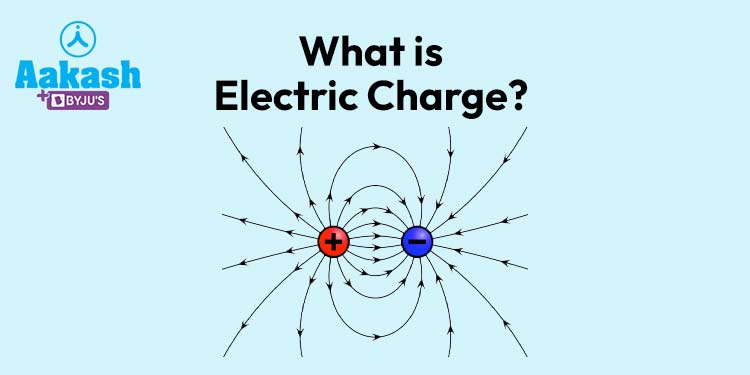

Electricity is an essential part of our modern lives, powering our devices, lighting our homes, and driving technological advancements. But have you ever wondered about the underlying concept behind this phenomenon? At the heart of electricity lies the concept of electric charge. In this blog post, we will delve into the world of electric charge, exploring its fundamental nature, properties, and significance in our everyday lives.
Understanding Electric Charge
Electric charge is a fundamental property of matter, closely related to the behavior of subatomic particles, such as electrons and protons. It is an intrinsic property that determines how these particles interact with each other and with electric and magnetic fields.
Types of Electric Charge
There are two types of electric charges: positive and negative. Protons carry a positive charge, while electrons carry a negative charge. The electric charge of an object depends on the number of protons and electrons it possesses. If an object has an equal number of protons and electrons, it is considered electrically neutral.
Coulomb’s Law and the Behavior of Electric Charges
The behavior of electric charges is governed by Coulomb’s law, formulated by the French physicist Charles-Augustin de Coulomb in the late 18th century. According to this law, the force between two charged objects is directly proportional to the product of their charges and inversely proportional to the square of the distance between them.
This law explains the basic principles of electrostatics and helps us understand why like charges repel each other, while opposite charges attract. When two objects with the same type of charge come close, such as two positively charged objects, they will repel each other due to the mutual force of their charges. On the other hand, objects with opposite charges, like a positively charged object and a negatively charged object, will attract each other.
Quantization of Electric Charge
One of the intriguing aspects of electric charge is its quantization. Through various experiments and observations, scientists have discovered that electric charge is always quantized. This means that the charge of any object or particle is an integer multiple of a fundamental charge unit, denoted by the symbol ‘e’. The fundamental charge is approximately equal to 1.6 x 10^-19 coulombs. Therefore, the charge of an object can be expressed as a whole number multiple of ‘e’.
The Role of Electric Charge in Everyday Life
Electric charge plays a crucial role in numerous aspects of our daily lives. Here are a few notable examples:
Electrical Power:
Electric charge is at the core of generating, transmitting, and utilizing electrical power. The flow of electric charge through conductive materials powers our homes, industries, and transportation systems.
Electronics:
The manipulation and control of electric charge enable the functioning of electronic devices. From smartphones and computers to televisions and refrigerators, electronic gadgets rely on the movement and regulation of electric charge to perform various tasks.
Static Electricity:
The accumulation and discharge of static electricity are common phenomena we encounter in our daily lives. Whether it’s the shock we feel after walking on a carpet or the attraction of a balloon to our hair, static electricity arises from an imbalance of electric charge.
Fundamental Forces:
Electric charge is intimately linked with other fundamental forces in nature, such as electromagnetism. The behavior of charged particles in electric and magnetic fields helps us comprehend a wide range of natural phenomena, from the behavior of lightning to the functioning of electric motors.
The Conclusion
Electric charge is a fundamental concept that lies at the heart of electricity and numerous other scientific principles. Its discovery and understanding have revolutionized our world, leading to technological advancements that have transformed the way we live, work, and communicate. From the quantization of charge to the fundamental forces it governs, electric charge is an essential component of our modern understanding of the physical world. Embracing and exploring the intricacies of electric charge allows us to unlock new possibilities and continue our journey of scientific discovery.
FAQs
What is the difference between positive and negative electric charges?
Positive electric charge is associated with protons, which are subatomic particles found in the nucleus of an atom. Negative electric charge is associated with electrons, which orbit around the nucleus. These charges have opposite properties, with positive charges attracting negative charges and vice versa.
Can electric charge be created or destroyed?
According to the principle of charge conservation, electric charge cannot be created or destroyed. It can only be transferred from one object to another or redistributed within a system. The total electric charge of a closed system remains constant.
How is electric charge measured?
Electric charge is measured in units called coulombs (C). The charge of an object can be quantified by the number of excess or deficit electrons or protons it possesses. The fundamental charge, denoted by 'e', is approximately 1.6 x 10^-19 C, and the charge of an object is typically expressed as a multiple of this fundamental charge.
What is the significance of electric charge in electronics?
Electric charge is crucial in the field of electronics. It enables the flow of electrons through conductive materials, facilitating the functioning of electronic devices. By controlling the movement of electric charge, we can manipulate currents, generate signals, and perform computations, leading to the development of various electronic devices and technologies.
How does electric charge relate to static electricity?
Static electricity arises from an imbalance of electric charge on the surface of objects. When objects come into contact, electrons can be transferred, causing one object to gain electrons (negative charge) and the other to lose electrons (positive charge). The resulting charge imbalance creates an attractive or repulsive force, leading to phenomena such as static shocks and the sticking of objects due to electrostatic attraction.