


Lenses are marvelous optical devices that play a crucial role in our daily lives, from eyeglasses that correct vision to cameras that capture precious moments. Among the different types of lenses, the convex lens stands out as a powerful tool for bending and focusing light. In this blog, we will dive into the world of convex lenses, exploring their structure, characteristics, applications, and the fascinating principles of light manipulation they embody.
What is a Convex Lens?
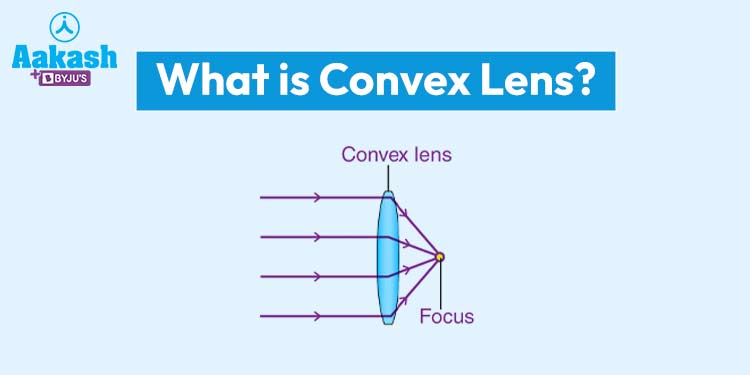
A convex lens is a transparent optical element made of glass or other materials, having at least one curved surface that bulges outward. Its shape resembles a magnifying glass, thicker in the center and tapering towards the edges. The term “convex” comes from the Latin word “convexus,” meaning “rounded” or “vaulted.” When light passes through a convex lens, it undergoes refraction, bending the light rays towards the center of the lens.
Characteristics of Convex Lenses
Focal Point:
Convex lenses have a unique focal point—the point at which parallel rays of light converge after passing through the lens. This focal point lies on the opposite side of the lens from the object. It is denoted by “F” in optical diagrams.
Focal Length:
The distance between the center of the lens and its focal point is known as the focal length. It determines the lens’s ability to focus light. Convex lenses have positive focal lengths, as they converge light rays.
Converging Lens:
Convex lenses are often referred to as “converging lenses” because they bring light rays closer together and converge them at the focal point.
Real and Virtual Images:
Depending on the object’s position relative to the lens, convex lenses can form both real and virtual images. A real image forms when the object is placed beyond the focal point, while a virtual image forms when the object is between the lens and the focal point.
Applications of Convex Lenses
Convex lenses find widespread applications in various fields, owing to their ability to manipulate light:
Vision Correction:
Convex lenses are used in eyeglasses and contact lenses to correct hyperopia (farsightedness) by converging light rays before they reach the eye’s lens.
Magnification:
Magnifying glasses, projectors, and telescopes employ convex lenses to magnify small objects or project enlarged images.
Cameras and Photography:
Convex lenses are a fundamental component of camera lenses, helping to focus light onto the camera’s sensor or film to capture images.
Microscopes:
Convex lenses are utilized in microscopes to magnify small specimens and reveal intricate details.
Spotlights and Flashlights:
Convex lenses are used in spotlights and flashlights to focus light into a concentrated beam.
Astronomical Observations:
In astronomy, convex lenses are integrated into telescopes to gather and focus light from distant celestial objects.
Conclusion
Convex lenses are an essential part of modern optics, providing us with an unparalleled ability to manipulate light. Their ability to converge light rays and form images has revolutionized various fields, from vision correction to photography and astronomy. Understanding the principles of convex lenses allows us to appreciate the beauty of light and its behavior when interacting with optical elements.
Next time you pick up a magnifying glass or gaze through a telescope, take a moment to marvel at the wonders of the convex lens—a remarkable tool that has expanded our vision and deepened our understanding of the world around us.
FAQs
What is a convex lens?
A convex lens is a transparent optical element with at least one curved surface that bulges outward. Its shape resembles a magnifying glass, thicker in the center and tapering towards the edges.
How does a convex lens work?
When light passes through a convex lens, it undergoes refraction, bending the light rays towards the center of the lens. This refraction causes the light rays to converge at a focal point on the opposite side of the lens from the object.
What is the focal point of a convex lens?
The focal point of a convex lens is the point at which parallel rays of light converge after passing through the lens. It lies on the opposite side of the lens from the object.
What is the focal length of a convex lens?
The focal length of a convex lens is the distance between the center of the lens and its focal point. It determines the lens's ability to focus light and is denoted by "F" in optical diagrams.
What is the difference between a converging lens and a diverging lens?
A convex lens is a converging lens because it brings light rays closer together and converges them at the focal point. On the other hand, a diverging lens (concave lens) spreads out light rays, causing them to diverge.
What type of image does a convex lens form?
A convex lens can form both real and virtual images. A real image forms when the object is placed beyond the focal point, while a virtual image forms when the object is between the lens and the focal point.
What are some applications of convex lenses?
Convex lenses have various practical applications, including vision correction in eyeglasses, magnification in magnifying glasses and telescopes, focusing light in cameras, and creating concentrated beams in spotlights and flashlights.
How are convex lenses used in photography?
Convex lenses are essential components of camera lenses. They help to focus light onto the camera's sensor or film, enabling the capture of sharp and clear images.
Are convex lenses used in microscopes?
Yes, convex lenses are used in microscopes to magnify small specimens and reveal intricate details.

