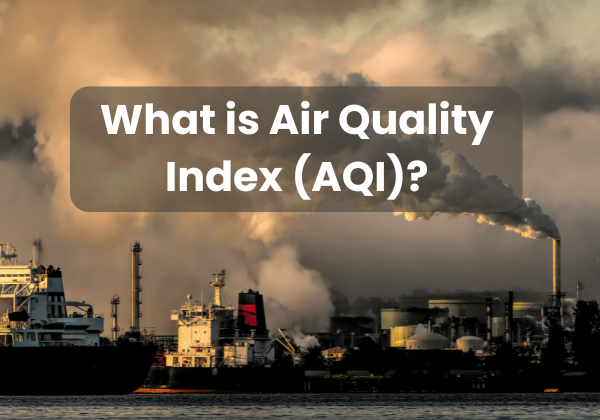

The Air Quality Index (AQI) is a standardized system used to measure and report air pollution levels in an easily understandable format. It provides a numerical scale that indicates the cleanliness or pollution level of the air, along with associated health advisories.
The Air Quality Index (AQI) plays a crucial role in assessing and communicating the quality of air in a specific area. It serves as a vital tool for governments, environmental agencies, and individuals to understand pollution levels and their potential health impacts. By providing real-time data on air quality, the AQI enables timely actions to mitigate pollution exposure, helping to safeguard public health and promote environmental sustainability.
Importance of AQI
The AQI ranges from 0 to 500, where lower values signify cleaner air, and higher values indicate more polluted air. It takes into account various pollutants, such as:
- Particulate matter (PM2.5 and PM10)
- Ozone (O₃)
- Nitrogen dioxide (NO₂)
- Sulfur dioxide (SO₂)
- Carbon monoxide (CO)
Each of these pollutants affects health differently, making AQI a comprehensive measure for assessing air quality.
a) Protecting Public Health
AQI plays a crucial role in alerting people about the risks of air pollution, especially for vulnerable groups such as children, the elderly, and individuals with respiratory issues.
b) Policy Making
Governments and environmental agencies use AQI data to create policies and implement measures to reduce air pollution.
c) Awareness and Behavior Change
It helps individuals understand the impact of their actions on air quality and encourages sustainable practices such as reducing vehicle emissions.
Components of AQI
The AQI is determined by analyzing several key pollutants that impact air quality. These components include particulate matter (PM2.5 and PM10), ground-level ozone (O3), carbon monoxide (CO), sulfur dioxide (SO2), and nitrogen dioxide (NO2). Each of these pollutants is assigned a value, and the highest value among them determines the overall AQI for a region. Understanding these components helps identify the sources of pollution and guides effective measures to reduce their levels. The AQI considers five primary air pollutants:
| Pollutant | Source | Health Impact |
|---|---|---|
| PM2.5 | Combustion, industrial emissions, dust | Penetrates lungs and bloodstream, causing respiratory and cardiovascular issues. |
| PM10 | Construction activities, road dust | Irritates respiratory tract and reduces lung function. |
| Ozone (O₃) | Vehicle emissions, chemical reactions | Triggers asthma, and reduces lung function. |
| Nitrogen Dioxide (NO₂) | Fossil fuel combustion | Causes inflammation of airways and aggravates asthma. |
| Sulfur Dioxide (SO₂) | Burning coal, and oil | Irritates respiratory system, and causes acid rain. |
| Carbon Monoxide (CO) | Incomplete combustion of fossil fuels | Reduces oxygen delivery to organs, causing fatigue and dizziness. |
How is AQI Calculated?
AQI is calculated using the concentration levels of pollutants in the air. Each pollutant’s concentration is converted into a sub-index using a pre-defined scale, and the highest sub-index becomes the overall AQI for that location.
Key Steps in AQI Calculation:
- Measurement of Pollutants: Monitoring stations record pollutant levels.
- Conversion to AQI Values: Concentration levels are mapped to AQI categories using specific breakpoints.
- Reporting: The highest pollutant-specific sub-index determines the AQI for that day.
The method for calculating the Air Quality Index (AQI) is standardized and consistent across both the Indian CPCB (Central Pollution Control Board) and the US-EPA (Environmental Protection Agency). The AQI is determined separately for each pollutant parameter, and the highest sub-index among them is used to represent the overall AQI. A sub-index is a linear function derived from the pollutant’s concentration.
Here’s how the calculation works:
Ip = [IHi – ILo / BPHi – BPLo] (Cp – BPLo) + ILo
Where,
Ip = index of pollutant p
Cp = truncated concentration of pollutant p
BPHi = concentration breakpoint i.e. greater than or equal to Cp
BPLo = concentration breakpoint i.e. less than or equal to Cp
IHi = AQI value corresponding to BPHi
ILo = AQI value corresponding to BPLo
Indian AQI Calculation
In India, the AQI is calculated based on a minimum of three parameters, with at least one being either PM10 or PM2.5. Sub-indices are determined using 16-hour average data for pollutants.
Example Calculation (PM2.5, CO, and Ozone):
Suppose the concentration of PM2.5 is 110 µg/m³. Referring to the Indian AQI standards:
- BPHi = 120, BPLo = 91
- IHi = 300, ILo = 201
Putting the values in equation and solving:
Sub Index= [(300-201)/ (120-91)] (110-91) + 201 = 265.86
Similarly, for other parameters, the sub-index can be calculated and the worst sub-index shows the AQI.
US-EPA AQI Calculation
The US-EPA AQI range differs slightly from India’s. The formula remains the same, but the breakpoints are adjusted to match the EPA’s standards.
Example Calculation (Carbon Monoxide):
Suppose the CO concentration (Cp) is 11.0 ppm. According to US-EPA guidelines:
- BPHi = 12.4, BPLo = 9.5
- IHi = 150, ILo = 101
Putting all the values in the equation and solving,
Ip = [(150-101) / (12.4-9.5)] (11.0-9.5) + 101 = 126.34
Calculate AQI for other present parameters and apply the equation differently, identify the worst-hit index and it will give you AQI.
Air Quality Index (AQI) Categories
The AQI is divided into six categories, each associated with a specific color, level of health concern, and precautionary measures:
| AQI Range | Category | Color Code | Health Implications | Precautions |
|---|---|---|---|---|
| 0-50 | Good | Green | Air quality is satisfactory. | No action required. |
| 51-100 | Moderate | Yellow | Acceptable but may cause discomfort for sensitive groups. | Limit prolonged outdoor activity. |
| 101-150 | Unhealthy for Sensitive Groups | Orange | May affect children, elderly, and people with respiratory diseases. | Avoid outdoor exertion. |
| 151-200 | Unhealthy | Red | May affect everyone; sensitive groups at higher risk. | Reduce outdoor activities. |
| 201-300 | Very Unhealthy | Purple | Health alert for the entire population. | Stay indoors; use air purifiers if needed. |
| 301-500 | Hazardous | Maroon | Emergency conditions; serious health risks. | Avoid all outdoor activities. |
Air Quality Index (AQI) Levels Around the World
Different countries have their own standards and categories for AQI based on local environmental policies and health considerations.
Global Comparison of AQI Standards:
| Country | Pollutants Considered | AQI Scale |
|---|---|---|
| United States (USA) | PM2.5, PM10, O₃, NO₂, SO₂, CO | 0-500 |
| India (India AQI) | PM2.5, PM10, O₃, NO₂, SO₂, NH₃, Pb | 0-500 |
| China | PM2.5, PM10, O₃, NO₂, SO₂, CO | 0-300 |
| European Union | PM2.5, PM10, O₃, NO₂, SO₂ | 0-100 |
How Can You Reduce Your AQI Impact?
Improving air quality requires both individual and collective action. Here are some ways to reduce your impact on AQI:
a) Individual Actions:
- Use Public Transport: Reduce the number of vehicles on the road.
- Adopt Clean Energy: Opt for solar or wind energy for household electricity needs.
- Reduce Waste: Practice waste segregation and composting to reduce burning.
b) Community and Policy Initiatives:
- Green Spaces: Plant trees and support urban greening projects.
- Industrial Regulations: Ensure industries comply with emission standards.
- Awareness Campaigns: Educate the public on the importance of reducing air pollution.
What is a Good AQI?
The Air Quality Index (AQI) is a tool used to measure the quality of air in a specific location, providing a clear understanding of how polluted or clean the air is. A “good AQI” refers to air quality that poses little to no risk to human health and the environment. Typically, an AQI ranging between 0 and 50 is considered good, signifying that the air is clean and free from harmful levels of pollutants such as particulate matter (PM2.5 and PM10), ozone, nitrogen dioxide, sulfur dioxide, and carbon monoxide.
Good AQI levels are crucial for maintaining public health, particularly for vulnerable groups such as children, the elderly, and those with respiratory issues. Breathing clean air helps reduce the risk of respiratory diseases, cardiovascular issues, and other health complications caused by air pollution. Moreover, good air quality supports ecosystems by preventing acid rain, preserving biodiversity, and mitigating climate change impacts.
Achieving and maintaining a good AQI requires collective efforts. Governments can enforce stricter emission regulations and promote the use of clean energy, while individuals can contribute by adopting sustainable practices like using public transport, reducing waste, and planting trees.
In conclusion, a good AQI ensures a healthier life and a more sustainable environment. It reflects the harmony between human activities and nature, underscoring the importance of proactive measures to preserve air quality for current and future generations. Aiming for and sustaining a good AQI is a shared responsibility that benefits everyone.
Which City Has the Best AQI in India?
Air Quality Index (AQI) is a crucial measure of air pollution levels, reflecting the cleanliness of the air and its impact on health and the environment. In a country like India, where many cities grapple with poor air quality due to rapid urbanization and industrialization, identifying the city with the best AQI is essential.
As of recent data, Aizawl, the capital of Mizoram, consistently ranks among the cities with the best AQI in India. With its lush greenery, minimal industrial activity, and clean environment, Aizawl often maintains an AQI in the “Good” category, typically between 0 and 50. The city benefits from its geographical location in the northeastern hills, which ensures a steady flow of fresh air. Additionally, limited vehicular emissions and the widespread use of eco-friendly practices among the residents contribute significantly to its superior air quality.
Aizawl’s example underscores the importance of sustainable living and effective urban planning. The city’s clean air stands in stark contrast to highly polluted metros like Delhi and Mumbai, emphasizing the need for stricter pollution control measures in urban areas.
While Aizawl shines as an example of good air quality, it also highlights the urgent need for other Indian cities to adopt eco-friendly practices. Planting trees, reducing vehicular emissions, and using renewable energy are steps that can significantly improve AQI across the nation. In conclusion, Aizawl’s exceptional air quality sets a benchmark for other cities, reminding us of the value of clean air in fostering healthier communities.
What Causes Poor Air Quality?
Poor air quality is a significant environmental concern affecting the health of millions worldwide. It results from a combination of natural and human-induced factors that release harmful pollutants into the atmosphere. Understanding these causes is crucial to addressing the issue effectively.
One of the primary contributors to poor air quality is vehicular emissions. The increasing number of automobiles on the road emits pollutants like carbon monoxide, nitrogen oxides, and particulate matter. Similarly, industrial activities, especially those involving the burning of fossil fuels, release large amounts of sulfur dioxide, volatile organic compounds (VOCs), and fine particles, which deteriorate air quality.
Another major cause is construction and mining activities, which generate dust and particulate matter, contributing to smog formation. Agricultural practices, such as the burning of crop residues, release pollutants like carbon dioxide and methane. Additionally, power plants that burn coal and other fossil fuels are significant sources of air pollution, releasing greenhouse gases and toxic substances.
Natural events such as wildfires, volcanic eruptions, and dust storms can also degrade air quality. Wildfires, for instance, produce large amounts of smoke containing fine particles and harmful gases.
Urban areas, with high population density and industrialization, often experience poor air quality due to the cumulative effect of these factors. Climate conditions, like low wind speeds, can further trap pollutants, leading to prolonged exposure.
Addressing the causes of poor air quality requires coordinated efforts, including stricter emission regulations, promoting renewable energy, and adopting sustainable practices. Without such measures, the adverse effects on public health and the environment will continue to escalate.
Understanding the Air Quality Index (AQI) is crucial for safeguarding your health and contributing to a cleaner environment. By staying informed about AQI levels and taking proactive measures, you can minimize exposure to harmful pollutants and advocate for sustainable practices.
Together, we can work towards improving air quality and creating a healthier world for future generations. Stay informed, act responsibly, and breathe easy!
Air Quality Index (AQI) FAQs
Q1. What is the Air Quality Index (AQI)?
A1. The Air Quality Index (AQI) is a numerical scale used to measure and report the quality of air in a specific location. It indicates how clean or polluted the air is and highlights potential health risks associated with the pollution levels. The AQI typically ranges from 0 to 500, with higher values indicating poorer air quality.
Q2. How is the AQI calculated?
A2. AQI is calculated based on the concentrations of key air pollutants such as particulate matter (PM2.5 and PM10), nitrogen dioxide (NO2), sulfur dioxide (SO2), ozone (O3), carbon monoxide (CO), and ammonia (NH3). Each pollutant's concentration is converted into an AQI sub-index, and the highest sub-index value among them becomes the overall AQI for the area.
Q3. What do different AQI levels mean?
A3. The AQI is categorized into six levels:
0–50 (Good): Air quality is considered satisfactory with minimal health risks.
51–100 (Moderate): Acceptable air quality, but some pollutants may pose a concern for sensitive groups.
101–150 (Unhealthy for Sensitive Groups): Health effects for children, elderly, or those with respiratory issues.
151–200 (Unhealthy): Health effects for everyone; sensitive groups may experience severe issues.
201–300 (Very Unhealthy): Serious health risks for the population.
301+ (Hazardous): Emergency conditions; everyone is likely to experience severe health effects.
Q4. Which cities in India have the best and worst AQI levels?
A4. Cities like Shillong and Aizawl often report good AQI levels due to low industrial activities and high forest cover. Conversely, cities like Delhi and Kanpur frequently rank among the worst due to high vehicle emissions, industrial activities, and seasonal crop burning in nearby areas.
Q5. How can individuals protect themselves from poor AQI?
A5. Individuals can take the following precautions to reduce exposure to poor air quality:
Limit outdoor activities, especially during high-pollution hours.
Use N95 or higher-grade masks when stepping out.
Install air purifiers indoors.
Avoid smoking or burning materials indoors.
Stay informed about AQI updates and plan activities accordingly.