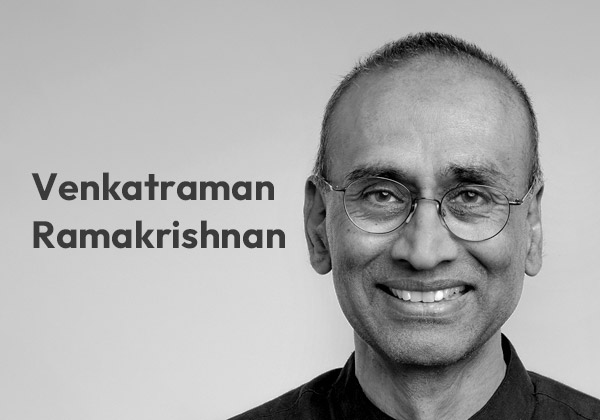

Venkatraman Ramakrishnan, commonly known as Venki, is an esteemed Indian-American and British structural biologist renowned for his groundbreaking work on the ribosome, the molecular machine that synthesizes proteins in all living cells. Venki’s achievements in science are celebrated worldwide, making him an inspiring figure in the field of molecular biology. His work not only advances our understanding of fundamental biological processes but also holds significant implications for medicine and drug development. Through his remarkable contributions, Ramakrishnan continues to inspire future generations of scientists and researchers across the globe.
This article talks about the details of the life of Venkatraman Ramakrishnan, his early days, his achievements, his findings, his awards and much more.
Venkatraman Ramakrishnan Early Life and Education
Childhood and Family Background
Venkatraman Ramakrishnan, often called Venki, was born on April 5, 1952, in Chidambaram, a small town in Tamil Nadu, India. He grew up in a family deeply rooted in science. His father, C. V. Ramakrishnan, was a biochemist, and his mother, Rajalakshmi Ramakrishnan, was a physicist. Their scientific background influenced Venki’s early interest in science and learning.
Schooling in India
Venki’s early education took place in India. He attended local schools where he was known for his curiosity and keen interest in science. His parents’ professions provided a stimulating environment at home, encouraging him to ask questions and seek answers. This nurturing environment played a crucial role in shaping his intellectual growth and interest in scientific pursuits.
College Education
After completing his school education, Venki enrolled at Maharaja Sayajirao University in Baroda (now Vadodara), Gujarat. He pursued a Bachelor of Science degree in Physics, graduating in 1971. His time at the university was marked by a growing fascination with the fundamental principles of science and the desire to delve deeper into research. Venki’s passion for physics laid the groundwork for his future academic endeavors.
Venkatraman Ramakrishnan Personal Life
Family and Upbringing
Venki Ramakrishnan was born into a family with a rich scientific heritage. His father, C. V. Ramakrishnan, was a biochemist, and his mother, Rajalakshmi Ramakrishnan, was a physicist. Growing up in Chidambaram, Tamil Nadu, India, Venki was surrounded by science and learning from a young age. This environment nurtured his curiosity and love for knowledge.
Marriage and Children
Venki is married to Vera Rosenberry, an accomplished children’s book author and illustrator. Their relationship is built on mutual respect and a shared love for learning and creativity. They have one child, Raman Ramakrishnan, who, like his parents, has pursued a career that reflects a blend of creativity and analytical thinking.
Interests and Hobbies
Beyond his scientific career, Venki has a variety of interests and hobbies that enrich his personal life.
Venki is an avid music lover, particularly fond of classical music. He enjoys both Indian classical music and Western classical music, finding relaxation and inspiration in the melodies and rhythms. His appreciation for music is a way for him to unwind from the rigors of scientific research.
Venki is also an enthusiastic reader. He enjoys exploring different genres and topics, ranging from science and history to literature and philosophy. Reading broadens his perspective and fuels his intellectual curiosity, providing a balance to his professional life.
Venkatraman Ramakrishnan Career
Moving to the United States
After completing his studies in physics at Maharaja Sayajirao University in India, Venkatraman Ramakrishnan decided to pursue higher education in the United States. He earned his Ph.D. in Physics from Ohio University. His research focused on theoretical physics, but he soon developed a keen interest in biology.
Shift to Molecular Biology
Following his Ph.D., Venki shifted his focus from physics to molecular biology. This transition marked the beginning of his groundbreaking research into the structure of ribosomes. He took up a postdoctoral position at Yale University, where he began working on ribosome research, which would become the central theme of his career.
Work at Yale University
At Yale, Venki worked on understanding how ribosomes function. Ribosomes are essential cellular machines that make proteins based on genetic instructions. His research aimed to uncover the detailed structure of ribosomes and how they operate at a molecular level. This work laid the foundation for his future achievements.
Research Work by Venkatraman Ramakrishnan
Venkatraman Ramakrishnan’s research focuses on understanding the ribosome, a vital molecular machine in cells that makes proteins. His work has provided deep insights into how ribosomes work and how they can be targeted by antibiotics.
Early Research at Yale
Exploring Ribosome Function
At Yale University, Venki began studying ribosomes. Ribosomes are responsible for translating genetic information into proteins, which are essential for all living cells. His early research aimed to understand how ribosomes read the genetic code and build proteins accurately.
Developing Techniques
During his time at Yale, Venki worked on developing techniques to study ribosomes in detail. This involved preparing ribosome samples and using X-ray crystallography, a method that helps visualize the structure of molecules at a very fine level.
Major Breakthroughs at MRC Laboratory of Molecular Biology
Mapping the Ribosome Structure
In 1999, Venki moved to the Medical Research Council (MRC) Laboratory of Molecular Biology in Cambridge, UK. Here, his team made a major breakthrough by mapping the structure of the ribosome’s 30S subunit. This structure is crucial because it reveals how ribosomes interact with messenger RNA (mRNA) and transfer RNA (tRNA) during protein synthesis.
Detailed Insights
The detailed map provided insights into how ribosomes bind to mRNA and tRNA. This allowed scientists to see exactly where and how proteins are assembled. Understanding this process is vital for developing antibiotics that can target bacterial ribosomes without affecting human ones.
Venkatraman Ramakrishnan Achievements
Nobel Prize in Chemistry (2009)
One of Venkatraman Ramakrishnan’s most significant achievements is winning the Nobel Prize in Chemistry in 2009. He received this prestigious award for his work on the structure and function of the ribosome. This research, conducted alongside Thomas A. Steitz and Ada E. Yonath, provided a detailed understanding of how ribosomes work, which has had a profound impact on molecular biology and medicine.
Detailed Ribosome Structure Mapping
Venki’s research led to a breakthrough in understanding the ribosome’s structure. By mapping the 30S subunit of the ribosome, he and his team revealed how ribosomes interact with messenger RNA (mRNA) and transfer RNA (tRNA) to build proteins. This detailed map has been crucial for developing new antibiotics that specifically target bacterial ribosomes without harming human cells.
Leadership as President of the Royal Society
Venki served as the President of the Royal Society, one of the oldest and most respected scientific institutions, from 2015 to 2020. During his tenure, he worked to promote scientific research and address global challenges such as climate change and public health. His leadership helped strengthen the role of science in tackling major issues facing society.
Contributions to Antibiotic Development
The detailed structure of ribosomes uncovered by Venki’s research has played a key role in improving antibiotics. By understanding how antibiotics interact with bacterial ribosomes, scientists can design drugs that are more effective at fighting infections. This achievement has important implications for treating bacterial diseases and developing new treatments.
Venkatraman Ramakrishnan Awards and Honors
The following awards and honors highlight Venkatraman Ramakrishnan’s exceptional contributions to science, particularly in the field of molecular biology and structural research.
| Awards | Awarded in |
| Nobel Prize in Chemistry | 2009 |
| Copley Medal | 2012 |
| Linnean Medal | 2014 |
| Clemens Prize | 2012 |
| Foreign Member of the Royal Society | 2002 |
| Padma Bhushan | 2014 |
| Fellow of the Royal Society | 2002 |
| Shanti Swarup Bhatnagar Prize | 2003 |
| Wiley Prize in Biomedical Sciences | 2008 |
Venkatraman Ramakrishnan Famous Publications
These publications reflect Venkatraman Ramakrishnan’s significant contributions to understanding ribosomes and their structure, which have been crucial for advancing molecular biology and drug development.
| Publication Title | Year |
| “Gene Machine: The Race to Decipher the Secrets of the Ribosome” | 2018 |
| Why We Die: The New Science of Ageing and the Quest for Immortality | 2014 |
Venkatraman Ramakrishnan Impact
Advances in Molecular Biology
Venkatraman Ramakrishnan’s research has significantly advanced our understanding of ribosomes, the essential molecular machines in cells that build proteins. By revealing the detailed structure of ribosomes, his work has provided crucial insights into how proteins are made from genetic information. This has helped scientists understand many fundamental processes in biology.
Improvements in Antibiotics
One of the most practical impacts of Venki’s research is in the field of medicine. His detailed mapping of ribosomes has led to better knowledge of how antibiotics can target bacterial ribosomes without affecting human ribosomes. This has paved the way for developing more effective antibiotics and improved treatments for bacterial infections.
Influence on Scientific Research
Venki’s work has inspired other scientists and researchers around the world. His findings have opened up new areas of research in molecular biology and drug development. The techniques and methods he developed are now widely used in scientific studies, making a lasting impact on the field.
Leadership and Advocacy
As the President of the Royal Society, Venki promoted the importance of science in addressing global challenges like climate change and public health. His leadership helped highlight the value of scientific research and its role in solving pressing issues. This advocacy for science has strengthened its position in society.
Education and Mentorship
Venki is also known for his commitment to education and mentoring young scientists. He regularly engages with students and researchers, sharing his knowledge and encouraging them to pursue careers in science. His efforts in mentoring help shape the next generation of scientists and foster a passion for research.
Venkatraman Ramakrishnan FAQs
Q1. Why did Venkatraman Ramakrishnan win the Nobel prize?
Answer: Venkatraman Ramakrishnan won the Nobel Prize in Chemistry in 2009 for his work on the structure and function of the ribosome. His research provided detailed insights into how ribosomes, the molecular machines that make proteins in cells, work. This understanding is crucial for developing antibiotics and advancing molecular biology.
Q2. Who won the Nobel Prize for Indian Chemistry?
Answer: The Nobel Prize in Chemistry awarded to an Indian was won by Venkatraman Ramakrishnan in 2009. He received the prize for his research on ribosomes, which has had a significant impact on both science and medicine.
Q3. What is Venkatraman Ramakrishnan contribution to Indian chemistry?
Answer: Venkatraman Ramakrishnan’s major contribution to Indian chemistry, and science in general, is his detailed study of the ribosome’s structure. His research has advanced our understanding of how proteins are made in cells and has influenced the development of new antibiotics. This work has brought global recognition to his contributions and to Indian science.
Q4. What did Venkatraman Ramakrishnan discover in Chemistry?
Answer: Venkatraman Ramakrishnan’s key discovery in chemistry is the detailed structure of the ribosome. By mapping the ribosome's structure, he revealed how this essential cellular machine builds proteins based on genetic information. This discovery has important implications for understanding biological processes and developing antibiotics.
Q5. Is Venkatraman Ramakrishnan alive?
Answer: Yes, Venkatraman Ramakrishnan is alive. Born on April 5, 1952, he continues to be an influential figure in science and research.