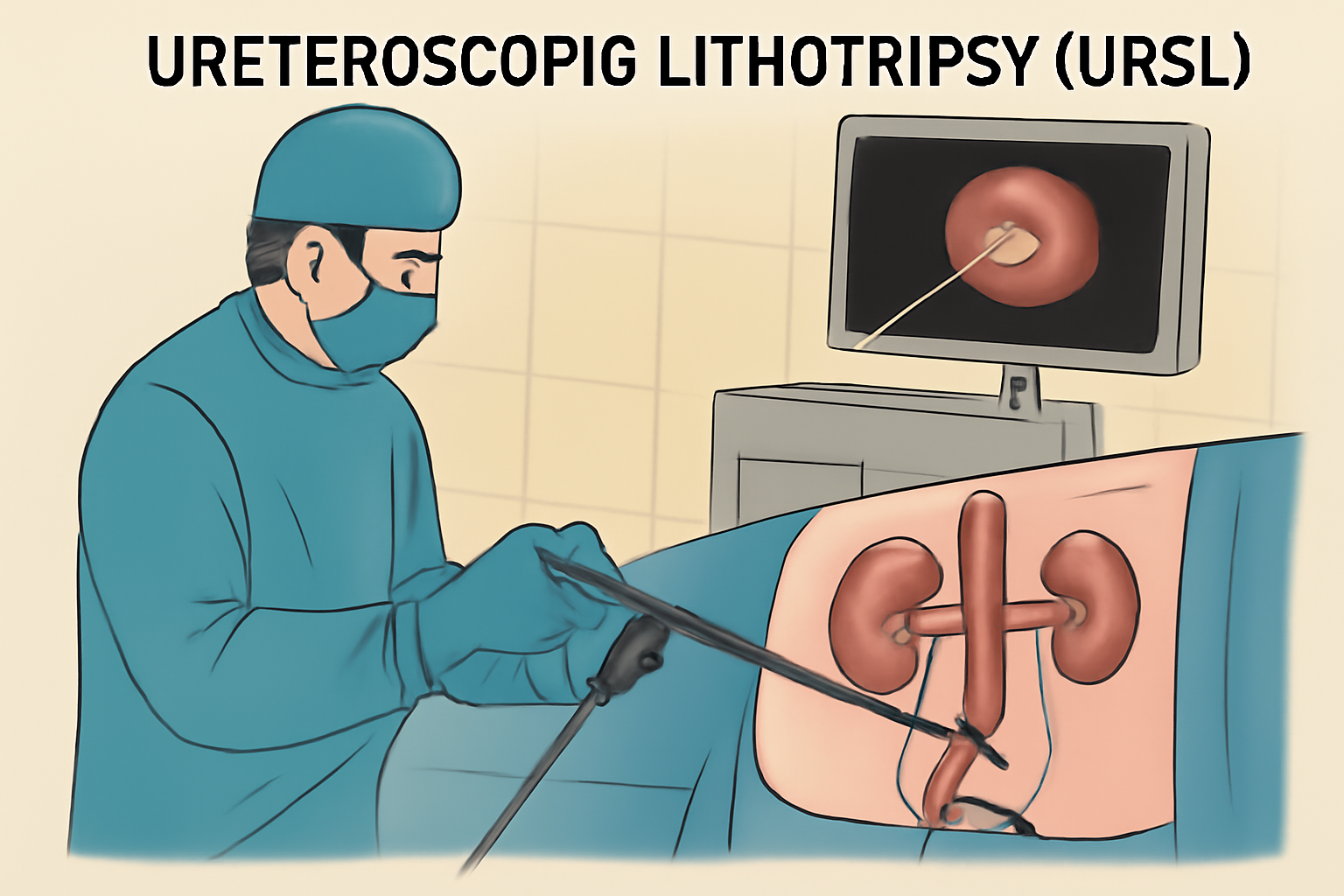

URSL Full Form in Medical: The full form of URSL is Ureteroscopic Lithotripsy. It is a medical procedure that helps remove stones from the ureter or kidney. Kidney stones are hard, crystal-like substances that form in the kidneys due to high levels of minerals in the urine. When these stones move into the ureter, they can block the flow of urine and cause pain. URSL is a modern and safe method to break and remove these stones without making any large cuts on the body. This blog explains what URSL is, when it is used, how the procedure is done, and what to expect after the treatment.
What is the Full Form of URSL in Medical?
URSL is a minimally invasive surgical procedure used to treat stones that are stuck in the ureter or located in the lower part of the kidney. The ureter is a tube that carries urine from the kidney to the bladder. If a stone blocks the ureter, it can cause severe pain, infection, and kidney damage.
In URSL, doctors use an instrument called a ureteroscope, which is a thin, tube-like device with a camera and light at the end. It is inserted through the urethra (the opening where urine comes out) and guided into the bladder and ureter. Once the stone is located, doctors use a laser (usually Holmium laser) to break it into small pieces. These small fragments are either removed using a basket-like tool or left to pass naturally with urine.
When is URSL Needed?
Doctors usually recommend URSL when:
-
A stone is too large to pass through the urine naturally.
-
There is intense pain in the lower back or abdomen due to the stone.
-
The patient shows signs of infection, such as fever or cloudy urine.
-
The stone is blocking the ureter, causing swelling of the kidney (hydronephrosis).
-
Other non-surgical treatments like drinking more fluids or medications do not work.
-
Shock Wave Lithotripsy (ESWL) has failed or is not suitable due to the location or size of the stone.
-
The stone has been present for a long time and is not moving.
In such cases, URSL is a reliable and effective solution to remove the stone and restore normal urine flow.
How Does the URSL Procedure Work?
The URSL procedure is done in a hospital by a urologist and follows these general steps:
-
Preparation:
The patient is given anesthesia. This may be general anesthesia (where the patient is asleep) or spinal anesthesia (where the lower body is numbed). The doctor also checks for infections before surgery. -
Insertion of Ureteroscope:
A ureteroscope is gently inserted through the urethra, passed through the bladder, and into the ureter where the stone is located. -
Stone Location:
The camera at the tip of the ureteroscope helps the doctor see the stone clearly on a screen. -
Laser Fragmentation:
A laser fiber is passed through the scope, and a powerful laser is used to break the stone into very small pieces. This process is called laser lithotripsy. -
Stone Removal:
The tiny fragments may be removed using a basket-like tool or left to be passed out naturally in the urine over the next few days. -
Stent Placement:
Sometimes, a DJ stent (a soft plastic tube) is placed inside the ureter to keep it open and allow smooth urine flow. It also helps reduce swelling and pain. The stent is removed after 1–2 weeks.
Benefits of URSL
URSL has many advantages compared to traditional surgery:
-
No large cuts or stitches are required, so the body heals faster.
-
Short hospital stay – many patients go home the same day or after one night.
-
Quick recovery – most people can return to normal activities within a week.
-
Less pain after the procedure.
-
High success rate in removing stones, even those stuck in difficult positions.
-
Low risk of complications when performed by experienced doctors.
-
Can be used for stones that don’t respond to other treatments like ESWL.
Risks and Side Effects of URSL
Although URSL is generally safe, like any medical procedure, there are some possible risks and side effects. These include:
-
Pain or burning during urination for a few days after the procedure.
-
Small amount of blood in the urine (usually stops within 1–2 days).
-
Urinary tract infection (UTI) if bacteria enter the urinary system.
-
Injury to the ureter (very rare, but can happen if the ureter is narrow or delicate).
-
Discomfort due to the DJ stent, which may cause frequent urination or back pain until it is removed.
-
Recurring stones if lifestyle or diet is not changed.
Doctors provide medicines to manage these symptoms and reduce the chance of complications.
Recovery After URSL Procedure
The recovery after URSL is usually smooth and fast. Most patients feel much better within a few days. Here is what to expect:
-
Hospital Discharge: Most patients are discharged the same day or within 24 hours.
-
Hydration: Drink lots of water (2–3 litres daily) to help flush out small stone pieces.
-
Medications: Painkillers and antibiotics may be given to reduce pain and prevent infection.
-
Activity: Avoid heavy physical work for about 5–7 days.
-
Stent Removal: If a stent is placed, a follow-up visit will be scheduled to remove it.
-
Symptoms: Mild discomfort while urinating may occur, which usually goes away in a few days.
Most people return to work and normal activities within 1–2 weeks.
Who Performs URSL?
URSL is performed by a urologist, a doctor who is trained to treat diseases of the urinary tract and the male reproductive system. Urologists have the skills and tools needed to diagnose, treat, and manage kidney stones and other urinary problems. They work in hospitals or special clinics and are supported by trained nurses and technicians.
Preventing Kidney and Ureteral Stones After URSL
After URSL, it is important to take steps to prevent new stones from forming. Here are some tips:
-
Drink plenty of water every day (at least 8–10 glasses).
-
Limit salt intake, which can lead to stone formation.
-
Reduce animal protein like red meat, which can increase stone-forming substances.
-
Eat more fruits and vegetables, which help balance the acid levels in urine.
-
Avoid foods high in oxalates, like spinach, beets, and nuts (if advised by your doctor).
-
Follow a balanced diet, maintain a healthy weight, and exercise regularly.
-
Regular follow-ups with your urologist to check for any signs of new stone formation.
URSL Full Form in Medical: Conclusion
URSL (Ureteroscopic Lithotripsy) is a modern and effective way to remove stones from the ureter or kidney using a thin tube and laser. It is safe, causes less pain, and allows a quick return to daily life. If you have kidney stones that are causing pain or not going away with medicine, URSL may be the right treatment for you. Talk to a urologist to understand your options and how this procedure can help you feel better.