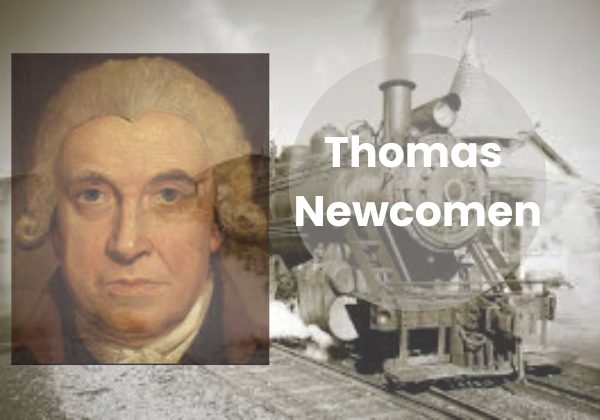

Thomas Newcomen was a key figure in the early history of steam power. His work in the early 18th century laid the foundation for modern industrial technology. This detailed exploration provides an in-depth look at his life, his significant contributions, and the broader context of his work.
Early Life and Background of Thomas Newcomen
Birth and Family Background
Thomas Newcomen was born on February 28, 1664, in Dartmouth, Devon, England. He came from a modest background; his father was a tanner. His early years were marked by economic hardship, but his ingenuity and mechanical aptitude led him to a career in engineering.
Thomas Newcomen Education and Early Career
Newcomen’s formal education was limited, but his skills as a blacksmith provided him with a strong foundation in practical mechanics. His work as a blacksmith and ironmonger involved designing and building various mechanical devices, which would later contribute to his steam engine development.
Innovations in Steam Engine Technology
The Problem of Mine Pumping
During Newcomen’s time, the mining industry faced significant challenges due to the accumulation of water in mines. Traditional methods of pumping water were inefficient and inadequate for deeper mining operations. Newcomen recognized the need for a more effective solution to this problem.
Development of the Newcomen Engine
Newcomen’s steam engine, developed around 1712, was a significant advancement in mechanical engineering. It was designed specifically to address the problem of mine drainage. Unlike earlier steam devices, Newcomen’s engine was capable of generating the power necessary to pump large quantities of water from deep mines.
Design and Mechanism
- Atmospheric Pressure Principle: Newcomen’s engine operated based on the principle of atmospheric pressure. Steam was used to create a vacuum in a cylinder, which then drove a piston.
- Beam Engine: The engine featured a beam that converted the piston’s linear motion into a reciprocating motion suitable for pumping. This design allowed for a more practical and efficient application of steam power.
- Cylinder and Piston: The engine’s cylinder and piston system was central to its operation. Steam introduced into the cylinder would condense, creating a vacuum that drove the piston downward. This movement was transferred to the beam, which powered the pump.
| Feature | Description |
| Cylinder Diameter | Approximately 10 inches to 24 inches |
| Stroke Length | Typically around 6 to 10 feet |
| Engine Type | Atmospheric engine |
| Primary Use | Pumping water from mines |
Impact and Legacy of Thomas Newcomen
Industrial Revolution Catalyst
Newcomen’s steam engine was a crucial precursor to the Industrial Revolution. It provided a reliable method for pumping water from mines, facilitating deeper and more efficient mining operations. This had a ripple effect on various industries, demonstrating the potential of steam power for industrial applications.
Advancements by Successors
The Newcomen engine was not the most efficient steam engine, but it set the stage for future developments. Innovations by engineers like James Watt built upon Newcomen’s work, leading to more efficient and powerful steam engines. Watt’s improvements, including the separate condenser, significantly increased the efficiency of steam engines and paved the way for widespread industrial use.
Historical Context and Influence
Newcomen’s work was part of a broader trend in the early 18th century toward improving mechanical and industrial processes. His engine was a practical solution to a pressing problem and demonstrated the potential of steam power. It influenced subsequent engineers and inventors, contributing to the rapid technological advancements of the Industrial Revolution.
Detailed Analysis of Newcomen’s Engine
Engineering Specifications
Cylinder Dimensions: Newcomen’s engines varied in size, with cylinders typically ranging from 10 to 24 inches in diameter. The size and design of the engine were tailored to the specific needs of the installation.
Pumping Capacity: The engines were capable of pumping large volumes of water, essential for maintaining the operational depth of mines. The capacity of the engine depended on its size and the efficiency of its components.
Operational Challenges
- Fuel Consumption: Newcomen’s engines required a significant amount of fuel to generate steam. This led to high operating costs and limited the engine’s economic feasibility in some applications.
- Maintenance Requirements: The engines were prone to wear and required regular maintenance. The large and heavy components, such as the cylinder and beam, necessitated frequent upkeep to ensure reliable operation.
Technological Limitations
Efficiency Issues: The Newcomen engine was relatively inefficient compared to later steam engines. Its reliance on atmospheric pressure limited its power output and efficiency.
Design Constraints: The engine’s design was constrained by the materials and manufacturing techniques available in the early 18th century. Advances in metallurgy and engineering would later address some of these limitations.
Newcomen’s Personal Life and Later Years
Family Life of Thomas Newcomen
Thomas Newcomen married Hannah Mucklestone in 1691. The couple had several children, and Newcomen continued to work as an engineer and inventor throughout his life. His family supported his work, and his son, also named Thomas, was involved in the development and promotion of Newcomen’s engine.
Death and Legacy of Thomas Newcomen
Thomas Newcomen passed away on July 5, 1729. His contributions to engineering and technology were recognized posthumously, and his steam engine became a symbol of early industrial innovation. Newcomen’s work had a lasting impact on the development of steam power and mechanical engineering.
Recognition and Honors of Thomas Newcomen
While Newcomen did not receive significant recognition during his lifetime, his contributions were acknowledged by later generations. His steam engine was celebrated as a pioneering achievement, and he is remembered as one of the key figures in the history of industrial technology.
Thomas Newcomen was a pioneering engineer whose development of the first practical steam engine marked a significant advancement in mechanical engineering. His innovations addressed the pressing problem of mine drainage and laid the groundwork for future developments in steam power. Despite the limitations of his engine, Newcomen’s work had a profound impact on the Industrial Revolution and the evolution of technology.
Newcomen’s legacy endures through the principles and technologies that followed his innovations. His work inspired future generations of engineers and inventors, and his contributions remain a crucial part of the history of industrial technology.