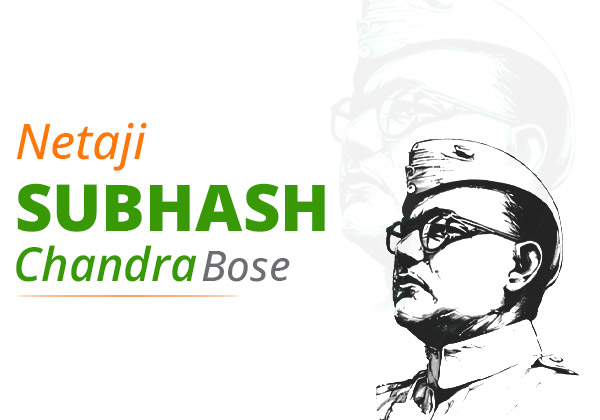

Subhash Chandra Bose was a key leader in India’s fight for independence from British rule. He was born on January 23, 1897, in Cuttack, Odisha. Bose is famous for his strong and unwavering efforts to free India from British control. He was known for his revolutionary ideas and fearless actions. Unlike some leaders who chose peaceful methods, Bose believed in taking bold steps to achieve freedom. His passion and dedication to his cause made a big difference in India’s history and left a lasting impact on the country’s struggle for independence. This article talks about the details of the life of Subhash Chandra Bose, his early life, his education, ideologies, legacy, contribution to India’s struggle for independence, and his last days.
Subhash Chandra Bose Early Life and Education
Early Life
Subhash Chandra Bose was born on January 23, 1897, in Cuttack, Odisha, in British India. He was born into a large Bengali family; his father, Janakinath Bose, was a successful lawyer, and his mother, Prabhavati Dutt Bose, was a devoutly religious woman. Bose was the ninth of fourteen children, and his family was well-respected in their community. From a young age, Bose was inspired by the stories of Indian heroes and the struggle for independence. He was a bright and ambitious child, excelling in his studies and showing a keen interest in Indian history and politics.
Education
Primary and Secondary Education
Bose attended the Ravenshaw Collegiate School in Cuttack, where he demonstrated strong academic abilities and leadership qualities. His performance in school was impressive, and he was known for his discipline and determination.
Higher Education
After finishing his schooling, Bose went on to study at Presidency College in Calcutta. Here, he was actively involved in student politics and became known for his radical views against British rule. His participation in political activities and his criticism of British policies led to conflicts with college authorities.
University of Cambridge
In 1919, Bose traveled to England to prepare for the Indian Civil Services (ICS) examination. He studied at the University of Cambridge and passed the ICS exam with high marks. However, he was disillusioned by the British government’s treatment of Indian aspirations and chose to resign from the ICS in 1921. This decision marked his full-time commitment to the independence movement.
Bose’s early education and experiences played a crucial role in shaping his revolutionary ideas and his determination to fight for India’s freedom. His academic excellence, combined with his growing sense of patriotism, set the stage for his future contributions to the independence movement.
Subhash Chandra Bose Personal Life
Family Background
Subhash Chandra Bose was born on January 23, 1897, in Cuttack, Odisha, into a large and respected family. His father, Janakinath Bose, was a well-known lawyer in their community. His mother, Prabhavati Dutt Bose, was a devout and religious woman who played a significant role in shaping Bose’s early values and principles.
Growing up, Bose was one of fourteen siblings, which created a lively and supportive family environment. The Bose family was deeply rooted in Bengali culture and traditions, and this background influenced Bose’s early years. His family’s values and their emphasis on education and social responsibility left a lasting impact on him.
Marriage and Family Life
In 1937, Subhash Chandra Bose married Emilie Schenkl, an Austrian woman. Emilie met Bose during his travels in Europe, and their relationship grew strong despite the challenges of distance and political turmoil. Their marriage was kept private for security reasons, and it was not widely known in India at the time.
The couple had a daughter named Anita Bose, born in 1942. Anita’s birth was a significant moment for Bose, as it represented a personal joy amidst the turbulent years of his revolutionary activities. Bose’s wife, Emilie, and their daughter remained largely out of the public eye, partly due to the secrecy surrounding Bose’s activities and the political climate of the time.
Personal Traits and Characteristics
Subhash Chandra Bose was known for his intense dedication and strong personality. His commitment to India’s independence was all-consuming, and he was often described as a charismatic and dynamic leader. Despite his demanding and often dangerous life as a revolutionary, Bose maintained close connections with his family and valued their support and encouragement.
Bose’s personal life reflected his deep sense of duty and sacrifice for his country. His family provided him with emotional support and stability, which was crucial during the years of his struggle for India’s freedom. His personal choices, including his marriage and family life, were intertwined with his broader vision for an independent India.
Overall, Subhash Chandra Bose’s personal life was marked by a balance of family loyalty and unwavering commitment to his revolutionary goals. His relationships and family life played a significant role in shaping his character and determination to achieve independence for India.
Subhash Chandra Bose Ideologies
Fight for Independence:
Subhash Chandra Bose strongly believed that India needed to take bold and direct action to achieve independence from British rule. Unlike some leaders who favored negotiations and peaceful protests, Bose thought that only a strong, active resistance would drive the British out of India.
Revolutionary Approach:
Bose was known for his revolutionary ideas. He believed in using armed struggle to challenge the British government. He felt that peaceful methods alone wouldn’t be enough to free India and that a more forceful approach was necessary.
Socialism and Justice:
Bose was also a supporter of socialism. He wanted to build a fair and just society in India after independence. This meant that he wanted to address social inequalities and ensure that wealth and resources were shared more equally among people.
Unity Among All Indians:
Bose believed in bringing together all sections of Indian society to fight for independence. He wanted people from different regions, religions, and backgrounds to unite in the struggle against British rule. He felt that a united effort would be stronger and more effective.
Criticism of British Rule:
Bose was very critical of British rule and the way it treated Indians. He was frustrated with the slow pace of reforms and the lack of respect shown to Indian aspirations. His frustration led him to seek more aggressive and immediate solutions for India’s freedom.
Overall, Subhash Chandra Bose’s ideologies centered around the need for a strong, united, and active fight against British colonialism, combined with a vision of social justice and fairness for all Indians.
Subhash Chandra Bose Policies
Active Resistance:
Subhash Chandra Bose believed that to achieve independence from British rule, India needed to take active and bold steps. He supported using armed resistance and revolutionary activities as key strategies. Unlike leaders who focused on peaceful protests, Bose felt that direct action was essential.
Indian National Army (INA):
Bose founded and led the Indian National Army (INA), also known as the Azad Hind Fauj. The INA was formed to fight against British forces alongside the Axis powers during World War II. Bose saw the army as a way to inspire Indians to join the struggle for independence and to show that India was ready to defend itself.
Partnership with Axis Powers:
During World War II, Bose sought support from the Axis powers, including Germany and Japan. He believed that aligning with these countries could help India gain freedom from British rule. His goal was to use international alliances to strengthen the independence movement.
Economic and Social Reforms:
Bose also had ideas for economic and social reforms. He wanted to create a fairer society where wealth and resources were shared more equally. This meant addressing social inequalities and working towards a more just system in India after independence.
Unified Nationalism:
Bose’s policies emphasized the importance of unity among Indians. He wanted people from all parts of India, regardless of their religion, region, or background, to come together in the fight for freedom. He believed that a united effort would be more powerful and effective.
Overall, Subhash Chandra Bose’s policies focused on using direct and active methods to achieve independence, building a strong military force, seeking international support, and promoting social and economic reforms to create a fair and unified India.
Subhash Chandra Bose’s Fallout with Mahatma Gandhi
Different Views on Independence:
Subhash Chandra Bose and Mahatma Gandhi had different ideas about how to achieve India’s independence. While Gandhi believed in using non-violent methods like peaceful protests and civil disobedience, Bose thought that more direct and forceful action was necessary. He felt that only strong resistance would be effective against British rule.
Disagreements on Strategies:
Bose and Gandhi clashed over their strategies for the freedom struggle. Gandhi focused on methods like non-cooperation and boycotts, which aimed to peacefully persuade the British to leave India. In contrast, Bose was in favor of using armed struggle and revolutionary tactics. This difference in approach led to their disagreement.
Political Differences:
Bose was also critical of Gandhi’s approach, believing it was too slow and not aggressive enough. He wanted a quicker, more assertive fight against the British, whereas Gandhi preferred a gradual process of change through nonviolent means.
Impact on the Congress Party:
Bose’s differences with Gandhi also affected his position within the Indian National Congress, the main political party leading the independence movement. His radical views and revolutionary methods were at odds with Gandhi’s more moderate approach. This led to tensions within the party and eventually to Bose’s resignation from key positions.
Legacy of Their Disagreement:
Despite their differences, both Bose and Gandhi were dedicated to the cause of Indian independence, though they chose different paths. Their disagreement highlighted the diversity of thought within the independence movement, showing that there were multiple ways to fight for freedom.
Overall, Subhash Chandra Bose and Mahatma Gandhi’s fallout was due to their differing views on how to achieve India’s independence. Bose’s focus on direct action and armed struggle contrasted with Gandhi’s commitment to non-violent resistance, leading to a significant rift between the two leaders.
Subhash Chandra Bose Contribution To Indian National Congress
Early Involvement:
Subhash Chandra Bose joined the Indian National Congress (INC) in the early 1920s. He was deeply involved in the party’s activities and quickly made a name for himself as a strong leader with a clear vision for India’s future.
Leadership Roles:
Bose played several important roles within the INC. In 1938, he was elected as the President of the Indian National Congress. During his term, he pushed for more radical changes and a more aggressive approach to fighting British rule. His leadership helped energize the party and attract younger members who shared his revolutionary ideas.
Reforming the Congress:
Bose wanted the INC to adopt a more militant stance against British rule. He advocated for the need to use stronger measures beyond peaceful protests. His ideas included forming a national army to fight for independence, which was a significant shift from the party’s traditional non-violent methods.
Conflicts and Resignation:
Bose’s views often conflicted with those of Mahatma Gandhi and other senior leaders who preferred non-violent methods. These disagreements created tension within the party. Eventually, Bose resigned from the position of Congress President in 1939 due to these conflicts and his differing vision for the freedom struggle.
Legacy within the Congress:
Despite his resignation, Bose’s time with the INC was influential. His leadership and ideas contributed to the growth and dynamism of the party, even though his approach was different from the more moderate strategies of other leaders. His drive and passion left a lasting impression on the Congress and the broader independence movement.
Subhash Chandra Bose’s Escape from India
Reasons for Leaving:
Subhash Chandra Bose needed to leave India in 1941 because he was under intense pressure from the British government. They were determined to capture him due to his revolutionary activities and leadership in the Indian National Army (INA). Bose realized that staying in India would put him and his mission at risk, so he decided to escape.
The Escape Plan:
Bose’s escape was both daring and secretive. On January 17, 1941, he left his home in Calcutta (now Kolkata in India) under the guise of a common traveler. He disguised himself as a European and used a fake name to avoid detection.
Journey to Germany:
Bose traveled through several countries, including Afghanistan, to avoid being caught. His journey took him to Berlin, Germany, where he sought support from the Axis powers. In Berlin, Bose aimed to gain military assistance to help India fight against British rule.
Meeting with Axis Leaders:
In Germany, Bose met with leaders from the Axis powers, including Adolf Hitler and other high-ranking officials. He hoped to form an alliance that would support his efforts to create an armed resistance against the British.
Subhash Chandra Bose Contribution to Indian Army
Formation of the Indian National Army (INA):
Subhash Chandra Bose made a significant contribution to the Indian Army by founding the Indian National Army (INA) during World War II. The INA was also known as the Azad Hind Fauj, which means “Free Indian Army.” Bose’s goal was to create a strong, organized military force to fight against British rule in India.
Leadership and Organization:
Bose took the lead in organizing and expanding the INA. He gathered Indian soldiers who were captured by Japanese forces during World War II and motivated them to join his cause. Bose also recruited Indian expatriates and volunteers who were passionate about India’s independence. Under his leadership, the INA grew into a well-structured military force with various units and ranks.
Collaboration with Axis Powers:
Bose worked closely with the Axis powers, particularly Japan, to gain support for the INA. He sought military assistance and resources to strengthen his army. The INA fought alongside Japanese forces in Southeast Asia, including Burma (now Myanmar) and Malaya, with the aim of liberating India from British control.
Military Campaigns:
The INA was involved in several military campaigns in Southeast Asia. They fought against British and Allied forces in an effort to push towards India. Although the INA did not achieve its goal of liberating India, its efforts and battles were significant in showing that there was an organized resistance against British rule.
Subhash Chandra Bose Death
Circumstances of Death:
Subhash Chandra Bose’s death remains shrouded in mystery and uncertainty. He died on August 18, 1945, in a plane crash in Taihoku (now Taipei), Taiwan. At the time, he was traveling in a Japanese aircraft that crashed shortly after takeoff. Bose was reportedly injured in the crash and died a few hours later.
Conflicting Reports:
There have been various theories and conflicting reports about Bose’s death. Some believe he died in the plane crash, while others think he may have survived the crash but died later from injuries or illness. There were also rumors that Bose might have escaped the crash and lived in hiding for a while. However, no concrete evidence has emerged to confirm these theories.
Official Confirmation:
The official account is that Bose died in the plane crash in Taiwan. The Japanese government and several reports from that time supported this version. Despite this, many people in India and around the world continue to question the official story, leading to various conspiracy theories and speculation.
Subhash Chandra Bose’s Legacy for Indian History
- Inspirational Leadership: Bose is remembered for his bold and inspirational leadership in the fight against British rule. His determination and revolutionary spirit motivated many Indians to join the struggle for independence.
- Indian National Army (INA): The formation and leadership of the INA are significant parts of Bose’s legacy. The INA demonstrated that an organized military force could challenge British colonial power and showed the strength of Indian resistance.
- Commitment to Independence: Bose’s unwavering commitment to India’s independence, even at great personal risk, is a powerful symbol of dedication. His approach to fighting for freedom through direct action and armed struggle added a dynamic dimension to the independence movement.
- Unity and Patriotism: Bose’s emphasis on unity among Indians, regardless of religion, region, or background, helped foster a sense of collective patriotism and purpose. His vision of a united India contributed to a broader sense of national identity.
- International Impact: Bose’s efforts to seek international support from Axis powers during World War II highlighted the global dimensions of the Indian independence struggle. His ability to gain support from foreign powers showed the global appeal of India’s fight for freedom.
- Cultural and Historical Influence: Bose’s life and work continue to inspire Indian culture and history. His story is celebrated in literature, films, and educational materials, reflecting his enduring impact on Indian national consciousness.
- Symbol of Courage: Bose is remembered as a symbol of courage and resilience. His willingness to take risks and challenge the status quo remains an example of bravery and commitment to a cause.
Popular Culture Representation of Subhash Chandra Bose
| Medium | Title/Description |
| Films | “Netaji Subhas Chandra Bose: The Forgotten Hero” |
| Books | “Bose: The Forgotten Hero” by Chandrachur Chakraborty |
| Television | “Subhas Chandra Bose” (TV Series) |
| Plays | “Netaji Subhas Chandra Bose: The Hero of India” |
| Documentaries | “The Life and Legacy of Netaji Subhas Chandra Bose” |
| Comics | “Subhas Chandra Bose: The Untold Story” |
| Educational Materials | “Subhas Chandra Bose: A Revolutionary Leader” |
| Songs | “Chalo Dilli” |
| Art and Murals | Various Murals and Portraits |
Subhash Chandra Bose FAQs
Q1. Who was Subhash Chandra Bose?
Subhash Chandra Bose was a prominent leader in the Indian independence movement known for his radical approach to fighting British colonial rule. He founded the Indian National Army (INA) and sought international support to achieve India's freedom.
Q2. What were Subhash Chandra Bose's major contributions to India's independence?
Subhash Chandra Bose's major contributions include the formation of the Indian National Army (INA), his leadership in organizing armed resistance against British rule, and his efforts to gain support from Axis powers during World War II.
Q3. How did Subhash Chandra Bose die?
Subhash Chandra Bose died on August 18, 1945, in a plane crash in Taihoku (now Taipei), Taiwan. The exact circumstances of his death remain uncertain, with various theories and speculations about what really happened.
Q4. What were Subhash Chandra Bose’s key ideologies?
Subhash Chandra Bose's key ideologies included the belief in armed struggle for independence, support for socialism and economic reforms, and the need for a united national movement involving all Indians to achieve freedom from British rule.
Q5. How is Subhash Chandra Bose remembered in popular culture?
Subhash Chandra Bose is remembered in popular culture through various media, including films like "Netaji Subhas Chandra Bose: The Forgotten Hero," biographies, documentaries, plays, and educational materials. His legacy is also celebrated in songs, art, and public commemorations.