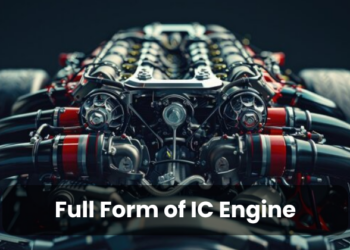
Full Form of SI: In the field of automobile engineering and mechanical systems, engines play a crucial role in powering vehicles. Among the various types of internal combustion engines, the SI engine is widely used and studied by engineering students and professionals. In this article, we will explore the full form of SI engine, how it works, its components, applications, and advantages — all tailored for aspiring engineers preparing for competitive exams or pursuing core engineering courses in 2025.
What is the Full Form of SI Engine?
SI Engine Full Form: Spark Ignition Engine
The term “SI engine” refers to Spark Ignition Engine, which is a type of internal combustion engine where the air-fuel mixture is ignited by a spark plug. These engines are commonly found in petrol-based vehicles and operate on the Otto cycle.
How Does an SI Engine Work?
An SI engine works on the four-stroke principle, consisting of:
-
Intake Stroke: Air and fuel mixture enters the cylinder.
-
Compression Stroke: The piston compresses the mixture.
-
Power Stroke: The spark plug ignites the mixture, causing combustion and pushing the piston down.
-
Exhaust Stroke: Burnt gases are expelled through the exhaust valve.
The spark plug is central to the functioning of an SI engine, initiating the combustion process precisely at the end of the compression stroke.
Key Components of an SI Engine
| Component | Function |
|---|---|
| Spark Plug | Ignites the air-fuel mixture using electric spark. |
| Carburetor / Fuel Injector | Mixes fuel with air (carburetor in older engines, injectors in modern). |
| Piston | Transfers energy from combustion to the crankshaft. |
| Crankshaft | Converts linear piston motion into rotary motion. |
| Valves (Inlet & Exhaust) | Regulate intake of fuel-air and exhaust of gases. |
SI Engine vs CI Engine
| Feature | SI Engine (Spark Ignition) | CI Engine (Compression Ignition) |
|---|---|---|
| Fuel Used | Petrol | Diesel |
| Ignition Method | Spark Plug | Compression |
| Operating Cycle | Otto Cycle | Diesel Cycle |
| Compression Ratio | Lower (around 8:1 to 12:1) | Higher (around 14:1 to 22:1) |
| Thermal Efficiency | Lower than CI engines | Higher thermal efficiency |
| Maintenance | Comparatively lower | Requires more maintenance |
Applications of SI Engines
SI engines are primarily used in:
-
Two-wheelers and four-wheelers (petrol-based)
-
Small aircraft engines
-
Lawnmowers
-
Small generators
-
Sports and performance cars where quick throttle response is essential
Their relatively lightweight, quick start-up, and lower noise levels make them ideal for private vehicles and light-duty applications.
Advantages of SI Engines
-
Smooth and quiet operation
-
Lower initial cost compared to CI engines
-
Easier starting in cold conditions
-
Better throttle response
-
Less vibration during operation
These advantages make SI engines ideal for everyday consumer vehicles and light machinery.
Limitations of SI Engines
While SI engines offer several benefits, they also have certain limitations:
-
Lower fuel efficiency
-
Higher emissions of unburnt hydrocarbons and CO
-
Knocking can occur if the air-fuel mixture detonates prematurely
-
Not suitable for heavy-duty industrial applications
With evolving emission norms in 2025, manufacturers are continually improving SI engine technology to meet environmental standards.
Future of SI Engines in 2025
With the global focus shifting towards sustainability, SI engines are being improved with technologies such as:
-
Turbocharging
-
Direct Fuel Injection
-
Variable Valve Timing (VVT)
-
Hybrid Integration (combining electric motors with petrol engines)
While electric vehicles are gaining popularity, petrol-based SI engines continue to dominate the Indian two-wheeler and small car segments due to their affordability and infrastructure compatibility.
Conclusion
To summarise, the SI engine full form is Spark Ignition engine, a type of internal combustion engine that ignites the air-fuel mixture using a spark plug. It is most commonly used in petrol vehicles and light machinery. Understanding its working, components, and applications is crucial for engineering students, especially those preparing for exams like JEE, GATE, and technical interviews.
In 2025, with a strong push for cleaner technologies and advanced engine design, SI engines are evolving but remain a key topic in core engineering disciplines.
Full Form of SI FAQs
Q1. What is the full form of SI engine?
Answer: The full form of SI Engine is Spark Ignition Engine. It refers to an internal combustion engine in which the fuel-air mixture is ignited by an electric spark from a spark plug.
Q2. How does an SI engine work?
Answer: An SI engine works on the Otto cycle and typically operates through four strokes: intake, compression, power (spark ignition and combustion), and exhaust. The spark plug plays a key role by igniting the air-fuel mixture at the right moment to produce power.
Q3. Where are SI engines commonly used?
Answer: SI engines are commonly found in:
-
Petrol cars and motorcycles
-
Scooters and two-wheelers
-
Lawn mowers
-
Light aircraft
-
Portable generators
They are preferred for lightweight vehicles due to their quick start and smooth operation.
Q4. What is the main difference between SI and CI engines?
Answer: The primary difference lies in the ignition method. SI (Spark Ignition) engines use a spark plug to ignite the fuel-air mixture, while CI (Compression Ignition) engines, like diesel engines, ignite the fuel through compression without a spark plug.
Q5. What are the advantages of using an SI engine?
Answer: Some key advantages include:
-
Quieter operation
-
Lower initial cost
-
Easier starting in cold weather
-
Quick throttle response
These benefits make SI engines ideal for personal and light-duty vehicles.