
Rajkumari Amrit Kaur: Pioneer of Indian Healthcare and Founder of AIIMS
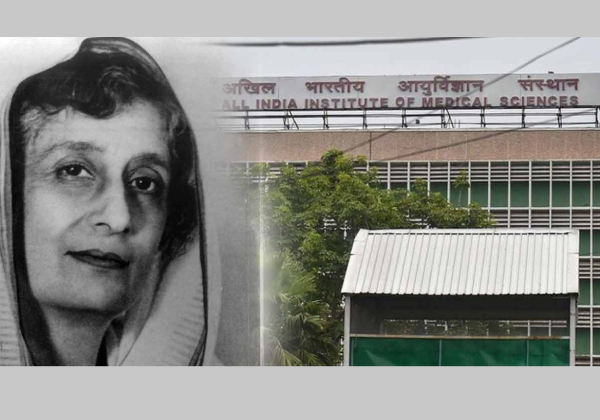
Rajkumari Amrit Kaur was an Indian freedom fighter, social activist, and the founder of the All India Institute of Medical Sciences (AIIMS) in New Delhi. She played a pivotal role in India’s struggle for independence and in shaping the healthcare system of post-independent India. This article delves into her life, achievements, and the lasting legacy she left behind through the establishment of AIIMS.
Early Life and Background of Rajkumari Amrit Kaur
Birth and Family
Rajkumari Amrit Kaur was born on February 2, 1889, into the princely family of Kapurthala in Punjab. She was the daughter of Raja Sir Harnam Singh, who was the President of the Kapurthala State Council. Despite her royal lineage, Kaur was deeply influenced by the Indian independence movement from an early age.
Education
Kaur received her early education in England, where she attended Sherborne School for Girls in Dorset and later studied at Oxford University. Her time in England exposed her to various social and political ideas, including women’s suffrage and the fight against colonialism, which significantly influenced her future activism.
Involvement in the Indian Independence Movement
Joining the Freedom Struggle
Inspired by Mahatma Gandhi and his principles of non-violence and civil disobedience, Kaur joined the Indian National Congress and became actively involved in the freedom struggle. She participated in several protests and campaigns, including the Salt March in 1930, and was imprisoned multiple times for her activities against British rule.
Advocacy for Women’s Rights
Kaur was a staunch advocate for women’s rights and worked tirelessly to improve the status of women in India. She was instrumental in the establishment of the All India Women’s Conference (AIWC) and served as its president. Through AIWC, she fought for women’s education, suffrage, and legal reforms.
Role in Post-Independent India
Health Minister of India
After India gained independence in 1947, Kaur became the first woman to hold a cabinet position in the Indian government. She was appointed as the Minister of Health and served in this capacity from 1947 to 1957. During her tenure, she introduced several reforms to improve public health and healthcare services in the country.
Establishment of AIIMS
One of Kaur’s most significant contributions was the establishment of the All India Institute of Medical Sciences (AIIMS) in New Delhi. She envisioned AIIMS as a premier medical institution that would provide high-quality medical education, research, and healthcare services. Her relentless efforts and advocacy led to the passing of the AIIMS Act in 1956, and the institute was inaugurated in 1956.
AIIMS: A Legacy of Excellence
Vision and Mission
AIIMS was established with the mission to provide comprehensive healthcare services, promote medical research, and offer world-class medical education. The institute aims to produce highly skilled medical professionals who can contribute to the healthcare sector both nationally and internationally.
Achievements and Impact
Since its inception, AIIMS has made significant strides in various fields of medicine and healthcare. It has become a leading center for medical research and education, attracting students and researchers from all over the world. The institute has also played a crucial role in addressing public health challenges and providing specialized medical care to millions of patients.
Departments and Specializations
AIIMS offers a wide range of medical and healthcare services through its various departments and specializations. Some of the key departments include Cardiology, Neurology, Oncology, Pediatrics, and Surgery. The institute is also known for its advanced medical research facilities and state-of-the-art infrastructure.
Key Milestones in Rajkumari Amrit Kaur’s Life
| Year | Milestone |
|---|---|
| 1889 | Born in Kapurthala, Punjab |
| Early 1900s | Studied at Sherborne School for Girls and Oxford University in England |
| 1930 | Participated in the Salt March and other freedom struggle activities |
| 1947 | Appointed as the first Health Minister of independent India |
| 1956 | AIIMS Act passed, leading to the establishment of the All India Institute of Medical Sciences |
| 1956 | AIIMS inaugurated |
| 1964 | Passed away, leaving a legacy of contributions to healthcare and women’s rights |
Rajkumari Amrit Kaur: The Visionary Founder of AIIMS
Rajkumari Amrit Kaur became the first President of the All India Institute of Medical Sciences (AIIMS) at the age of 67, a position she held from 1957 until her demise in 1964. As AIIMS celebrates its Diamond Jubilee, it is essential to reflect on her monumental contributions to the institution’s governance and establishment. The Princess of Kapurthala, Rajkumari Amrit Kaur, had an impressive educational background, having attended Sherborne School for Girls in Dorset, England, and completing her college education at Oxford University. In 1956, she was awarded a Doctor of Laws by Princeton University.
Raised a Christian, Rajkumari Amrit Kaur’s commitment to public service was evident when she joined Mahatma Gandhi’s ashram in 1934, serving as his secretary for 16 years. Her dedication to India’s independence was demonstrated by her participation in the Quit India Movement, which led to her imprisonment for three years. She broke barriers by becoming the first woman to hold a Cabinet rank in Nehru’s government and served as the President of the World Health Assembly in 1950. Her visionary leadership was instrumental in AIIMS achieving its status as the premier medical sciences university in India.
In 1957, Rajkumari Amrit Kaur chaired the first meeting of the AIIMS Governing Body. During her eight-year tenure, she presided over 25 Governing Body meetings. Dr. Jivraj Mehta, the Director General of Health Services, and Dr. B.B. Dixit, the Director of AIIMS, worked closely with her throughout this period. Understanding the importance of stability in institution-building, she ensured that an IAS officer served as Deputy Director Administration for a 12-year tenure.
The inaugural Governing Body meeting highlighted the significant governance challenges facing AIIMS. These included establishing the institute as an apex medical sciences university amid tight budgets, a shortage of personnel, inadequate infrastructure, and reliance on foreign funding. Rajkumari Amrit Kaur’s leadership laid the foundation for a governance structure that provided high-level policy support and interventions critical for the institute’s growth. She took on the responsibility of coordinating with state health ministers and the Union of India for additional budgetary allocations and delegating adequate administrative and financial powers to the AIIMS Director.
Key Contributions of Rajkumari Amrit Kaur to AIIMS
| Contribution | Details |
|---|---|
| First President of AIIMS | Held the position from 1957 until her death in 1964. |
| Educational Background | Educated at Sherborne School for Girls, Dorset, and Oxford University; awarded Doctor of Laws by Princeton University. |
| Role in Indian Independence | Joined Gandhi’s ashram in 1934, served as his secretary for 16 years, participated in the Quit India Movement, and was imprisoned for three years. |
| Political Achievements | First woman in Nehru’s Cabinet, President of the World Health Assembly in 1950. |
| Governance of AIIMS | Chaired 25 Governing Body meetings, coordinated with state health ministers and the Union of India for budgetary and administrative support. |
FAQs about Rajkumari Amrit Kaur and AIIMS
- Who was Rajkumari Amrit Kaur?
- Rajkumari Amrit Kaur was the first President of AIIMS and a prominent leader in Indian politics and healthcare.
- What role did she play in the establishment of AIIMS?
- She was instrumental in the establishment and governance of AIIMS, chairing the first Governing Body meeting and ensuring stability and support for the institution’s growth.
- What was her educational background?
- She was educated at Sherborne School for Girls in Dorset, England, and Oxford University. She was awarded a Doctor of Laws by Princeton University in 1956.
- How did she contribute to India’s independence movement?
- She joined Mahatma Gandhi’s ashram in 1934, served as his secretary for 16 years, participated in the Quit India Movement, and was imprisoned for three years.
- What were her achievements in Indian politics?
- She was the first woman to hold a Cabinet rank in Nehru’s government and served as the President of the World Health Assembly in 1950.
- What challenges did AIIMS face during its early years?
- AIIMS faced challenges such as tight budgets, lack of adequate personnel, absence of infrastructure, and dependency on foreign funding.
- How did Rajkumari Amrit Kaur address these challenges?
- She coordinated with state health ministers and the Union of India for additional budgetary allocations and ensured the delegation of adequate administrative and financial powers to the AIIMS Director.
- What was the significance of her tenure as President of AIIMS?
- Her tenure was crucial in establishing AIIMS as a premier medical sciences university and providing it with the necessary governance structure for its growth.
- How is Rajkumari Amrit Kaur remembered today?
- She is remembered for her visionary leadership, dedication to public service, and significant contributions to Indian healthcare and education.
- What impact did her leadership have on AIIMS?
- Her leadership laid the foundation for AIIMS to become a leading institution in medical education, research, and healthcare in India.
The First Governing Body Meeting of AIIMS
The inaugural Governing Body meeting of the All India Institute of Medical Sciences (AIIMS) was convened on September 2, 1957. The meeting was chaired by Rajkumari Amrit Kaur and attended by notable members including Dr. A.L. Mudaliar, Dr. Jivraj Mehta, Lt. Col. Jaswant Singh (Director General Health Services), Lt. Col. Amir Chand, Dr. R.M. Kasliwal, and Dr. B.B. Dixit (Director AIIMS). Interestingly, while the Union Health Secretary was not a member of the Governing Body, the Joint Secretary of the Ministry of Finance was included.
Budget and Financial Allocations
For the fiscal year 1957-58, the budget was set at Rs. 40 lakhs, with the total allocation for AIIMS during the second Five Year Plan amounting to Rs. 11.11 crores. Recognizing that these funds were insufficient for the construction of the hospital building through the end of the third Five Year Plan period, the Governing Body decided to request the Government of India to transfer Safdarjung Hospital to AIIMS. Additionally, AIIMS accepted a generous donation from the Rockefeller Foundation, amounting to USD 200,000 for the purchase of books, publications, and scientific equipment. One of the critical decisions taken by the Governing Body was to consider and adopt the regulations of AIIMS.
Progress Report and Staffing
The Governing Body reviewed the half-yearly progress report of AIIMS, rating the institute’s performance as “very good” despite facing challenges such as insufficient staffing. The Director was tasked with identifying suitable candidates for key positions, including the Professor of General Surgery, Head of the Department of Medicine, Head of the Department of Preventive & Social Medicine, and Professor of Anesthesiology. Notably, the services of Professor H.M. Smetana, sponsored by the Rockefeller Foundation, were secured from Delhi University for the role of Professor of Preventive and Social Medicine. However, attempts to obtain the services of Dr. P.N. Wahi from the Government of Uttar Pradesh and Dr. Srivastava and Dr. Balakrishnan from the Government of Bombay were unsuccessful due to the state governments’ insistence on their prior resignation and the institute’s inability to protect their past services. Due to budget constraints, AIIMS accepted Rockefeller Foundation’s sponsorship for air conditioning the institute building, deeming it essential for construction.
Other Key Decisions
Selection of Key Personnel
In late 1957, the Governing Body decided that AIIMS would award an M.Ch for surgical subjects and a DM for clinical subjects such as orthopedic surgery, neurosurgery, thoracic surgery, cardiology, neurology, as well as a DM in midwifery and an M.Ch in gynecology. During this meeting, Lt. Col. Amir Chand suggested Dr. K.L. Wig, Principal of Medical College Amritsar, as a suitable candidate for the Head of the Department of Medicine. The Governing Body agreed and resolved that the Chairman would persuade the Health Minister of Punjab to facilitate Dr. K.L. Wig’s appointment. The appointments of Dr. Sujoy B. Roy as Professor of Cardiology and Dr. R.B. Arora as Professor of Pharmacology were also approved in 1957.
Hospital Construction and International Support
Due to financial limitations and escalating costs for buildings and equipment, the decision to construct a hospital for AIIMS was deferred until the third Five Year Plan. Meanwhile, Dr. Jivraj Mehta, as Director General Health Services, offered 60 beds in Safdarjung Hospital for teaching purposes for the Departments of Medicine and Surgery, as professors had already been appointed in these departments. Additionally, AIIMS accepted a grant of 1 million pounds from New Zealand for the hospital’s construction, which commenced during the second Five Year Plan period.
Key Highlights from the First Governing Body Meeting of AIIMS
| Aspect | Details |
|---|---|
| Date of Meeting | September 2, 1957 |
| Chairperson | Rajkumari Amrit Kaur |
| Attendees | Dr. A.L. Mudaliar, Dr. Jivraj Mehta, Lt. Col. Jaswant Singh, Lt. Col. Amir Chand, Dr. R.M. Kasliwal, Dr. B.B. Dixit |
| Budget for 1957-58 | Rs. 40 lakhs |
| Total Allocation (2nd Five Year Plan) | Rs. 11.11 crores |
| Foreign Donations | USD 200,000 from Rockefeller Foundation |
| Key Decisions | Adoption of AIIMS regulations, transfer request for Safdarjung Hospital, acceptance of Rockefeller Foundation’s sponsorship for air conditioning |
| Staffing Challenges | Insufficient staff, difficulty in securing key personnel from state governments |
| Notable Appointments | Dr. K.L. Wig (suggested for Head of Department of Medicine), Dr. Sujoy B. Roy (Professor of Cardiology), Dr. R.B. Arora (Professor of Pharmacology) |
| Hospital Construction | Deferred until the third Five Year Plan, 60 teaching beds offered in Safdarjung Hospital, 1 million pounds grant from New Zealand for construction |
FAQs about the First Governing Body Meeting of AIIMS
- When was the first Governing Body meeting of AIIMS held?
- The first Governing Body meeting of AIIMS was held on September 2, 1957.
- Who chaired the first Governing Body meeting of AIIMS?
- The meeting was chaired by Rajkumari Amrit Kaur.
- What was the budget for AIIMS for the year 1957-58?
- The budget for the year 1957-58 was Rs. 40 lakhs.
- What was the total allocation for AIIMS during the second Five Year Plan?
- The total allocation for AIIMS during the second Five Year Plan was Rs. 11.11 crores.
- What foreign donation did AIIMS receive for books, publications, and equipment?
- AIIMS received a donation of USD 200,000 from the Rockefeller Foundation.
- Why did the Governing Body decide to request the transfer of Safdarjung Hospital to AIIMS?
- The Governing Body decided to request the transfer due to insufficient budget for constructing the hospital building.
- Who was suggested for the post of Head of the Department of Medicine at AIIMS?
- Dr. K.L. Wig, Principal of Medical College Amritsar, was suggested for the post.
- Which foreign grant did AIIMS receive for hospital construction?
- AIIMS received a grant of 1 million pounds from New Zealand for hospital construction.
- What key positions were identified for staffing during the first Governing Body meeting?
- Key positions identified included the Professor of General Surgery, Head of the Department of Medicine, Head of the Department of Preventive & Social Medicine, and Professor of Anesthesiology.
- What was the Governing Body’s rating of AIIMS’s performance in its half-yearly progress report?
- The Governing Body rated AIIMS’s performance as “very good” despite the challenges.
AIIMS – The Autonomous Institute from November 15, 1956
Autonomous Nature of AIIMS
Rajkumari Amrit Kaur was instrumental in safeguarding the autonomous status of AIIMS. She asserted that from November 15, 1956, AIIMS would operate autonomously, with the stipulation that any posts with a minimum pay of Rs. 600/- per month or more would require government approval, while those below this threshold could be filled without prior approval. This decision enabled the Governing Body to fill 35 Assistant Professor positions without needing government consent, thereby preserving the institute’s autonomous nature.
Kaur established AIIMS as an international entity through collaborations with the Rockefeller Foundation and the Government of New Zealand, and she encouraged further collaboration with the University of Pittsburgh. The AIIMS insignia was approved by the Governing Body in 1958, and the slogan was chosen in consultation with Vice President Dr. S. Radhakrishnan. Kaur allowed Dr. Jivraj Mehta to chair Governing Body meetings in her absence. Under Mehta’s leadership, the Governing Body relaxed admission conditions for Nepalese candidates under the technical cooperation scheme of the Colombo Plan, as well as students from Burma. AIIMS also facilitated the exchange of postgraduate students by sending senior AIIMS students abroad and accepting international students. In 1958, the Nursing College at Delhi was amalgamated with AIIMS.
AIIMS – The Apex Medical Sciences University of India
Institution Building
The passion with which Rajkumari Amrit Kaur pursued the institution building of AIIMS is evident in the Governing Body discussions. By 1959, AIIMS had 350 beds at the institute and 84 teaching beds for medical and surgical cases at Safdarjung Hospital, in addition to the Nursing College. The institute continued to advocate for the transfer of Safdarjung Hospital to AIIMS, alongside the 650 beds planned for the institute.
Kaur emphasized that AIIMS should be responsible for developing patterns of teaching in undergraduate and postgraduate medical education across all medical colleges and allied institutions in India. She chaired the Governing Body and ran AIIMS as an autonomous institute through the Standing Committees, including the Finance Committee and Selection Committee (both chaired by Dr. Jivraj Mehta), the Academic Committee, and the Building Committee. The membership of the Institute Body was pan-India representative, including medical faculties from Indian universities, Members of Parliament, distinguished medical educationists, members of the Indian Science Congress, and representatives from the Ministries of Education and Finance. AIIMS developed close collaborations with the Indian Medical Council and the Indian Council of Medical Research to pursue the objective of becoming the apex Medical Sciences University of India.
AIIMS Admissions and Entrance Examinations
Selection Process
Rajkumari Amrit Kaur’s vision for AIIMS included a transparent and merit-based selection process for admissions. Undergraduate MBBS course admissions were based on an open advertisement, results of an open competitive test, and equal opportunities for students from all parts of India. Advertisements for applications were issued in all major newspapers across the country. For postgraduate studies, candidates were selected through a national-level process involving an open call for applications and selection by a committee. The AIIMS entrance examination was conducted in five cities—Bombay, Calcutta, Madras, Nagpur, and Delhi—in 1956, 1957, and 1958, with 400 candidates competing for 50 MBBS seats.
AIIMS – Global Recognition
International Acclaim
By 1961, AIIMS had garnered international recognition. On the occasion of its 150th anniversary, Massachusetts General Hospital included AIIMS in its list of the most distinguished hospitals in America, Canada, and Europe. Rajkumari Amrit Kaur was presented with a medallion and a ‘Book of Citation’. In a letter to the Chairman of the Board of Trustees at Massachusetts General Hospital, Dr. B.B. Dixit highlighted AIIMS’s commitment to uniting education and research to meet the health needs of 400 million people, vowing to live up to the high expectations set by this recognition.
Key Highlights from AIIMS’s Early Years
| Aspect | Details |
|---|---|
| Autonomous Status | Achieved on November 15, 1956 |
| Government Approval for Posts | Required for posts with a minimum pay of Rs. 600/- per month or more |
| Collaborations | Rockefeller Foundation, Government of New Zealand, University of Pittsburgh |
| AIIMS Insignia | Approved in 1958 |
| International Recognition | Massachusetts General Hospital included AIIMS in its list of distinguished hospitals in 1961 |
| Key Personnel | Dr. Jivraj Mehta chaired meetings in Rajkumari Amrit Kaur’s absence |
| Admissions | Transparent, merit-based process with nationwide entrance examinations |
| Teaching Beds | 350 beds at AIIMS and 84 teaching beds at Safdarjung Hospital by 1959 |
| Student Exchange Programs | Enabled the exchange of postgraduate students internationally |
| Nursing College | Amalgamated with AIIMS in 1958 |
FAQs about AIIMS
- When did AIIMS achieve autonomous status?
- AIIMS achieved autonomous status on November 15, 1956.
- What was the criterion for government approval of posts at AIIMS?
- Government approval was required for posts with a minimum pay of Rs. 600/- per month or more.
- Which international collaborations did AIIMS establish under Rajkumari Amrit Kaur?
- AIIMS established collaborations with the Rockefeller Foundation, the Government of New Zealand, and the University of Pittsburgh.
- When was the AIIMS insignia approved?
- The AIIMS insignia was approved in 1958.
- Which prestigious hospital recognized AIIMS internationally?
- Massachusetts General Hospital recognized AIIMS internationally in 1961.
- How were admissions to AIIMS conducted?
- Admissions were based on a transparent, merit-based process with nationwide entrance examinations.
- How many teaching beds did AIIMS have by 1959?
- By 1959, AIIMS had 350 beds at the institute and 84 teaching beds at Safdarjung Hospital.
- Did AIIMS have a student exchange program?
- Yes, AIIMS facilitated the exchange of postgraduate students internationally.
- When was the Nursing College amalgamated with AIIMS?
- The Nursing College was amalgamated with AIIMS in 1958.