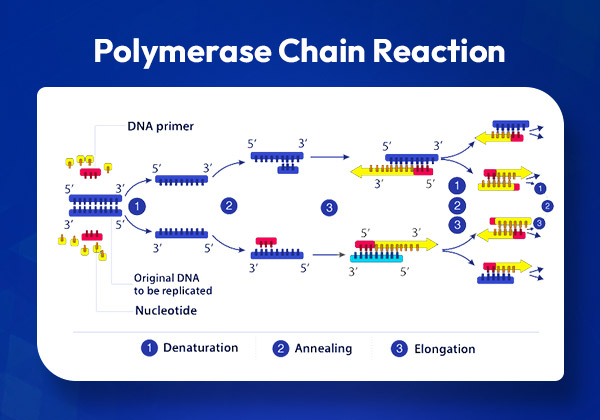

Polymerase Chain Reaction (PCR) is a pivotal technique in molecular biology that amplifies DNA segments, enabling researchers to analyze and replicate genetic material. This method has revolutionized various scientific fields and medical diagnostics due to its efficiency and versatility.
Types of Polymerase Chain Reaction (PCR)
- Traditional PCR: Amplifies DNA segments through cycles of denaturation, annealing, and extension using DNA polymerase.
- Real-time PCR (qPCR): Monitors the amplification of DNA in real-time, allowing quantitative analysis of gene expression or viral load.
- Reverse Transcription PCR (RT-PCR): Converts RNA into complementary DNA (cDNA) before amplification, useful for studying gene expression from RNA samples.
Functions of Polymerase Chain Reaction (PCR)
PCR serves several critical functions in research and diagnostics:
- DNA Amplification: Replicates specific DNA sequences for further analysis.
- Gene Cloning: Creates copies of genes for genetic engineering and recombinant DNA technology.
- Mutation Detection: Identifies genetic mutations and variations.
- Pathogen Detection: Detects and identifies pathogens, including viruses and bacteria, in clinical samples.
Importance of Polymerase Chain Reaction (PCR)
PCR’s importance extends across various applications:
- Medical Diagnostics: Used in diagnosing genetic disorders, infectious diseases, and cancer.
- Forensic Science: Analyzes DNA evidence in criminal investigations.
- Biotechnology: Essential for gene editing, sequencing, and personalized medicine.
Uses of Polymerase Chain Reaction (PCR)
PCR is employed in diverse fields:
- Clinical Diagnosis: Identifies pathogens and genetic mutations in patient samples.
- Research: Facilitates genomic studies, evolutionary biology, and drug development.
- Environmental Monitoring: Detects microorganisms and pollutants in environmental samples.
Effects of Polymerase Chain Reaction (PCR)
The widespread adoption of PCR has positive impacts:
- Advances in Medicine: Enables early disease detection and personalized treatment strategies.
- Scientific Research: Accelerates genomic research and understanding of genetic diversity.
- Technological Innovation: Drives innovations in biotechnology and medical diagnostics.
In summary, Polymerase Chain Reaction (PCR) stands as a cornerstone technique in modern biology and medicine, empowering scientists and healthcare professionals with powerful tools for understanding genetics, diagnosing diseases, and advancing biotechnological innovations.
Polymerase Chain Reaction (PCR) FAQs
Q1: What is Polymerase Chain Reaction (PCR)?
Answer: PCR is a molecular technique used to amplify DNA segments by repeatedly replicating them, making millions to billions of copies from a single DNA template.
Q2: How does PCR benefit scientific research?
Answer: PCR allows researchers to study specific DNA sequences, detect genetic mutations, clone genes, and analyze gene expression levels, contributing to advancements in genetics, medicine, and biotechnology.
Q3: What are the different types of PCR?
Answer:
Traditional PCR: Amplifies DNA segments using thermal cycling through denaturation, annealing, and extension.
Real-time PCR (qPCR): Monitors DNA amplification in real-time, enabling quantitative analysis.
Reverse Transcription PCR (RT-PCR): Converts RNA into complementary DNA (cDNA) before amplification, useful for studying gene expression.
Q4: In what fields is PCR widely used?
Answer: PCR is extensively used in clinical diagnostics for detecting pathogens and genetic disorders, in forensics for DNA profiling, in biotechnology for genetic engineering, and in environmental sciences for microbial detection and analysis.
Q5: What are the main advantages of PCR?
Answer:
Sensitivity: Can detect tiny amounts of DNA or RNA.
Speed: Generates results rapidly, within hours or even minutes.
Specificity: Amplifies specific DNA sequences, reducing false positives.
Versatility: Adaptable for various applications, from medical diagnostics to research and environmental monitoring.